
Low libido in women is one of the most common concerns raised in a gynecology visit, and one of the least often explained well. This guide walks through the causes worth ruling out, what a diagnosis actually involves, and where medication metabolism fits into the picture.
On this page
A drop in sex drive can show up quietly. You stop initiating, and sex starts to feel like a chore, or your body doesn’t respond the way it used to. Many women blame themselves or their relationships before realizing that biology, hormones, and medications can influence sexual desire.
Low libido in women is common, and it rarely comes down to one cause. Hormones, mental health, certain medications, and genetics can all play a part, sometimes together.
This article walks through the most common triggers, like how your body metabolizes certain antidepressants at the genetic level.
What Is Low Libido in Women & What Causes It?
Low libido means a reduced interest in sexual activity compared with a person’s usual level of desire. Low libido in women usually comes from a mix of factors, not one single trigger. Hormonal shifts, mental health, certain medications, and physical health conditions are the most common contributors, and they often overlap.
Cleveland Clinic puts low sex drive at roughly 1 in 5 men and an even larger share of women, at some point in life.
| Category | Common Contributors |
| Hormonal & life stage | Perimenopause, menopause, pregnancy, postpartum recovery, low testosterone |
| Mental health & medications | Depression, chronic stress, SSRIs and certain other antidepressants, some hormonal birth control |
| Physical health | Thyroid disorders, chronic pain, vaginal dryness, prior gynecologic surgery |
| Relationship & lifestyle | Relationship stress, poor sleep, body image, major life transitions |
Genetics is one of the least-discussed pieces of this puzzle. How your body metabolizes a medication, not just whether you take it, can shape whether that medication becomes part of the problem. That’s where the rest of this article spends most of its time.
What Is HSDD & How Is Low Libido Diagnosed?
Hypoactive sexual desire disorder (HSDD) is the clinical term for a persistent, distressing lack of sexual desire. It’s coded as ICD-10 F52.0 when distress is present, and as R68.82 (decreased libido) when the cause isn’t yet determined, or distress isn’t part of the picture.
HSDD isn’t the same as a slow week during a stressful month; the definition requires the pattern to persist and to cause real distress, not just a temporary dip. Diagnosis usually starts with a conversation about timeline, distress level, and recent changes (a new medication, a relationship shift, a stretch of poor sleep) rather than a single lab test.
Two medications, flibanserin (Addyi) and bremelanotide (Vyleesi), carry FDA approval specifically for HSDD. These medications are approved for specific groups of women and are not suitable for everyone.
In December 2025, the FDA expanded flibanserin’s approval to postmenopausal women under 65, after a decade of the drug being limited to premenopausal use.
Can Antidepressants Lower Your Sex Drive?
Yes. Sexual side effects such as lower desire, delayed arousal, and trouble reaching orgasm are a recognized class effect of SSRIs, the antidepressant family that includes citalopram, fluoxetine, and paroxetine. The mechanism traces back to serotonin’s role in sexual response, not a personal or relationship failure.
Two genes, CYP2D6 and CYP2C19, control how fast the liver clears many SSRIs, according to pharmacogenetics guidelines for these medications from the Clinical Pharmacogenetics Implementation Consortium. A poor metabolizer clears a drug slowly, so a standard dose can sit at a higher level in the bloodstream than intended, and some research ties that higher exposure to a greater chance of sexual side effects.
One pharmacogenetic study using the CAN-BIND-1 depression research cohort found CYP2C19 metabolizer status was linked to changes in sexual arousal on escitalopram; the researchers noted that genotyping before starting the medication could guide choices that sidestep this side effect. This research area is still developing, and metabolizer status is one factor among several. RPh Labs’ PGx test reports on CYP2C19, CYP2D6, and other genes tied to antidepressants like citalopram, fluoxetine, and paroxetine; see the complete gene and medication list.
How Do Menopause and Hormones Affect Desire?
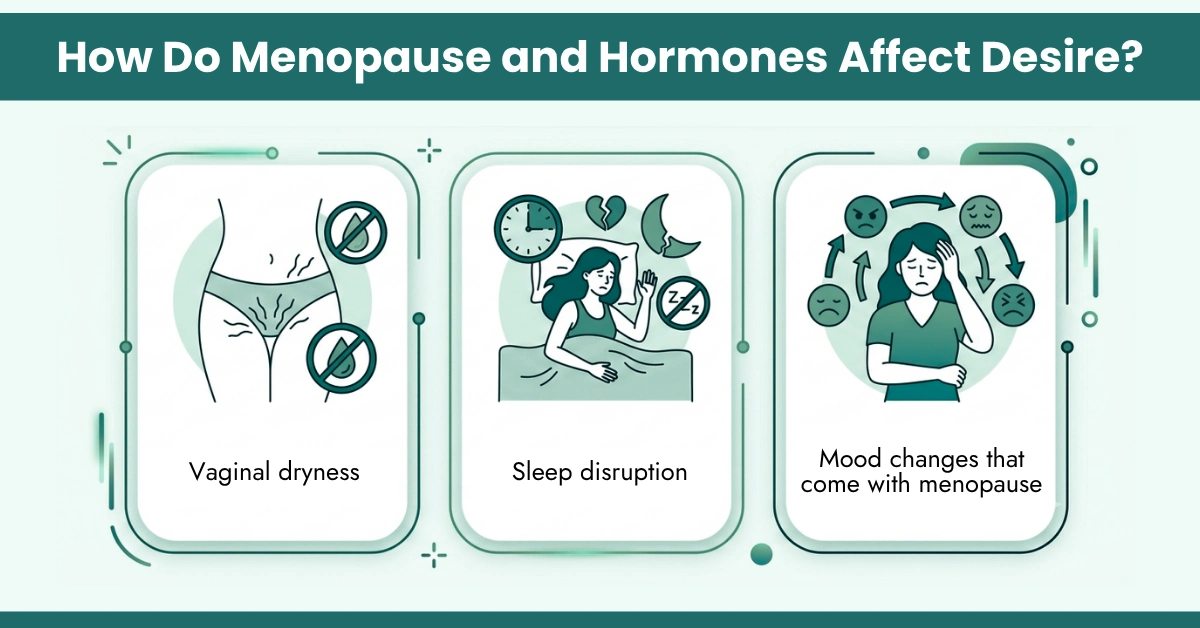
Estrogen and testosterone both decline during the menopause transition, and that shift is one of the most common reasons libido drops in midlife.
- Vaginal dryness.
- Sleep disruption.
- Mood changes that come with menopause.
Some women notice desire return once hot flashes, sleep, and mood settle after menopause; others don’t, especially if testosterone stays low.
Thyroid disorders and a prior hysterectomy, especially with ovary removal, can produce a similar hormonal drop and deserve the same workup. Low testosterone and thyroid conditions are both worth ruling out with a provider, rather than assuming a change in desire is simply menopause.
Can Birth Control Affect Libido?
Yes, for some women. Combined hormonal contraceptives, including the pill, the patch, and the vaginal ring, are linked to lower sex drive in a subset of users.
The effect isn’t universal, and plenty of women notice no change at all. If desire dropped after starting or switching hormonal birth control, that timing is worth raising at your next appointment; a different formulation or a non-hormonal option sometimes resolves it. This is a conversation for a prescriber, not a reason to stop a medication on your own.
Is Low Sex Drive During Pregnancy or Postpartum Normal?
Yes. Shifting hormones, fatigue, nausea, and body changes during pregnancy commonly lower desire, and the pattern often continues postpartum, when sleep debt, breastfeeding hormones, and physical healing all compete for the same energy.
Desire often returns gradually as hormones settle and sleep improves, though timelines vary widely between women. A drop that continues well past the postpartum window, or one that comes with persistent low mood, is worth raising with an OB-GYN or primary care provider rather than waiting it out.
Can Pharmacogenetic Testing Explain Medication-Related Low Libido?
Not by itself. A PGx test doesn’t diagnose low libido, and it isn’t a standalone treatment. What it shows is how your body is likely to metabolize specific medications, several antidepressants among them, based on your genetic makeup, information a provider can weigh if a medication’s side effects are part of the picture. The FDA maintains a public table of medications with pharmacogenomic information in their labeling, for anyone who wants the regulatory backdrop.
RPh Labs’ PGx testing kit collects a cheek swab at home and runs it through a CLIA-certified, COLA-accredited lab, with results back in 7-10 business days through a secure account. Ordering a kit, activating it, mailing back the sample, and reading the results are the four steps outlined here, and a clinical pharmacist or genetic counselor is on hand if questions come up. Testing is currently available in 45 states, so check current coverage before ordering.
Causes of low sex drive that often get overlooked
Most conversations start with hormones and stop there. In practice the causes of low sex drive stack up, and the ones that get missed are usually the ordinary ones: a medication you have taken for years, untreated pain, or three months of broken sleep.
Seven contributors come up again and again, and together they cover most causes of low sex drive seen in clinic:
- Hormonal shifts, including perimenopause, postpartum recovery, and an underactive thyroid.
- Medications, especially SSRIs, some antipsychotics, and a few blood pressure drugs.
- Depression or anxiety itself, separate from anything prescribed to treat it.
- Pain conditions, from endometriosis to arthritis, that turn sex into something you brace for.
- Vaginal dryness or tissue thinning, which quietly converts desire into avoidance.
- Sleep debt and sustained stress, which blunt desire in almost everyone.
- Relationship strain, body image, and a plain shortage of privacy or unhurried time.
Write down when the change started and what else changed that same month. That timeline narrows the causes of low sex drive faster than any panel of labs, and it hands your clinician something concrete instead of a vague complaint. If two or three items apply at once, that is the normal pattern for low libido in women rather than the exception.
Antidepressants and sex drive: what CYP2D6 and CYP2C19 actually do
The link between antidepressants and sex drive is well recognized and printed in the labeling of the drugs themselves. Reduced desire, delayed arousal and difficulty reaching orgasm are class effects of SSRIs. They sit near the top of any honest list of causes of low sex drive, and they are not a sign that something is wrong with you or your relationship.
Two genes on a standard pharmacogenomic panel, CYP2D6 and CYP2C19, set how quickly your liver clears many of these medicines. A poor metabolizer holds on to a standard dose longer, so blood levels can run higher than the dose suggests. An ultrarapid metabolizer may clear the drug before it does much at all. The CPIC guidelines translate those results into specific starting-dose and drug-choice advice for several antidepressants.
Other drugs can change the result
Metabolizer status is not fixed by genes alone. Fluoxetine, paroxetine and bupropion all inhibit CYP2D6 strongly, so someone genetically normal can behave like a poor metabolizer while taking them. Pharmacists call this phenoconversion, and it is covered in more detail in our guide to CYP2D6 inhibitors.
None of this tells you to stop a medicine. If antidepressants and sex drive seem connected in your case, the useful move is to bring the timing to your prescriber, who can weigh a dose change, a switch, or a wait against the risk of your depression returning. Our overview of genetic testing for antidepressants covers what that conversation usually involves.
Hypoactive sexual desire disorder versus an ordinary dip
A quiet few months during a hard stretch at work is not a disorder. Hypoactive sexual desire disorder describes desire that has dropped from your own baseline, stayed down for months, and causes real distress. All three parts matter, and the distress part is what separates a diagnosis from a preference.
There is no blood test for it. A clinician builds the picture from a timeline, a medication review, a look at thyroid and iron studies where symptoms point that way, and a pelvic exam if pain or dryness is part of the story.
- Desire that has always been low, with no distress, is a baseline rather than a disorder.
- Desire that drops in one specific situation, but not others, points toward relationship or context factors.
- Desire that drops across the board, with distress, is what hypoactive sexual desire disorder describes.
- Desire that drops within weeks of a new prescription points first at the prescription.
Two medicines carry approval specifically for this diagnosis, and neither suits everyone. Both have meaningful cautions around alcohol, blood pressure and other drugs, which is why the decision belongs with a prescriber who knows your full medication list.
Libido after menopause, and what actually helps
Falling estrogen thins vaginal tissue and reduces natural lubrication, so sex can become uncomfortable before desire itself changes. Many women describe changes in libido after menopause as a slow withdrawal from something that started to hurt, which is a different problem from a lost interest in intimacy.
That distinction matters because the comfort problem is usually treatable. Low-dose vaginal estrogen, non-hormonal moisturizers, and regular use of a good lubricant all address the tissue rather than the brain.
- Treat pain and dryness first, then see what is left of the desire problem.
- Fix sleep where hot flashes are wrecking it, since exhaustion suppresses desire on its own.
- Ask for thyroid testing if fatigue, weight change or cold intolerance came along with it.
- Raise any surgical history, especially ovary removal, which drops hormones abruptly rather than gradually.
Be careful with claims you may read about genetic tests guiding hormone therapy. There is no pharmacogenomic guideline for estrogen, progestins or testosterone, and no genetic test picks a dose for them. Libido after menopause is managed on symptoms, exam findings and your own risk profile, discussed with your clinician.
How to raise low libido in women at a short appointment
Fifteen-minute appointments reward preparation. Bringing a short written summary gets you further than trying to explain everything from memory while the clock runs.
- Write one sentence on when desire changed and how it differs from your own normal.
- List every prescription, over-the-counter product and supplement, with the month each started.
- Note anything else that shifted in that window: a new baby, a surgery, a bereavement, a sleep problem.
- Say plainly whether it distresses you, since that single word changes how the visit is coded and handled.
- Ask directly whether any medicine on your list is a known contributor.
- Ask what the next step is if the first change does not help, so you leave with a plan rather than a single trial.
If the visit ends with a suggestion to simply relax, it is reasonable to ask for a referral. Care for low libido in women sits across gynecology, primary care, psychiatry and pelvic floor therapy, and the right specialist depends on which cause is most likely in your case.
What a pharmacogenomic panel can and cannot answer
A pharmacogenomic test reports how you are likely to process certain medicines. It does not diagnose low libido in women, does not measure hormone levels, and does not predict whether you will develop any condition. Treating it as a cause-finder for low libido in women is the most common misunderstanding we see.
Where it genuinely helps is narrower and more practical. If an antidepressant is a suspect, knowing your CYP2D6 and CYP2C19 status tells your prescriber whether a standard dose is likely to run high or low in your body before you spend another eight weeks finding out.
What the RPh Labs panel covers
The RPh Labs panel reads 20 genes and reports them against more than 240 medicines, including the SSRIs most often involved here. It is a cheek swab you collect at home, reviewed by a PharmD pharmacist, with results 7 to 10 business days after the sample reaches the Dallas lab. You can see the full list on the medication list page or order the at-home PGx kit.
The panel does not include any gene marketed for hormone therapy, contraception or a diagnosis of hypoactive sexual desire disorder. It reports metabolism, and nothing about your genes here says anything about desire itself.
Questions worth asking before you change an antidepressant
Stopping an antidepressant on your own can bring dizziness, flu-like symptoms, electric-shock sensations and a return of the depression that started treatment. Changes are planned and tapered with a prescriber, not trialled at home.
- Is this side effect likely to settle, and how long would you wait before changing something?
- Would a dose reduction be safe for my depression, or is a different drug the better move?
- Are any of the alternatives less associated with this problem in practice?
- Does anything else on my list inhibit the enzyme that clears this drug?
- If we switch, how will we taper, and what should I expect during the change?
Keeping notes for the first month after any change gives the next appointment something to work with. Note desire, mood, sleep and side effects separately when antidepressants and sex drive are both in play, because improvement often arrives in one column before the others, and that pattern tells your prescriber whether to hold or adjust.
Conclusion:
Low libido in women is common, and it’s rarely about willpower or attraction. Hormones, mental health, medications, and genetics all factor in, sometimes at once. If an antidepressant is on your list of possible causes, a PGx test shows how your body handles it at the genetic level, one more piece of information for the conversation with your provider.
Disclaimer:
This article is educational and isn’t a substitute for individualized medical or genetic counseling advice. Talk with your doctor, gynecologist, or RPh Labs’ clinical team about your specific symptoms, medications, and genetic results.
Low libido in women: more questions answered
What is considered low libido in women?
There’s no universal number. Clinicians look at whether desire has dropped from your own baseline for at least several months, and whether it causes distress. A change without distress is often coded as decreased libido (R68.82); with distress, it may meet criteria for HSDD (F52.0).
How can I rekindle sexual desire naturally?
Start with the basics that affect desire indirectly: sleep, stress levels, and time with a partner outside the bedroom. If a medication, hormone shift, or mood change is driving the drop, addressing that underlying cause tends to matter more than any single technique. A provider can sort out which one applies to you.
Do supplements or vitamins work for low libido?
Evidence for most over-the-counter libido supplements is limited or mixed. The FDA doesn’t review supplements before they reach shelves the same way it reviews prescription drugs. If you’re considering one, check with your pharmacist or provider first, especially if you take other medications, since interactions are possible.
Does RPh Labs’ PGx test diagnose low libido?
No. The test doesn’t diagnose low libido or any other condition. It reports how your body is likely to metabolize 240+ medications, several of them antidepressants, based on your genes. Your provider or RPh Labs’ clinical team interprets what that means for your specific prescriptions.
Is pharmacogenetic testing covered by insurance?
Coverage varies by plan. RPh Labs accepts several insurance plans and has a 4-installment, no-interest payment option for anyone paying out of pocket. Check current accepted plans or state availability before ordering.
Can a genetic test tell me which hormone therapy to use?
No. There is no pharmacogenomic dosing guideline for estrogen, progestins or testosterone, and no panel picks a hormone or a dose. Decisions about hormones and libido after menopause rest on your symptoms, exam findings, personal and family history, and your clinician’s judgment. A pharmacogenomic panel only reports how you process certain other medicines.
How long do sexual side effects from an SSRI usually last?
For some people they ease within the first couple of months as the body adjusts. For others they persist for as long as the drug is taken. Because antidepressants and sex drive can stay linked indefinitely, it is worth raising at the two-month mark rather than waiting a year to mention it.
Does birth control belong on the list of possible causes?
It can. Some people notice a drop after starting or switching a hormonal method, and others notice nothing at all. If the timing lines up, that is worth raising, since a different formulation or a non-hormonal option sometimes resolves it. No genetic test predicts this response.
Is hypoactive sexual desire disorder the same as asexuality?
No. Asexuality is a sexual orientation and involves no distress about a lack of sexual attraction. Hypoactive sexual desire disorder requires a drop from a person’s own previous baseline plus real distress about that change. A clinician should never apply hypoactive sexual desire disorder to someone who is simply not distressed.
What should I do if pain is the main problem rather than desire?
Say so directly, because pain routes the workup differently. Persistent pain with sex warrants a pelvic exam and, depending on findings, referral to pelvic floor physical therapy or evaluation for endometriosis. Treating the pain often restores enough comfort that the remaining causes of low sex drive look very different afterwards.
Do over-the-counter libido supplements work?
Evidence for most of them is thin or mixed, and supplements are not reviewed before they reach shelves the way prescription drugs are. Some interact with prescriptions, including blood thinners and antidepressants. Run any product past your pharmacist before adding it, especially if you already take several medicines.

Leave a Reply