
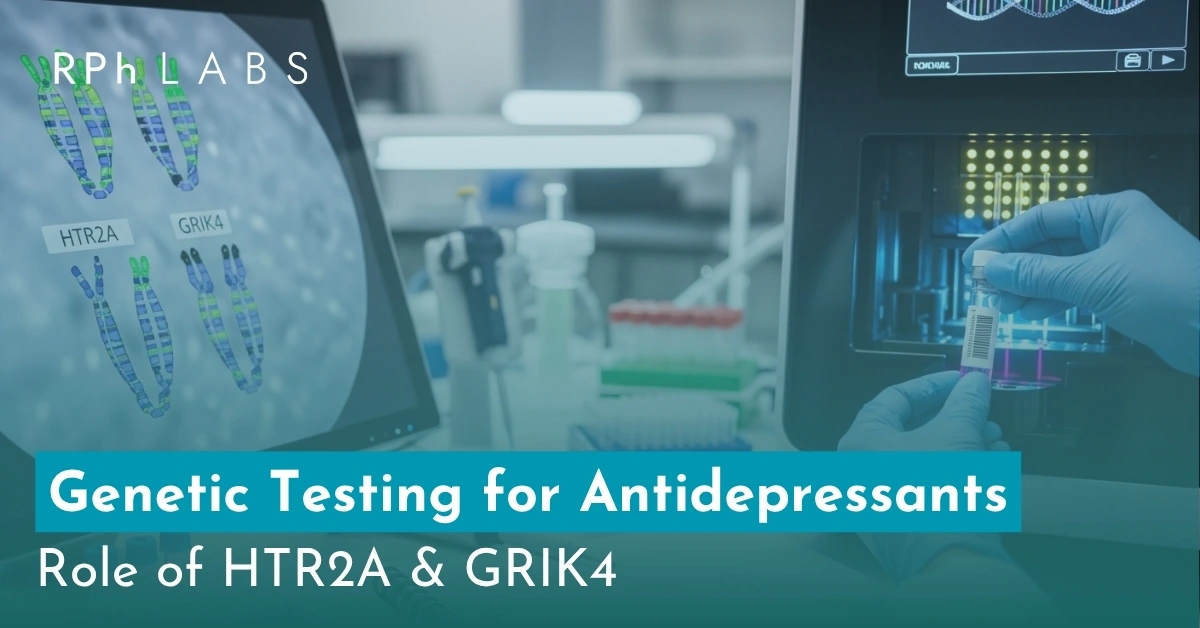
Why Genes Matter in Antidepressant Treatment
When you take an antidepressant, it doesn’t act in a vacuum. Your body’s neurochemistry, receptor systems, and brain signalling pathways all respond differently based on your unique biology. That’s why two people on the same dose may have very different outcomes. Two major factors cause variability:- How your brain’s receptors respond to the drug (target genes or receptor gene)
- How your body processes the drug (metabolism genes, drug-gene interactions)
What Is Genetic Testing for Antidepressants?
PGx test examines your DNA from a simple cheek swab to analyse key genes affecting medication response. The process is simple:- Provide a cheek swab or saliva sample.
- The lab examines relevant genes (CYP enzymes, HTR2A, GRIK4).
- A report categorises drugs as more suitable or higher risk.
- Clinicians integrate the results with clinical history.
HTR2A: The Serotonin Receptor Gene
HTR2A encodes the 5-HT2A receptor, one of the main serotonin receptors involved in mood regulation.- Variants affect response to SSRIs such as citalopram (shown in the STAR*D trial).
- Certain polymorphisms increase the risk of side effects like agitation, insomnia, or sexual dysfunction.
- When analysed with other genes (like GRIK4), predictive power improves.
GRIK4: The Glutamate Receptor Gene
GRIK4 encodes a kainate receptor subunit within the glutamate system, which regulates brain plasticity and stress response.- The rs1954787 SNP is associated with remission from antidepressant treatment.
- STAR*D and meta-analyses suggest carriers of the “C” allele respond better to SSRIs.
- Although effect sizes are modest, they provide additional predictive information beyond serotonin genes.
Why HTR2A + GRIK4 Together Is More Powerful
Testing one gene is helpful, but combining HTR2A and GRIK4 yields greater insight:- In STAR*D, people who were homozygous for favorable alleles in both genes were 23% less likely to fail response compared to those with no favorable alleles.
- The interaction of glutamate and serotonin pathways seems to influence antidepressant responsiveness better than either alone.
- Many modern PGx panels, like those offered by RPh Labs, use combinatorial testing (multiple genes) for more accurate medication response genetic testing.
How Genes Relate to Antidepressants
Here’s a simple comparison table to help you see how all this fits together:| Gene/Variant | Biological Role | Antidepressant Effects |
| HTR2A (various SNPs) | Serotonin receptor modulation | Influences the SSRI efficacy and side effects |
| GRIK4 (rs1954787) | Glutamate (kainate) receptor | Improves odds of response/remission |
| CYP2D6/CYP2C19 (P450 family) | Drug metabolism (liver) | Affects drug levels, side effects risk |
How Accurate Is Genetic Testing for Psychiatric Medications
No test is perfect, but the field has matured considerably. Based on recent umbrella reviews and meta-analyses:- Improved outcomes: PGx-guided prescribing has shown improved response and remission rates in multiple studies, ranging from ~20–78%, depending on study design.
- Modest effect in RCTs: In highly controlled randomized clinical trials (RCTs), the effect size is modest, suggesting results may be less robust in strict conditions.
- Panel variability: Significant heterogeneity exists across pharmacogenomic panels, making results inconsistent.
- Evidence limitations: A 2020 PMC review highlighted that evidence is insufficient to guarantee response prediction from any test.
- Practical application: In routine clinical practice, gains are often limited; PGx is therefore mainly used as an adjunctive tool, particularly in treatment-resistant cases.
Benefits of Genetic Testing for Antidepressants
When used with clinical judgment, testing offers:- Fewer failed trials
- Reduced side effects
- Optimized dosing
- Faster symptom relief
- Greater patient confidence
How This Knowledge Helps In Practice
Knowing your HTR2A and GRIK4 genotype offers these practical benefits:- Choosing SSRIs is more likely to be effective.
- Avoiding drugs linked to a higher risk of side effects.
- Switching classes earlier if genetic markers predict poor response.
Conclusion:
If you understand how the genes HTR2A and GRIK4 affect depression gives you and your doctor in-depth insight into your treatment. This science is becoming a part of your daily life. If you’re thinking about genetic testing for antidepressants, labs like RPh Labs include these genes in their panels. Their reports are easy to understand and show how your genes relate to medication choices, side effect risks, and dosing. While testing can’t promise perfect results, it can help reduce guesswork, speed up relief, and personalise your treatment. Talk to your doctor about whether including these genes in your test could improve your path to remission and take that next step with confidence.Disclaimer:
This article is for educational purposes only and should not substitute medical advice. Always consult a licensed healthcare provider before making treatment decisions. Some images may be illustrative or AI-generated.Frequently Asked Questions
How much does a full genetic test cost?
A complete genetic test may cost anywhere from $500 to $2,500 depending on the provider. RPH Labs offers best pharmacogenetic testing that gives you a clear and affordable option at just $299.
How long do PGx test results take?
At RPH Gen Lab, we use an easy and non-invasive swab test. Once your sample reaches our lab, results are typically available within 7–10 business days of our Rph Lab portal.
How much is genetic testing for antidepressants?
Genetic testing for antidepressants typically ranges from $300 to $2,000. At RPH Labs, the PGx test is available for $299 and can be paid through HSA or FSA.
How reliable is pharmacogenetic testing?
Our PGx test is conducted using advanced genetic analysis technology, making it highly reliable for predicting drug response. While no test can guarantee 100% accuracy, PGx testing significantly reduces trial-and-error in prescribing and helps providers choose the most effective and safest medications.
How accurate is PGx testing?
The RPH Gen Lab PGx Testing Kit provides clinically validated results backed by scientific evidence. Accuracy is consistently high, ensuring your healthcare provider receives actionable insights into your drug metabolism and response.
How do I prepare for PGx testing?
No special preparation is required. Our PGx Testing Kit uses a simple cheek swab that you can complete at home. Just avoid eating, drinking, or smoking for at least 30 minutes before swabbing for the best results.
Which genetic test is best for health?
For medication safety and effectiveness, a PGx test is one of the best options because it shows how your genes affect drug response.
Can a pharmacist order a PGx test?
Yes. At RPH Gen Lab, licensed pharmacists can order a PGx test for patients. This makes the process more accessible and helps patients get personalized medication guidance without waiting for lengthy specialist referrals.


Leave a Reply