
What Is Simvastatin and How Does It Work?
Simvastatin is a prescription statin medication that lowers LDL (bad) cholesterol by blocking an enzyme in the liver called HMG-CoA reductase. Brand name: Zocor. It belongs to the drug class known as HMG-CoA reductase inhibitors, commonly called statins. Here’s the simple mechanism:- Your liver makes most of your body’s cholesterol, especially overnight.
- Simvastatin blocks the enzyme driving that production.
- The liver then pulls more LDL from your bloodstream to compensate.
- Result: lower LDL, lower cardiovascular risk.
What Is Simvastatin Used For?
Simvastatin is primarily used to lower high cholesterol and reduce the risk of heart attack, stroke, and cardiovascular disease. It also raises HDL (good cholesterol) and lowers triglycerides. Approved uses include:- High cholesterol (hypercholesterolemia).
- Mixed dyslipidemia (abnormal blood fat levels).
- Coronary heart disease risk reduction.
- Post-heart attack prevention.
- Certain inherited cholesterol disorders (familial hypercholesterolemia).
- Prevention of cardiovascular events in high-risk patients, even with normal cholesterol.
What Is the Right Simvastatin Dosage?
The typical simvastatin dose ranges from 5 mg to 40 mg once daily, taken in the evening. Your doctor determines your dose based on your cholesterol levels, cardiovascular risk, other medications, and increasingly your genetic profile.| Dose | Typical Use |
| 5-10 mg | Low-risk patients or those on interacting medications |
| 20 mg | Moderate cholesterol reduction |
| 40 mg | Standard maintenance dose for most adults |
| 80 mg | Restricted, only for patients already on it long-term without muscle issues |
Important: The FDA restricts new patients from starting on simvastatin 80 mg due to a high risk of muscle injury (myopathy). This dose is only continued in patients who have safely tolerated it for 12+ months.
What Are the Side Effects of Simvastatin?
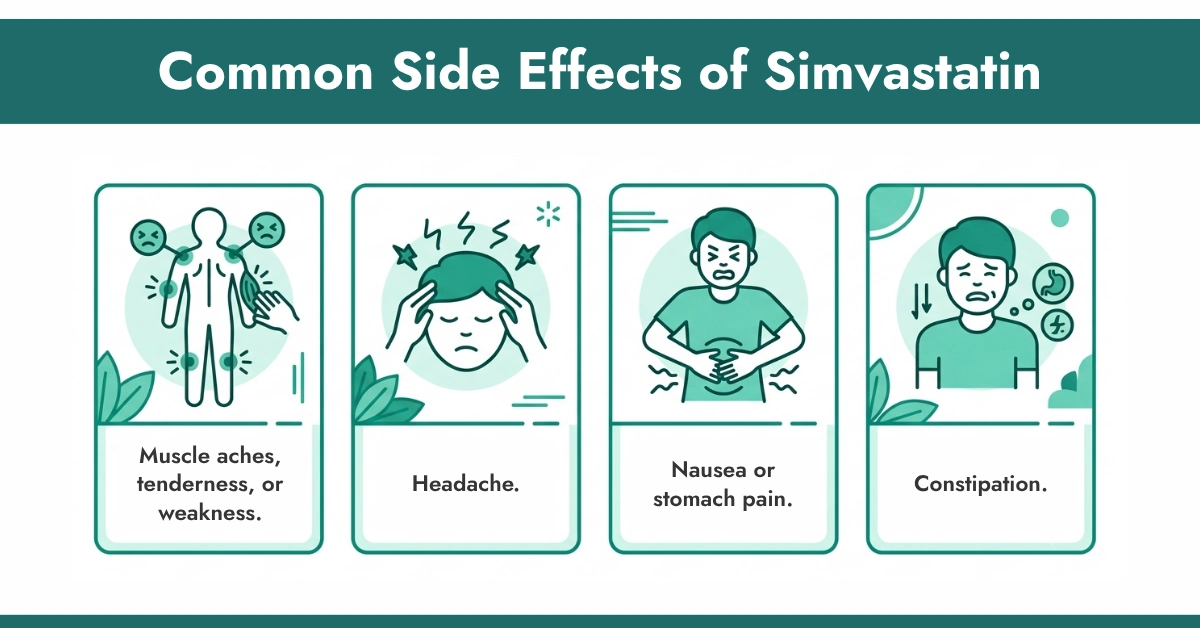
The most common and serious side effect of simvastatin is muscle pain (myalgia), which affects up to 10% of users. In rare cases, it can progress to a dangerous condition called rhabdomyolysis, the breakdown of muscle tissue that can lead to kidney failure. Common side effects:- Muscle aches, tenderness, or weakness.
- Headache.
- Nausea or stomach pain.
- Constipation.
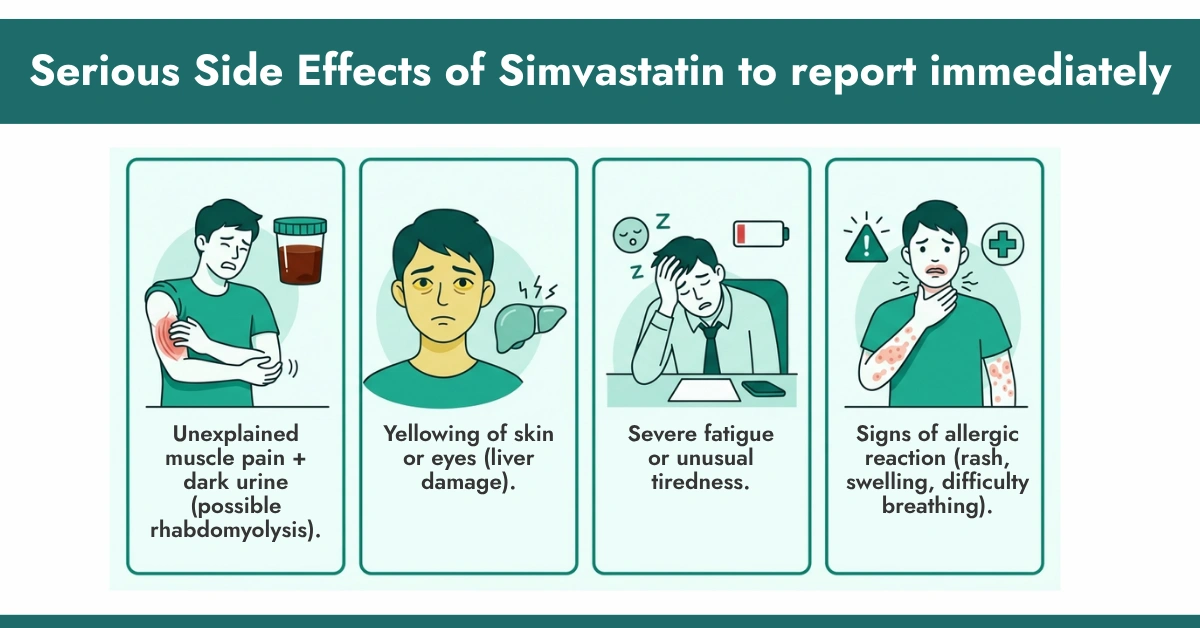
 Serious side effects to report immediately:
- Unexplained muscle pain + dark urine (possible rhabdomyolysis).
- Yellowing of skin or eyes (liver damage).
- Severe fatigue or unusual tiredness.
- Signs of allergic reaction (rash, swelling, difficulty breathing).
 Long-term use is generally safe in most patients, but regular monitoring of liver enzymes and muscle health is recommended. According to Mayo Clinic, simvastatin at high doses may be more likely to cause muscle pain than other statins, making dose management critical.
Is Simvastatin Safe? Key Warnings and Interactions
Simvastatin has important safety restrictions, particularly around drug interactions, diet, and alcohol, which are often underestimated. Don’t combine simvastatin with:- Cyclosporine, gemfibrozil, or nefazodone (contraindicated, major myopathy risk).
- Certain antibiotics: clarithromycin, erythromycin.
- Antifungals: itraconazole, ketoconazole.
- HIV medications (protease inhibitors).
- High-dose niacin (especially in people of Chinese descent).
- Active liver disease patients.
- Pregnant or breastfeeding women.
- Anyone taking contraindicated drugs listed above.
What’s the Brand Name for Simvastatin?
The most recognized brand name for simvastatin is Zocor, originally developed by Merck. It is now widely available as a generic drug, making it one of the most affordable statins on the market. Other brand or combination names include:- Vytorin: Simvastatin + ezetimibe (combined in one tablet).
- FloLipid: An oral simvastatin suspension.
Simvastatin vs. Atorvastatin vs. Rosuvastatin: Which Is Better?
There is no single “best” statin; the right one depends on your cholesterol targets, genetics, and other medications. Here’s a quick comparison:- Simvastatin: Moderate potency, low cost, but higher drug interaction risk and muscle side effect concern at high doses.
- Atorvastatin (Lipitor): Stronger LDL reduction, fewer interactions, widely preferred for high-risk patients.
- Rosuvastatin (Crestor): The most potent per milligram, less metabolized by CYP3A4 (lower interaction risk), good for very high LDL cases.
The Genetic Factor Most Doctors Don’t Discuss
Here’s what many people on simvastatin never hear: your SLCO1B1 gene variant can increase your risk of muscle damage by up to 17 times, regardless of your dose. The CPIC (Clinical Pharmacogenetics Implementation Consortium) has issued actionable guidelines specifically for simvastatin and SLCO1B1. Patients with certain variants in this gene build up more simvastatin in their blood than intended, leading to the muscle pain and liver stress that cause many people to give up on statins altogether. A 2025 update from the Dutch Pharmacogenetics Working Group (DPWG) recommends choosing an alternative statin entirely for patients with high-risk SLCO1B1 variants. RPh Labs CLIA-accredited PGx test analyzes your SLCO1B1, CYP2C9, CYP3A4, and other relevant genes to help you and your doctor make smarter statin decisions before problems start, not after. The test requires only a simple cheek swab, ships directly to your home, and delivers results within 7-10 business days through the RPh Labs portal. It’s also HSA/FSA eligible. If you’ve struggled with statin side effects or wonder why your cholesterol isn’t improving, your genetics may hold the answer.Conclusion
Simvastatin remains one of the most widely used and cost-effective tools for managing high cholesterol and reducing cardiovascular risk. When prescribed at the right dose, for the right patient, it works well. The problem is that “the right patient” has always been defined by cholesterol numbers and risk factors alone, without accounting for the genetic variables that quietly determine how the drug behaves in your body. Understanding your SLCO1B1, CYP2C9, and CYP3A4 gene status isn’t a luxury anymore; it’s practical medicine. It’s the difference between a statin that protects you and one that causes muscle pain you’d otherwise spend months trying to explain. If you’re currently on simvastatin, considering starting it, or have stopped because of side effects, a PGx test from RPh Labs gives your doctor the genetic data to personalize your treatment from the start. One cheek swab, actionable results, and smarter decisions.Disclaimer:
This content is for informational and educational purposes only. It doesn’t constitute medical advice, diagnosis, or treatment. Always consult a licensed healthcare provider before starting, stopping, or adjusting any medication. Individual responses to simvastatin may vary based on health history, concurrent medications, and genetic factors.Frequently Asked Questions
What is simvastatin used for?
Simvastatin lowers LDL cholesterol, raises HDL, and reduces the risk of heart attack, stroke, and cardiovascular disease. It’s prescribed alongside diet changes.
What is the best time to take simvastatin?
Take simvastatin in the evening or at bedtime. Your liver produces cholesterol primarily at night, so evening dosing is significantly more effective.
Can simvastatin cause muscle pain?
Yes. Muscle pain (myalgia) is the most common side effect. If you experience unexplained muscle weakness or dark-colored urine, contact your doctor immediately, as these may signal a serious condition called rhabdomyolysis.
Can I drink alcohol while taking simvastatin?
Limit alcohol to fewer than 2 drinks per day. Heavy alcohol use combined with simvastatin increases the risk of liver damage.
Why can’t I eat grapefruit with simvastatin?
Grapefruit blocks the CYP3A4 enzyme that breaks down simvastatin. This causes the drug to build up in your blood to dangerous levels, raising the risk of muscle damage and liver injury.
Is simvastatin safe long-term?
For most patients, yes, with regular monitoring. Your doctor may check liver enzymes and muscle health periodically, especially during the first year.
How does my genetics affect simvastatin?
Variants in the SLCO1B1 gene can dramatically increase simvastatin levels in your body, raising the risk of muscle toxicity. A pharmacogenomics (PGx) test can identify this risk before you start treatment.



Leave a Reply