
For providers
Pharmacogenomic testing that helps you prescribe with confidence
Order saliva-based PGx kits for your patients from a CLIA-certified PGx lab, and get pharmacist-reviewed reports that show how each patient is likely to respond to medication.
Provider pricing
Provider accounts order PGx testing at 20% off the $299 retail price. Your discount code is applied automatically when you order from your provider account. No minimum order and no contract.
Your discount
20% off testing
on every kit you order from your provider account, with no volume tier to reach.
How ordering works
Four steps from order to report, managed from your provider account.
1
Create an account
Sign up with your NPI. Your account is approved straight away and your provider discount is live.
2
Order a kit
Order online for the patient. We ship the kit to your office or directly to the patient.
3
Collect and return
The patient gives a painless cheek-swab saliva sample and mails it back in the prepaid return.
4
Review the report
Results post to your account with medication guidance organized by drug class.
The PGx Testing Kit
One saliva sample covers key drug-gene pairs across the medication classes you prescribe most. Samples are processed in our CLIA-licensed, COLA-accredited laboratory.
Medication classes covered
Antidepressants
Antipsychotics
ADHD medications
Pain and opioids
Cardiovascular
Anticoagulants
Statins
Gastrointestinal
Insurance billing
We bill Medicare and many commercial plans directly when the test meets coverage criteria. Include the patient’s insurance on the requisition and we handle the claim.
Results turnaround
7–10 business days
from when the lab receives the sample. Reports are posted to your provider account and a pharmacist is available to talk through results.
Why prescribers choose RPh Labs as their PGx lab
Choosing a PGx lab is really choosing a report your team will use. RPh Labs runs a clinical pharmacogenomic panel in our Dallas laboratory, interprets it against published FDA labeling and CPIC guidelines, and has a licensed PharmD pharmacist review every report before it is released.
- Accredited clinical laboratory: CLIA ID 45D2288954 and COLA ID 33822.
- Prescribing-focused panel: the pharmacogenes that change drug choice and dose, reported against 240+ medications, including CYP2D6 copy-number analysis.
- Pharmacist-reviewed reports: every result is checked by a PharmD, and our pharmacists will discuss results with you directly.
- Simple collection: a buccal (cheek) swab, collected in your office or by the patient at home.
- Turnaround: results in 7 to 10 business days from receipt of the sample.
- Provider portal: order, track and download results in one place at provider.rphlabs.com.
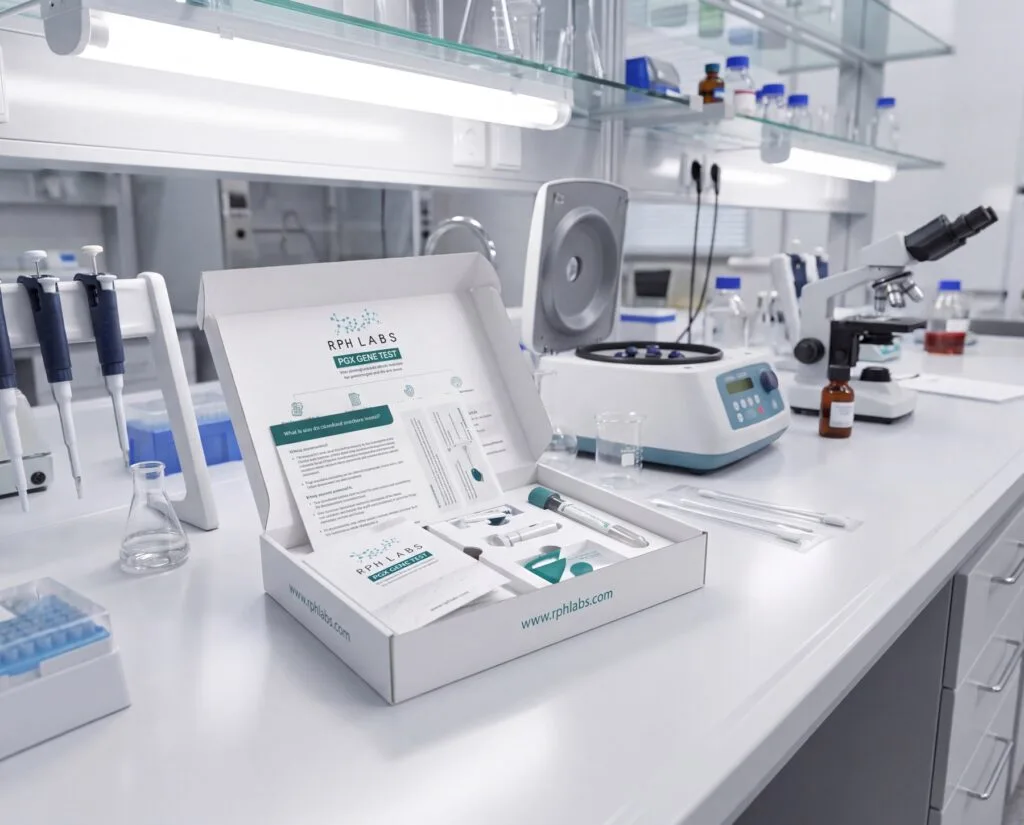
We built the service around the questions prescribers actually ask: which drug, what dose, and how confident can I be? The report answers those medication by medication, with the guideline behind each recommendation, so it fits into a normal appointment rather than needing a separate genetics consult.
When to order pharmacogenomic testing
Pharmacogenomic testing for providers is most useful at a decision point: before a first prescription with a known gene-drug interaction, or after a treatment has failed or caused unexpected side effects. Common triggers include:
- Starting a drug with FDA pharmacogenomic labeling, such as clopidogrel, codeine, carbamazepine, abacavir, siponimod or a thiopurine.
- Two or more failed trials of antidepressants, antipsychotics or ADHD medications.
- Unexpected side effects at standard doses, or no response at doses that should work.
- Polypharmacy, particularly in older adults on five or more medications, where one result informs many prescriptions.
- Planned long-term therapy such as warfarin or statins, where the starting dose matters.
Because germline results do not change, a single test ordered for one medication remains available for every future prescribing decision, and our reports are reissued when guidelines are updated.
Pharmacogenomic testing for providers: how ordering works
Pharmacogenomic testing for providers follows the same path whether you order one test or many. The online PGx requisition form is the fastest route; the printed requisition is also available below.
- Complete the PGx requisition form. Patient information, medical history, the requested PGx test and prescriber information, then the consent.
- Collect the specimen. A buccal swab in your office, or the patient uses an at-home kit and mails it back in the prepaid return envelope.
- The lab processes the sample. DNA is extracted, genotyped and interpreted against current guidelines.
- Pharmacist review and release. A PharmD reviews the report, and results are posted to the provider portal in 7 to 10 business days.
- Act on the results. Use the medication-by-medication guidance, and call us if you want to talk the report through with a pharmacist.
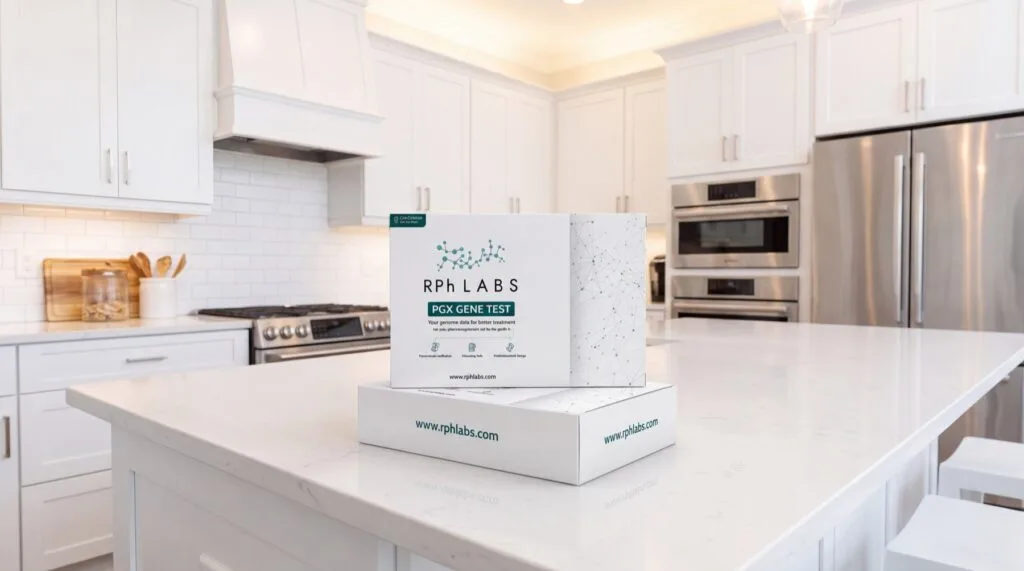
Prefer paper? Download the printable PGx requisition form (PDF) and send it with the specimen.
PGx requisition form checklist
The PGx requisition form has four sections. Having these details ready makes it quick to complete, and avoids delays at the laboratory:
- Patient information: name, date of birth, sex, contact details and address.
- Medical history: current medications and the diagnoses behind them, with ICD-10 codes.
- Requested PGx test: the panel or genes you want reported.
- Prescriber information: your name, practice, NPI, phone and email, so results reach the right clinician.
If you plan to bill insurance, also complete the insurance billing form. For Medicare patients whose coverage is uncertain, have the patient sign the ABN form before collection.
Specimen collection and shipping
A buccal swab is all the PGx lab needs. The patient should not eat, drink, smoke or brush their teeth for thirty minutes before collection. Rub the swab firmly on the inside of each cheek for about thirty seconds, seal it in the transport tube and send it with the completed requisition.
Patients who test at home receive a kit that ships within one business day, with a prepaid return envelope. Samples that fail quality control are re-extracted and re-run at no charge, and a replacement kit is sent free if a second sample is needed.
Service available
Not yet available
Hover or tap any state for its status. We serve patients in 45 states; see where we serve for the current list.
Genes on the panel
The panel focuses on pharmacogenes with established guidance. These are some of the key genes and the medications they affect:
| Gene | Example medications | Typical action |
|---|---|---|
| CYP2D6 | Codeine, tramadol, many SSRIs and TCAs, atomoxetine, aripiprazole, tamoxifen | Dose change or alternative for poor and ultrarapid metabolizers |
| CYP2C19 | Clopidogrel, citalopram, escitalopram, sertraline, PPIs | Alternative antiplatelet or antidepressant dosing |
| CYP2C9 and VKORC1 | Warfarin, NSAIDs, siponimod | Genotype-guided starting dose |
| CYP3A5 | Tacrolimus | Higher starting dose for expressers |
| SLCO1B1 | Simvastatin and other statins | Lower dose or different statin |
| TPMT and NUDT15 | Azathioprine, mercaptopurine, thioguanine | Reduced dose to avoid myelosuppression |
| HLA-B | Abacavir, carbamazepine, allopurinol | Avoid in carriers of risk alleles |
See every drug covered in the full medication list.
How results are reported
For each gene, the report converts the genotype (star alleles, and CYP2D6 copy number) into a phenotype, then applies the matching guideline recommendation to each medication.
| Phenotype | What it means | Typical implication |
|---|---|---|
| Poor metabolizer | Little or no enzyme activity | Higher exposure for active drugs; prodrugs may fail to activate |
| Intermediate metabolizer | Reduced activity | Consider a lower dose or closer monitoring |
| Normal metabolizer | Expected activity | Standard dosing per the label |
| Rapid or ultrarapid metabolizer | Increased activity | Lower exposure and possible non-response; prodrugs may reach toxic levels |
Transporter and HLA results are reported the same way, as function or risk categories linked to specific medications, so the actionable lines are easy to find in a busy clinic.
Pharmacogenomics in psychiatry
Pharmacogenomics in psychiatry is where most prescribers first use PGx results. Antidepressants and antipsychotics are among the drugs most affected by CYP2D6 and CYP2C19, and finding the right one by trial and error can take months.
- SSRIs: CPIC guidance covers citalopram, escitalopram and sertraline (CYP2C19) and paroxetine and fluvoxamine (CYP2D6).
- Tricyclics: amitriptyline and nortriptyline dosing is guided by CYP2D6 and CYP2C19.
- Antipsychotics: FDA labels for aripiprazole and brexpiprazole recommend dose adjustments for CYP2D6 poor metabolizers.
- ADHD: atomoxetine exposure is several times higher in CYP2D6 poor metabolizers.
Two situations come up often. A patient with depression who has not responded to two SSRIs may turn out to be a CYP2C19 ultrarapid metabolizer, which points toward an antidepressant that relies less on that enzyme. A patient with intolerable side effects on a low dose may be a CYP2D6 poor metabolizer, which supports a lower dose or a different drug.
Pharmacogenomics in psychiatry does not replace clinical judgment, but a result on file before the first prescription can rule out options the patient is likely to tolerate poorly and support the choice of starting dose.
Pharmacogenomic testing for providers in other specialties
- Primary care: patients on several medications, especially older adults, where one result informs many prescriptions.
- Cardiology: clopidogrel after stenting, warfarin initiation and statin selection.
- Pain management: codeine and tramadol, where CYP2D6 status affects both efficacy and safety.
- Neurology: carbamazepine (HLA-B*15:02) and siponimod (CYP2C9).
- Transplant, oncology and rheumatology: tacrolimus and thiopurines.
- Pharmacy practice: medication therapy management and deprescribing reviews.
Limitations and phenoconversion
A PGx result describes the patient’s genes, not everything that affects drug response. Keep these limits in mind when you apply it:
- Phenoconversion: strong inhibitors can make a genetic normal metabolizer behave like a poor metabolizer. Fluoxetine, paroxetine and bupropion, for example, strongly inhibit CYP2D6, so review the current medication list alongside the genotype.
- Non-genetic factors: age, liver and kidney function, diet, smoking, adherence and other drugs still matter.
- Panel scope: the test reports the variants on the panel; rare variants outside it may not be detected.
- Not diagnostic: pharmacogenomic results inform prescribing; they do not diagnose disease or predict response with certainty.
Our pharmacists can help interpret a result in the context of the full medication list, including likely phenoconversion, when you call to discuss a report.
Evidence and guidelines behind the report
Every recommendation in the report traces back to a public source your team can check. The main ones are the CPIC guidelines, the FDA Table of Pharmacogenomic Biomarkers in Drug Labeling, and curated gene-drug annotations from PharmGKB.
Clinical trials in depression have found that PGx-guided prescribing reduces the use of drugs with predicted gene-drug interactions, and genetic variation is estimated to explain a large share of the differences between patients in drug response. That is the case for pharmacogenomics in psychiatry and beyond: fewer trial-and-error cycles, and a better-informed first choice.
Children, older adults and polypharmacy
Pharmacogenomic results are just as relevant in children as in adults for many drugs, and CPIC guidance applies across ages for the gene-drug pairs it covers. Codeine is a well-known example: the FDA restricts its use in children, in part because CYP2D6 ultrarapid metabolizers can form dangerous amounts of morphine.
In older adults the benefit is often cumulative. A patient on eight medications may have three or four with gene-drug interactions, and a single panel gives the prescriber and pharmacist a way to review all of them at once during a medication review or deprescribing visit.
Because a cheek swab needs no needle, collection is straightforward for young patients and for older adults who find blood draws difficult.
Documenting medical necessity
Most coverage decisions turn on the chart. When you order pharmacogenomic testing for a patient you plan to bill to insurance, the note should make the clinical reason clear:
- The medication you are starting or considering, and the gene it is linked to.
- The diagnosis being treated, with the ICD-10 code that appears on the PGx requisition form.
- Prior medication trials, with doses, duration and why each was stopped.
- Any adverse drug reactions, or lack of response at therapeutic doses.
- How you expect the result to change the prescribing decision.
Clear documentation speeds up prior authorization where it is needed, and supports an appeal if a claim is denied.
Billing, insurance and Medicare
We accept Medicare, Texas Medicaid (TMHP), Blue Cross and Blue Shield of Texas, Baylor Scott and White Health Plan, NOVA NET and USA Managed Care Organization. Coverage depends on the plan, the diagnosis codes and the plan’s medical-necessity criteria; see the insurances we accept.
Medicare covers pharmacogenomic testing in defined circumstances: nationally for warfarin (NCD 90.1) and otherwise through local coverage determinations such as MolDX, generally when the patient is taking or about to start a medication with FDA labeling or CPIC guidance tied to a tested gene.
Some commercial plans require prior authorization before the sample is collected. Our team can check a patient’s benefits before you order and tell you what the plan is likely to require, so neither you nor the patient is surprised by the bill afterwards.
Patients without coverage can self-pay $299, in four interest-free installments if they prefer, and the test is HSA and FSA eligible.
Results, reports and pharmacist consultation
Each report comes in two parts: a clinical report with genotypes, phenotypes and guideline citations for your chart, and a plain-language summary for the patient. Medications are grouped into three bands (standard precautions, use with caution, consider alternatives) so the actionable findings stand out.
Results are posted to the provider portal, and our PharmD pharmacists will review a report with you or your patient by phone or video. When guidelines change, reports are reissued at no cost, so a result stays useful for the patient’s future prescriptions.
Many practices file the one-page summary in the chart for quick reference and keep the full clinical report alongside it. When a new medication is proposed months or years later, the same report can be checked again, and follow-up consultations with our pharmacists are included.
Patient data is handled under HIPAA, never sold, and shared only with the people the patient authorizes. Read our privacy policy.
Sharing results with your patient
Patients receive a plain-language summary written for them rather than for a clinician, and can download and print it or carry a one-page summary of their key metabolizer statuses. Reviewing it together at the next visit helps set expectations: pharmacogenomics narrows the options and informs the dose, but it does not guarantee that a given drug will work.
Encourage patients to share the report with every prescriber and pharmacist they see, and never to stop or change a medication on their own because of a result.
How to compare pharmacogenetic testing companies
Pharmacogenetic testing companies differ more than their marketing suggests. When you compare a PGx lab for your practice, these are the questions worth asking:
- Is the laboratory CLIA-certified and accredited, and can it give you both ID numbers?
- Does the panel include the genes that change prescribing, and does it call CYP2D6 copy number?
- Are results interpreted against FDA labeling and CPIC guidelines, with citations in the report?
- Does a pharmacist review each report, and can you talk a result through with them?
- What is the turnaround time, and how are results delivered?
- Which insurance plans does the lab bill, and is there a clear self-pay price?
- How is patient genetic data stored and shared?
We are happy to answer every one of these for RPh Labs. Call (888) 383-2181 or email [email protected].
Working with our PGx lab
Our team is available 9am to 5pm Central, Monday to Friday, on (888) 383-2181 and at [email protected]. Contact us to set up access to the provider portal, to ask about a specific medication, or to talk through a report with a pharmacist.
Practices that order regularly use the online PGx requisition form for each patient, and the portal to track samples and download results.
Provider questions
Something else? Call (888) 383-2181 or message our pharmacy team.
Who can register as a provider?
Physicians, nurse practitioners, physician assistants, pharmacists and other licensed prescribers with an active NPI.
What discount do providers get?
Provider accounts get 20% off testing. Kits you order from your provider account are 20% off the $299 retail price, and your discount code is applied automatically at checkout. Your code is shown in the Your Discount tab of your provider dashboard.
How do I order a PGx test for a patient?
Complete the online PGx requisition form with patient, medical history, requested test and prescriber details, then collect a buccal swab in your office or have the patient use an at-home kit. You can also use the printable requisition or the provider portal.
Can the kit ship directly to my patient?
Yes. Choose office or patient delivery at checkout. Every kit includes a prepaid return mailer.
What specimen does the PGx lab need?
A buccal (cheek) swab. There is no blood draw, and the DNA from a swab is equivalent to a blood sample for genotyping.
How long do results take?
Results are posted to the provider portal 7 to 10 business days after the laboratory receives the sample, and you are notified by email when the report is ready.
Is RPh Labs a CLIA-certified laboratory?
Yes. Our CLIA ID is 45D2288954 and our COLA ID is 33822.
Do you bill insurance?
We bill Medicare and many commercial plans when the test meets coverage criteria. Include the ICD-10 codes and the medications that prompted the test, and complete the insurance billing form. See Insurances We Accept for the current list.
Is a requisition form required?
Yes. Complete the PGx requisition form online when you order, or download it from the Forms page.
Can I discuss results with a pharmacist?
Yes. Our PharmD pharmacists will review a report with you or your patient and answer questions about specific medications.
What should I look for in a PGx lab?
CLIA certification and accreditation, a panel that includes CYP2D6 copy-number analysis, interpretation against FDA labeling and CPIC guidelines, pharmacist review, clear turnaround times and transparent billing. Compare pharmacogenetic testing companies on each of these before you choose.
Can patients order the test themselves?
Yes. Patients can order the at-home kit directly, and a licensed clinician reviews every self-ordered requisition. They can then share the report with you from their account.
Which states can my patients be tested in?
We serve 45 states. We cannot currently accept patients in New York, Maryland, Pennsylvania, Rhode Island or California.
Save 20% on every kit
Your account is approved as soon as you sign up, and your discount code is emailed to you.