
Online form · insurance, client bill or self-pay
Insurance Billing Form: Pharmacogenomic Testing Order Form
This insurance billing form is the insurance-billed version of our pharmacogenomic testing order form. Work straight down the page: tell us who the patient is, who is ordering, how the specimen was collected, how the test should be billed, and — most importantly — which medications and diagnosis codes justify the test. Everything you need is on this one page, in the order a reviewer will read it.
What the insurance billing form is for
The insurance billing form is the version of our pharmacogenomic testing order form used when a PGx test will be billed to a health plan. It collects everything a normal requisition does, plus what a payer needs before it will pay a claim: the policy details, a copy of the insurance card, and the medications and ICD-10 diagnosis codes that show why the test is medically necessary.
The form is completed by the ordering clinician or practice staff, with an authorization from the patient at the end. If the patient is paying for the test themselves and you do not need the billing sections, the shorter PGx requisition form is quicker. For patients with Original Medicare whose coverage is uncertain, the patient also signs the ABN form before collection.
The online insurance billing form and the printed version ask for the same information in the same seven sections, so a practice can use whichever fits its workflow.
Three ways to bill the pharmacogenomic testing order form
Section 4 of the insurance billing form asks how the test should be billed. Choose one:
- Insurance. We bill the patient’s health plan. The carrier, policy number and insured’s details open when you choose this, and a copy of the card is needed.
- Client bill. We invoice the ordering practice, which settles with the patient or its own payers under its own arrangements.
- Self-pay. The patient pays us directly at our cash price. Current pricing, with HSA and FSA eligibility and interest-free installments, is on the PGx test kit page.
If you are unsure which applies, choose insurance: our billing team verifies benefits first and will contact the practice if the plan is unlikely to pay.
Does insurance cover pharmacogenomic testing?
Often, yes, when the test is medically necessary for a specific prescribing decision. Does insurance cover pharmacogenomic testing in every case? No: coverage depends on the plan, the medications involved and the documentation. This is how the main payer types approach it:
Medicare
Medicare covers genetic testing for warfarin dosing under a national coverage determination (NCD 90.1). Other pharmacogenomic testing is decided by regional Medicare contractors through local coverage determinations, including the MolDX program, generally when the patient is taking or about to start a drug whose FDA label or CPIC guidance ties dosing or selection to a tested gene. You can read the current policies in the Medicare Coverage Database. When coverage is uncertain, have the patient sign the ABN form.
Medicaid
Medicaid coverage is set state by state. We work with Texas Medicaid (TMHP); for other states, our billing team checks the plan before testing.
Commercial plans
Commercial insurers publish their own medical policies. Many cover pharmacogenomic testing for defined gene-drug pairs, and some require prior authorization. See the insurances we accept for the plans we work with, and our guide to Medicare coverage of pharmacogenomic testing for more detail.
So, does insurance cover pharmacogenomic testing for your patient? The fastest way to find out is to submit this form with insurance selected: we verify benefits and confirm by email within one business day.
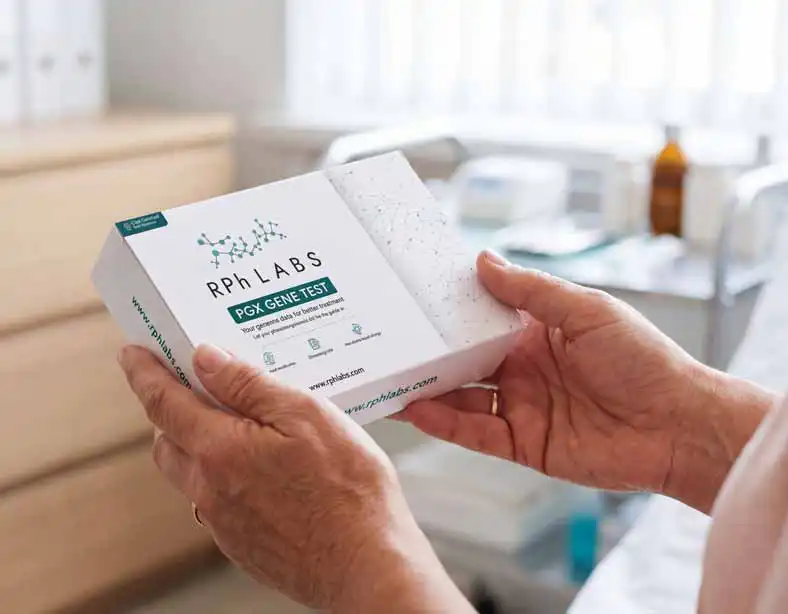
Medical necessity for pharmacogenomic testing
Payers pay for a test when it is reasonable and necessary for the patient’s care. For pharmacogenomic testing, that usually means the result is expected to change a real prescribing decision. Medical necessity for pharmacogenomic testing is typically supported by:
- A current or planned medication with pharmacogenomic guidance in its FDA labeling or a CPIC guideline.
- A diagnosis that matches that medication, recorded as an ICD-10 code.
- A clinical reason to test now, such as starting a high-risk drug, a failed trial, or side effects at a standard dose.
- Chart documentation that says how the result will be used.
Section 5 of the insurance billing form is built around this. Choosing a medication shows the diagnosis codes that support it, so the order carries a clear gene, drug and diagnosis link. Medical necessity for pharmacogenomic testing is decided by the payer, not the laboratory, but a complete, specific order is the best way to show it.
Documenting medical necessity in the chart
A short, specific note does more for medical necessity for pharmacogenomic testing than a long general one. A note that payers can follow usually covers four points:
- The medication decision at stake, for example starting clopidogrel after a coronary stent, or choosing a third antidepressant after two failed trials.
- The gene-drug link, with the guideline or label that supports it.
- The diagnosis, with its ICD-10 code.
- How the result will change management, such as a different drug or a different starting dose.
Attach the note in section 6 of the insurance billing form, or keep it on file in case the payer requests records. It is also the backbone of any appeal.
ICD-10 codes for pharmacogenomic testing
The medication panel in section 5 covers 122 medication entries across 14 genes, with 797 medication and diagnosis pairings drawn from 272 distinct ICD-10 codes. Each medication lists the codes that support it, and you tick the ones documented in the patient’s record. These are examples of ICD-10 codes for pharmacogenomic testing, as they appear on the form:
| Medication | Gene on the form | Example ICD-10 codes |
|---|---|---|
| Clopidogrel (Plavix) | CYP2C19 | I21.4 non-ST elevation myocardial infarction; I25.10 coronary artery disease; Z98.61 coronary angioplasty status |
| Warfarin (Coumadin) | CYP4F2 | I48.11 longstanding persistent atrial fibrillation; Z79.01 long-term use of anticoagulants |
| Sertraline (Zoloft) | CYP2D6, CYP2C19, CYP2B6 | F33.1 major depressive disorder, recurrent, moderate; F41.1 generalized anxiety disorder |
| Atomoxetine (Strattera) | CYP2D6 | F90.2 ADHD, combined type |
| Tramadol (Ultram) | CYP2D6 | G89.29 other chronic pain |
| Ondansetron (Zofran) | CYP2D6 | R11.2 nausea with vomiting, unspecified |
| Omeprazole (Prilosec) | CYP2C19 | K21.9 gastro-esophageal reflux disease without esophagitis |
| Simvastatin (Zocor) | SLCO1B1 | E78.00 pure hypercholesterolemia, unspecified; I25.10 coronary artery disease |
| Capecitabine (Xeloda) | DPYD | C18.9 malignant neoplasm of colon, unspecified; C50.919 malignant neoplasm of breast |
| Azathioprine (Azasan) | TPMT, NUDT15 | M06.89 other specified rheumatoid arthritis, multiple sites; Z94.0 kidney transplant status |
| Tamoxifen (Soltamox, Nolvadex) | CYP2D6 | C50.919 malignant neoplasm of breast; Z85.3 personal history of breast cancer |
Only select ICD-10 codes for pharmacogenomic testing that are documented for this patient. If the right code is not listed, add it in section 6, together with any other medications. You can search the full medication list to see which genes affect a drug.
Using the medication and ICD-10 panel
Section 5 is the heart of the insurance billing form. It is organized the way a pharmacogenomic report is: by gene, then by drug class, then by medication.
- Open a gene, such as CYP2D6 or CYP2C19, to see the drug classes it affects.
- Tick each medication the patient takes or you plan to prescribe. Use the search box to jump straight to a drug by name.
- Tick the ICD-10 codes under that medication that are documented in the patient’s chart.
- Check the summary. Your selections are written automatically into the “Selected medications & ICD-10 codes” box, which travels with the order to our billing team.
A medication can appear under more than one gene. Sertraline, for example, is listed under CYP2D6, CYP2C19 and CYP2B6, so choose it wherever it applies.
Genes in the billing panel
Section 5 groups its medications under the 14 genes that payers most often see on pharmacogenomic claims. The number beside each gene is how many medication entries it holds on the insurance billing form:
| Gene | Entries | Drug classes and examples |
|---|---|---|
| CYP2D6 | 42 | Antidepressants, antipsychotics, opioids, ADHD medications, antiemetics, antiarrhythmics and tamoxifen; for example amitriptyline, aripiprazole, tramadol and ondansetron |
| CYP2C19 | 26 | SSRIs, proton pump inhibitors, clopidogrel, anticonvulsants and antifungals; for example sertraline, omeprazole, clobazam and voriconazole |
| CYP2C9 | 13 | Anticonvulsants, NSAIDs and antidiabetic agents; for example phenytoin, celecoxib and flurbiprofen |
| SLCO1B1 | 7 | Statins, from atorvastatin to simvastatin |
| G6PD | 7 | Dapsone, methylene blue, nitrofurantoin, primaquine and uricolytic agents |
| MT-RNR1 | 6 | Aminoglycosides such as amikacin and gentamicin |
| BCHE | 5 | Neuromuscular blockers such as succinylcholine and mivacurium, and amifampridine |
| NAT2 | 4 | Isoniazid, sulfasalazine and sulfamethoxazole with trimethoprim |
| TPMT and NUDT15 | 3 each | Thiopurines: azathioprine, mercaptopurine and thioguanine |
| CYP2B6 | 2 | Efavirenz and sertraline |
| DPYD | 2 | Capecitabine and fluorouracil |
| CYP3A5 | 1 | Tacrolimus |
| CYP4F2 | 1 | Warfarin |
The laboratory reports the full panel whichever medications you choose; the selections tell the payer, and our pharmacists, which prescribing decisions the test supports.
The insurance billing form, section by section
The form has seven sections. Required fields are marked with an asterisk, and the form will not submit until they are complete.
1. Patient information
Name exactly as it appears on the insurance card, date of birth, sex, address, phone and optional email, plus ancestry. A name that does not match the card is the most common reason a claim comes back.
2. Provider information
Facility, ordering provider, NPI, email, phone, fax and practice address. The NPI is what the payer checks; the NPI field looks the provider up in the national registry and fills in the practice details.
3. Specimen information
Date and time of collection, specimen type (a buccal swab) and who collected it. Record the collection as it happened.
4. Insurance information
How the test should be billed, and for insurance: carrier, group and policy numbers, the insured’s name, date of birth and relationship to the patient, and a copy of the card.
5. Test selection: medications and ICD-10 codes
Open a gene, choose the medications that apply, and tick the supporting ICD-10 codes. A search box finds a drug quickly. At least one medication and one ICD-10 code are needed before we can bill a payer.
6. Other medications, notes and diagnosis codes
Other prescriptions, over-the-counter drugs and supplements, extra diagnosis codes and any context, with space to attach a medication list or supporting documentation.
7. Authorizations
The physician attests to ordering the test and to its medical necessity, and the patient consents to testing and to the release of results and billing information. Both sign by typing their full name and the date.
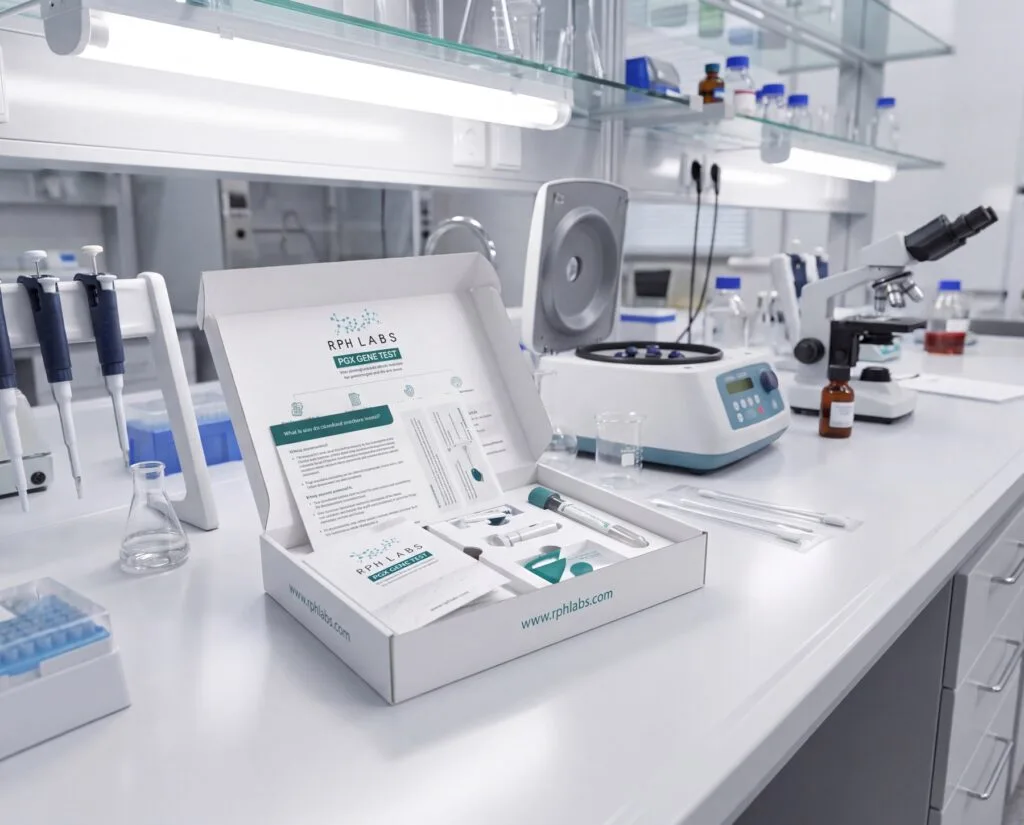
Insurance card and supporting documents
Upload the front and back of the insurance card: the back carries the claims address and payer phone numbers, and we cannot bill from the front alone. Section 6 also accepts a medication list and supporting documentation, such as recent clinic notes that explain why the test is being ordered.
Supporting notes are optional, but they make medical necessity for pharmacogenomic testing much easier to show if a payer asks for records or the claim is appealed.
Common situations for insurance-billed PGx testing
- Cardiology: clopidogrel after an acute coronary syndrome or stent, where CYP2C19 status affects antiplatelet choice; and warfarin dosing.
- Psychiatry: antidepressant and antipsychotic choices after failed trials or side effects, guided by CYP2D6 and CYP2C19.
- Pain management: opioids such as tramadol and codeine, which depend on CYP2D6 to work.
- Oncology: DPYD before fluoropyrimidines such as capecitabine, and TPMT and NUDT15 before thiopurines.
- Older adults on several medications, where one test informs many prescriptions.
In each case, the pharmacogenomic testing order form links the medication to its gene and diagnosis, which is exactly what a payer looks for.
Common insurance billing form errors that delay claims
- A patient name that does not match the insurance card.
- Only the front of the card uploaded.
- No medication or ICD-10 code in section 5. A payer will not pay without them.
- Codes that do not match the chosen medication, or codes not documented in the chart.
- A missing or incorrect NPI.
- Missing signatures. Both the physician and the patient authorizations are required.
Questions while completing the insurance billing form? Call (888) 383-2181, 9am to 5pm CT, Monday to Friday.
Prior authorization
Some commercial and Medicaid managed care plans require prior authorization for pharmacogenomic testing. When we verify benefits, we check whether the plan needs it and tell the practice before testing goes ahead. Having chart notes that show the medication decision at stake ready shortens the process.
After you submit the insurance billing form
- Our billing team verifies the patient’s benefits and confirms by email within one business day.
- The specimen is collected in the office, or an at-home kit ships to the patient with a prepaid return envelope.
- The sample is genotyped in our CLIA-certified, COLA-accredited Dallas laboratory.
- A PharmD pharmacist reviews every report before release, and results reach the ordering clinician 7 to 10 business days after the sample arrives.
- We submit the claim to the payer; the patient then receives an explanation of benefits.

What the patient may owe
When a plan covers the test, the patient may still owe a share under the plan’s deductible, copay or coinsurance. When Medicare covers a clinical laboratory test, there is usually no deductible or coinsurance for the test itself. If a plan does not cover the test, the ABN form (for Medicare) or our billing team (for other plans) explains the options before testing, so there are no surprises.
Self-pay is always available as an alternative, with HSA and FSA funds or four interest-free installments.
Explanations of benefits and appeals
After the claim is processed, the payer sends the patient an explanation of benefits (EOB), or for Medicare a Medicare Summary Notice. It shows what was billed, what the plan paid and what the patient may owe. It is a statement, not a bill.
If a claim is denied, the reason is on the EOB. Many denials are fixed by supplying documentation, and the ordering clinician can support an appeal with a letter explaining how the result changes treatment. Our billing team will help the patient understand the next step.
Printable insurance billing form (PDF)
Prefer paper? Download the printable pharmacogenomic testing order form for insurance billing (PDF), complete all seven sections, attach a copy of the insurance card, and send it with the specimen. It asks for the same information as the online insurance billing form.
All of our forms are on the forms page. Prescribers new to the lab can read more on the for providers page.
Privacy and security
This form carries protected health information and insurance details. It travels over an encrypted connection, is stored securely, and is used only to perform the test, bill the chosen payer and report results to the ordering clinician, in line with HIPAA. Read our HIPAA policy and privacy policy.

Insurance billing form FAQ
Who should use the insurance billing form?
Use it when a pharmacogenomic test will be billed to a health plan or to the practice. For self-pay orders, the shorter PGx requisition form is enough.
Does insurance cover pharmacogenomic testing?
Often, when the test is medically necessary for a specific prescribing decision. Coverage depends on the plan, the medications and the documentation, so our billing team verifies benefits before testing.
Which ICD-10 codes should I use for pharmacogenomic testing?
Use the codes documented for the patient that support the medication being prescribed. Section 5 lists the supporting codes for each medication, and section 6 accepts any others.
What shows medical necessity for pharmacogenomic testing?
A current or planned medication with pharmacogenomic guidance, a matching diagnosis code, a clinical reason to test now, and chart notes that say how the result will be used.
Why do you need both sides of the insurance card?
The back of the card carries the claims address and payer contact details. We cannot bill from the front alone.
What is client bill?
Client bill means we invoice the ordering practice instead of the patient’s plan or the patient.
How will I know the order was received?
You see a confirmation on screen, and our billing team verifies benefits and confirms by email within one business day.
Where do ICD-10 codes for pharmacogenomic testing go if they are not listed?
Add them in section 6, under ICD-10 codes and notes, or attach them as a document. Only use codes documented in the patient’s record.
Can I use the insurance billing form for client bill or self-pay?
Yes. Section 4 offers insurance, client bill and self-pay. The insurance fields only open when insurance is chosen.
Do Medicare patients need anything else?
If Medicare coverage is uncertain, the patient signs the ABN form before the specimen is collected.