
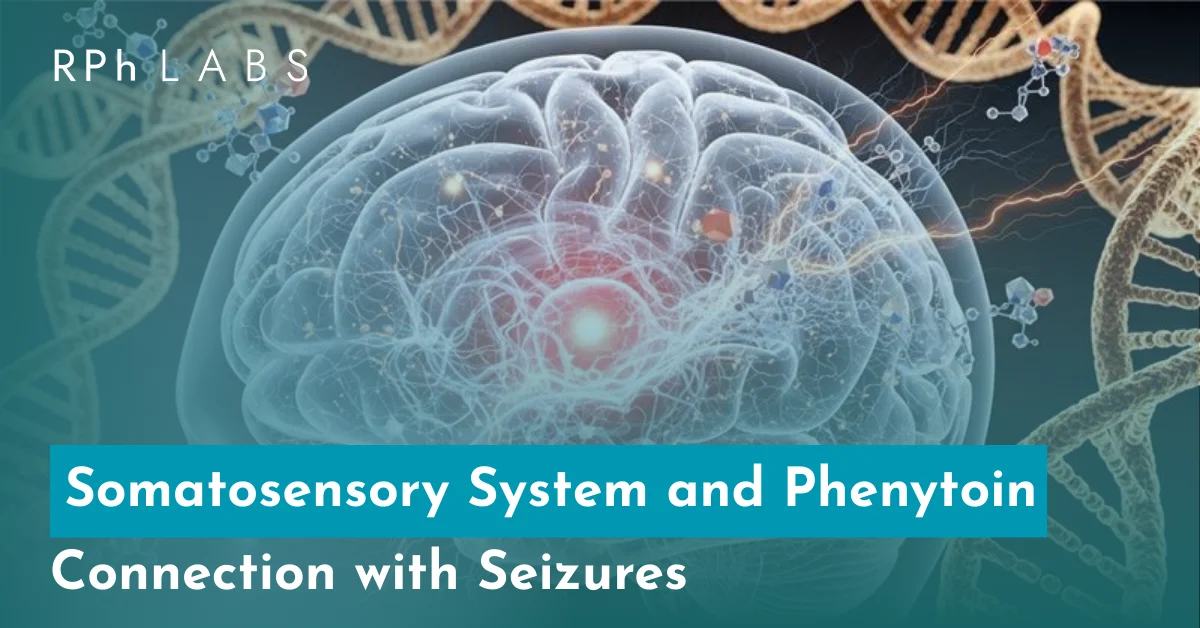
Phenytoin has been treating seizures for decades, and it remains one of the harder medicines to dose well. Small changes in the amount taken can produce large changes in blood level, and two genes shape how safely it works for you. Here is what that means day to day, and what to raise with your prescriber.
On this page
Before discussing Somatosensory System and Phenytoin, it’s critical to understand these terms. While you may already be aware, here we have explained these terms separately and in detail for those who don’t.
Key Takeaways:
- What is Phenytoin?
- Epilepsy and its causes
- Seizures and symptoms
- Somatosensory System and Phenytoin
Phenytoin
Phenytoin (a prescription medicine), is an anticonvulsant drug used to treat seizures and often associated with epilepsy. Anticonvulsant drugs can also be used to treat bipolar disorder, migraines, and nerve pain. Seizures occur when the normal communication between brain cells is disrupted. This can happen due to various factors, such as a high fever, low blood sugar, high blood sugar levels, sudden withdrawal from alcohol or drugs, or a head injury.
Phenytoin prevents, controls, and treats seizures, during or after the surgery to the brain. This drug comes under different brand names, including but not limited to Dilantin, and Phenytek. It is important to note that this drug can have serious interactions with alcohol.
Epilepsy and Its Causes:
Two or more unprovoked (not caused by anything) seizures that occur more than 24 hours apart are considered epilepsy. It’s a neurological condition that can have many causes, including genetic factors, brain damage, infections, and metabolic issues. It is important to note that in about half of cases, the cause of epilepsy is unknown, and epilepsy is one of the most common chronic neurological conditions in the United States. The above-given factors have been described as follows;
Genetic factors
- A genetic tendency passed down from a parent
- A new genetic change in the person
- Genetic conditions like tuberous sclerosis or neurofibromatosis
Brain damage
- Brain damage from a stroke, head injury, or lack of oxygen at birth
- Brain damage from infections like meningitis, encephalitis, or neurocysticercosis
- Brain damage from brain tumors
Metabolic issues
- Metabolic problems like GLUT-1 deficiency syndrome, which affects glucose transport to the brain
- Vitamin and mineral deficiencies
Other causes
- Developmental brain abnormalities
- Drug abuse or alcohol misuse
- Hormonal changes, like those that occur during menstruation
- Sleep issues, like sleep apnea
- Physical and emotional stress
Triggers
- Flashing lights or patterns
- Lack of sleep
- Dehydration
- Missing doses of anti-seizure medication
What are Seizures?
A seizure is essentially a sudden, uncontrolled burst of electrical activity in the brain. This disruption in normal brainwave patterns can lead to a variety of symptoms, including:
1. Uncontrolled Muscle Movements
- Types: These can range from subtle twitching to violent jerking of limbs.
- Tonic-clonic seizures: Characterized by a stiffening phase (tonic) followed by a phase of rhythmic jerking (clonic).
- Myoclonic seizures: Brief, shock-like jerks of muscles.
- Focal seizures: May involve localized muscle twitching or jerking in a specific part of the body.
2. Changes in Sensation
- Sensory symptoms can precede, accompany, or follow a seizure.
- Tingling or numbness: Often described as a pins-and-needles sensation.
- Burning or prickling: A hot or cold sensation.
- Strange tastes or smells: Hallucinatory sensations.
- Visual disturbances: Flashing lights, blurred vision, or tunnel vision.
3. Loss of Consciousness
- Can range from brief lapses of awareness to prolonged unconsciousness.
- Absence seizures: Brief periods of “spacing out” or staring into space.
- Tonic-clonic seizures: Often involve a loss of consciousness during the seizure.
- Post-ictal state: A period of confusion or drowsiness that can follow a seizure.
4. Psychological Symptoms
- Fear and anxiety: Can occur before, during, or after a seizure.
- Confusion and disorientation: May occur after a seizure, especially if the person has experienced a loss of consciousness.
- Déjà vu: A feeling of having already experienced a situation.
- Jamais vu: A feeling of unfamiliarity with a previously familiar situation.
Somatosensory System Role
The Somatosensory System is a network of neurons that allows people to perceive touch, pressure, temperature, pain, and movement. It’s also known as the somatic sense or tactile perception. It plays a crucial role in seizure activity in several ways:
Sensory Triggers: In some cases, sensory stimuli can trigger seizures. For example, flashing lights or loud noises can induce seizures in individuals with photosensitive epilepsy. Somatosensory Cortex Involvement: The somatosensory cortex, located in the parietal lobe of the brain, plays a critical role in processing sensory information. Seizures originating in this area can manifest as unusual sensations, such as tingling, numbness, or a burning sensation.
Aura: Some individuals with epilepsy experience an aura before a seizure. Auras are often sensory experiences, such as unusual smells, tastes, or feelings of déjà vu. These sensory phenomena provide valuable insights into the location of the seizure focus in the brain.
Somatosensory System and Phenytoin
Phenytoin is an anti-seizure medication that may also be used to treat irregular heartbeats in some cases. It works by stabilizing the electrical activity of neurons. It can affect the somatosensory system in several ways:
- Direct effects on sensory nerves: Phenytoin can interact with the nerves responsible for transmitting sensory information, potentially leading to altered sensations like numbness, tingling, or a loss of feeling.
- Effects on brain regions involved in sensory processing: Phenytoin can influence the activity of brain regions involved in processing sensory information, such as the somatosensory cortex. This can result in changes in sensory perception and interpretation.
- Interactions with neurotransmitters: Phenytoin can affect the levels or activity of neurotransmitters involved in sensory processing, which can also impact sensory perception
Phenytoin Side Effects: Phenytoin can cause a range of side effects, including:
Neurological: Dizziness, drowsiness, headache, tremor, nystagmus (rapid eye movements), ataxia (loss of coordination), slurred speech, confusion, and in severe cases, seizures or coma.
Other: Swollen gums, fatigue, nausea, vomiting, and increased hair growth.
Long-term use of high doses of phenytoin can lead to decreased bone density due to interference with vitamin D metabolism, increasing the risk of fractures.
- Phenytoin Therapeutic Effects: By stabilizing neuronal activity, phenytoin can help reduce the frequency and severity of seizures, including those with somatosensory symptoms.
Important:
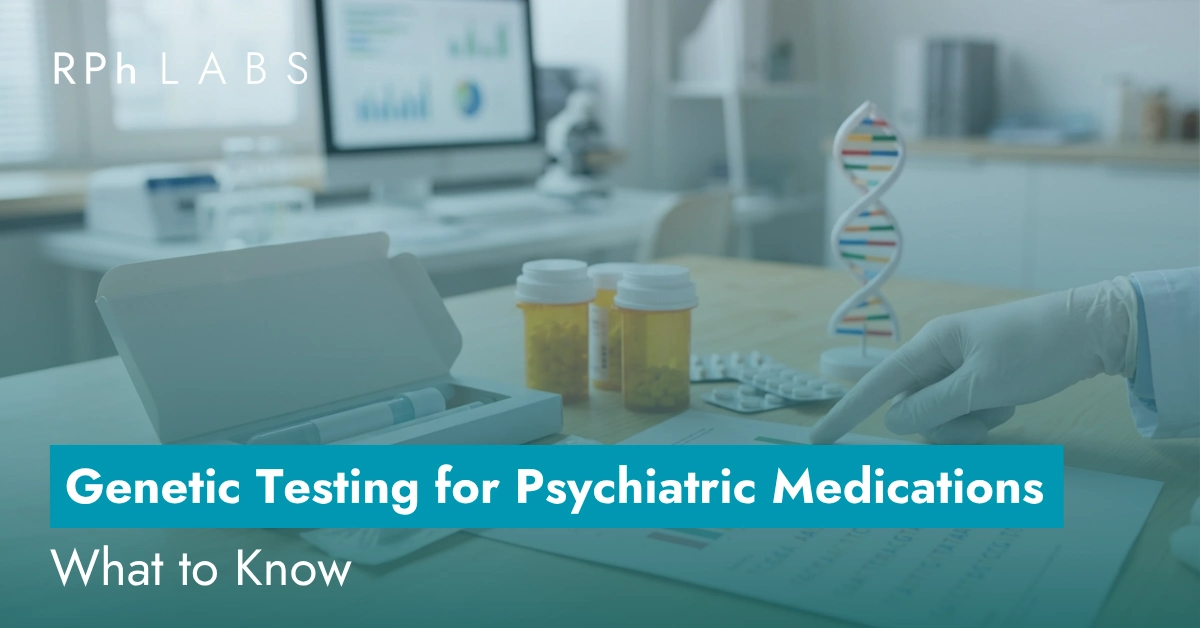
Phenytoin is metabolized mainly by CYP2C9, with a smaller contribution from CYP2C19, both members of the P450 family. Since Pharmacogenomics testing shows what type of metabolizer you are to certain drugs, it’s possible to know how your body shall respond to Phenytoin.
What is Pharmacogenomic Testing and How Does it Work?
This is a noninvasive test that needs only a cheek (buccal) swab, which you collect at home in a couple of minutes. It shows how your body may respond to 240+ medications, reducing trial and error while allowing your doctor to tailor medicines according to your genetic makeup.
Why phenytoin blood levels behave unpredictably
Most medicines clear at a steady percentage per hour, so doubling a dose roughly doubles the level. Phenytoin does not. The enzymes that break it down become saturated at concentrations close to the useful range.
Once those enzymes are working flat out, a small dose increase can send the blood level up steeply. That is why prescribers change the amount in small increments and recheck a level afterwards, and why nobody should adjust their own tablets between appointments.
There is a second complication. Phenytoin travels through the blood attached to albumin, and only the unbound fraction reaches the brain. In low albumin, kidney failure or pregnancy, a total level can look normal while the free portion is too high. In those situations a free level is measured instead.
Interactions push the same lever. Adding or removing a drug that competes for the same enzymes, or that displaces the drug from albumin, can move a level without any change in what you swallow. Valproate, warfarin, fluconazole, isoniazid, voriconazole, carbamazepine and rifampin all show up in this conversation.
CYP2C9 poor metabolizer results and starting doses
CYP2C9 does most of the metabolic work here, with CYP2C19 playing a smaller part. CYP2C9 carries common reduced-function variants, so clearance varies widely between people who look identical on paper.
A CYP2C9 poor metabolizer has two low-function copies and clears phenytoin slowly. On a standard starting amount, levels climb higher and side effects such as unsteadiness, slurred speech and involuntary eye movement appear sooner.
CPIC publishes a guideline for this gene pair and this drug. In broad terms it suggests a reduced starting maintenance dose for intermediate metabolizers and a larger reduction for a CYP2C9 poor metabolizer, with level monitoring either way. The full recommendation is in the CPIC guidelines, and your prescriber applies it to your situation.
CYP2C9 also affects warfarin and several NSAIDs, so the result rarely applies to one prescription only. MedlinePlus has a plain-language summary of CYP2C9 if you want the background.
CYP2C9 sits on the RPh Labs 20-gene panel, and because DNA does not change, a CYP2C9 poor metabolizer result is tested once and stays valid for life.
Stevens Johnson syndrome and the HLA-B*15:02 gene
The rare but serious risk with this class of medicine is a severe skin reaction. Stevens Johnson syndrome and its more extensive form, toxic epidermal necrolysis, cause blistering and peeling of the skin and the lining of the mouth, eyes and genitals, and they are medical emergencies.
A specific immune gene variant, HLA-B*15:02, raises that risk substantially. The link is best known with carbamazepine, and it applies to phenytoin and to fosphenytoin as well. The variant is far more common in people of Southeast Asian, Han Chinese, Thai, Malaysian and Indian ancestry, which is why testing is recommended in those groups before starting.
Guidance is direct: if someone carries HLA-B*15:02 and has not taken the drug before, an alternative anticonvulsant is preferred. CPIC covers this alongside the CYP2C9 recommendation, and the FDA lists the association in its table of pharmacogenetic associations.
Here is the honest limitation. HLA-B*15:02 is not on the RPh Labs 20-gene panel, so our report cannot tell you your Stevens Johnson syndrome risk. It is ordered separately, usually through a hospital or reference laboratory, and it is worth asking your prescriber about before a first prescription if your ancestry puts you in a higher-risk group.
Timing matters too. Most severe skin reactions appear in the first two months. A spreading rash, mouth sores with fever, painful or burning skin, or swelling of the face needs emergency assessment; call 911 or go to an emergency department rather than waiting for an appointment.
Dilantin side effects worth reporting quickly
Dilantin is the best known brand name for phenytoin, and many of the dilantin side effects people notice are direct signs that a blood level has drifted too high rather than allergies or bad luck.
- Involuntary jerking eye movements, double vision or blurred vision
- Unsteady walking, clumsiness or frequent stumbling
- Slurred speech
- New or worse drowsiness and confusion
- Nausea and vomiting
- Tremor
Report those to your prescriber rather than living with them. Dose-related dilantin side effects usually settle once a level is measured and the amount is adjusted by the person prescribing it. Do not reduce or skip tablets yourself, because a sudden drop in an anticonvulsant can trigger seizures, including prolonged ones.
A different group of dilantin side effects needs urgent care: fever with a rash and swollen glands, yellowing of the eyes or skin, dark urine, easy bruising or bleeding, and any blistering rash. Anticonvulsants as a class also carry a warning about new or worsening depression and suicidal thoughts, so tell your prescriber about mood changes. In the US the 988 Suicide and Crisis Lifeline is available by call or text, and 911 for an emergency.
For a suspected overdose of any seizure medicine, call 911, and in the US Poison Control can be reached at 1-800-222-1222 while help is on the way.
Gingival hyperplasia and looking after your gums
Gum overgrowth, called gingival hyperplasia, is one of the most recognisable long-term effects of this medicine. The gum tissue thickens and grows up over the teeth, most often at the front, and it can start within the first months of treatment.
Plaque makes it worse, which is the useful part of the story. Gingival hyperplasia responds to genuinely thorough brushing and flossing and to regular professional cleaning, so tell your dentist which medicines you take and ask for a shorter recall interval.
Let your prescriber know if gingival hyperplasia is progressing, affecting your bite or making cleaning painful. Options include a review of the medicine itself, but that is a neurology decision weighed against seizure control, never a reason to stop on your own.
Severe gingival hyperplasia is sometimes treated surgically by a periodontist, and it can return if the medicine continues and plaque control slips. Children and young adults seem to be affected more often, so dental review matters especially in that group.
Long-term monitoring beyond seizure control
Long courses of phenytoin need a wider check than a seizure diary. The original article mentions reduced bone density through effects on vitamin D, and that is worth acting on rather than noting.
- Vitamin D and calcium status, with bone density assessment for longer treatment
- Folate, since levels can fall and this matters a great deal before pregnancy
- Liver enzymes and blood counts
- Signs of peripheral neuropathy such as numbness or tingling in the feet
- Body hair growth and coarsening of facial features, which some people find distressing
- Drug interactions at every new prescription, including hormonal contraception, which can become less reliable
Because the drug induces liver enzymes, it lowers the levels of many other medicines, including some antifungals, immunosuppressants and direct oral anticoagulants. Tell every prescriber and pharmacist what you take, and see our medication list for the drugs our panel reports on by gene.
If you have been on the same medicine for years without problems, none of this means you should change anything. It means the annual review is worth using properly.
Pregnancy, children and older adults
Phenytoin is one of the older anticonvulsants, and its use in pregnancy involves a real balance. Uncontrolled seizures carry risk to both parent and pregnancy, and stopping medication suddenly is dangerous, so any change is planned in advance with a neurologist and an obstetric team.
If pregnancy is possible, raise it early rather than at the point of a positive test. Folate status, the choice of anticonvulsant, dose and monitoring are all easier to organise beforehand, and free levels are often used during pregnancy because protein binding changes.
In children, growth, dental review and school performance are followed alongside seizure control, since sedation and gum changes can affect both. Dosing in children is weight based and reviewed frequently as they grow.
In older adults, lower albumin, reduced kidney function and a longer medicine list all tend to raise the free fraction, so levels can rise without any dose change. Falls, unsteadiness and confusion are the signs that most often prompt a level check in this age group.
Bringing gene results into a phenytoin review
Genotype answers a different question from a blood level. It predicts how much phenytoin you are likely to need before the first tablet; a level tells you where you actually landed. For a medicine with this kind of dose-level curve, both help.
A CYP2C9 poor metabolizer result is most valuable at the start, when the dose is being found, and again if levels or side effects have never quite made sense. It also carries over to warfarin and NSAID decisions later.
The RPh Labs at-home cheek swab kit reports CYP2C9 with 19 other genes against more than 240 medications. The kit ships within one business day, shipping is free both ways, results arrive 7 to 10 business days after the sample reaches our Dallas lab, and a PharmD pharmacist reviews every report with a free consultation included.
Bring the report to your neurologist rather than acting on it, and ask separately about HLA-B*15:02 if you have not taken phenytoin before. For how the collection and reporting work, see how it works, and cheek swab versus saliva explains why we use a swab.
Conclusion
Seizures and epilepsy have complex challenges, but advancements in understanding the somatosensory system and medications like phenytoin have improved treatment outcomes. Phenytoin’s ability to stabilize neuronal activity makes it a cornerstone in seizure management, though careful monitoring is essential to mitigate side effects – personalized medicine approaches, such as pharmacogenomics testing, are helping prescribers narrow the choices sooner and cut down on avoidable trial and error.
Never stop or change an anti-seizure medicine on your own, because stopping abruptly can trigger seizures; any change, including stopping, is tapered on a plan set with your prescriber.
References:
Disclaimer: This blog is only for informational purposes. Please always consult a doctor before taking any medical action.
Phenytoin and gene testing FAQ
Does a gene test replace blood level monitoring?
No. A CYP2C9 result predicts how quickly you clear the drug, which helps set a starting amount and flags who needs watching early. Measured levels still guide every adjustment, because interactions, albumin, kidney function and illness all move concentrations after treatment begins.
Can I be tested for Stevens Johnson syndrome risk with your panel?
Not with ours. The variant most strongly linked to that reaction, HLA-B*15:02, is not among our 20 genes, so ask your prescriber to order it separately if your ancestry puts you in a higher-risk group and you have not taken the medicine before. Our panel covers CYP2C9 and 19 other genes.
Is gingival hyperplasia permanent?
Not necessarily. Careful plaque control and professional cleaning often reduce it, and it can improve if the medicine is changed, though that decision belongs to your neurologist. Severe overgrowth is sometimes treated surgically, and it may return if the medicine continues without good oral hygiene.
Which dilantin side effects mean my level is too high?
Jerking eye movements, double vision, unsteady walking, slurred speech and new drowsiness are the classic dose-related signs. Report them promptly so a level can be checked. Do not reduce your own tablets, because an abrupt drop in an anticonvulsant can bring seizures back.
Does being a CYP2C9 poor metabolizer mean I cannot take this medicine?
Usually not. It means the same effect arrives at a lower amount, so the starting dose is reduced and monitoring is closer. Plenty of people with reduced CYP2C9 function are treated successfully. The decision, and the number, come from your prescriber.
Is the test covered by insurance?
We accept insurance including Medicare, Texas Medicaid and Blue Cross Blue Shield of Texas, and billing forms are online. Self-pay is $299, HSA and FSA eligible, and can be split into four interest-free installments. Coverage varies by plan, so check before ordering.

Leave a Reply