

What is Kidney Dysplasia?
Kidney dysplasia is also called congenital renal dysplasia or dysplasia. It means one or both kidneys didn’t form correctly before birth. Instead of millions of healthy filtering units (nephrons), part of the kidney becomes cysts, scar tissue or disorganized cells that don’t function. This condition belongs to a larger group called CAKUT (congenital Anomalies of the Kidney and Urinary Tract). Research published in PubMed shows that CAKUT represents the most common cause of chronic kidney disease in children worldwide, accounting for 40% of children on kidney replacement therapy according to the UK Renal Registry. During weeks 5-12 of pregnancy, the kidneys form from two early tissues that must work together. If this process is disrupted, one or both kidneys may not develop properly.Types of Kidney Dysplasia and How Doctors Categorize
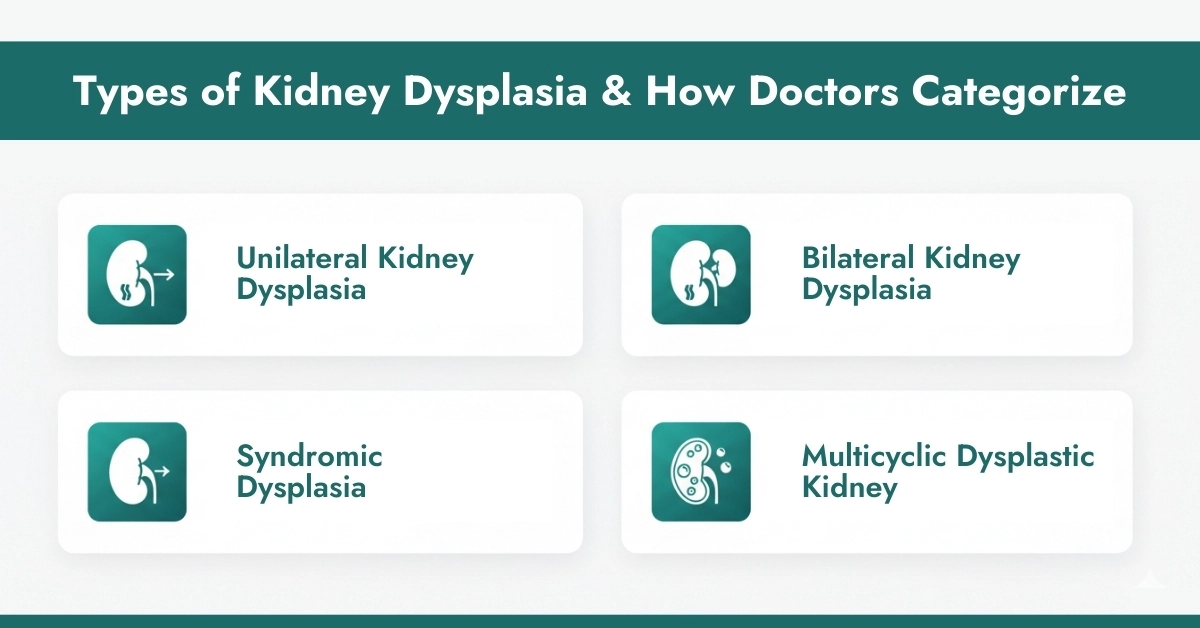
Doctors categorize this congenital disease of the kidney into four main types:- Unilateral Kidney Dysplasia: This is the common type. In this condition, only one kidney is affected. The outlook is excellent because the healthy kidney usually grows larger and does the work for both.
- Bilateral Kidney Dysplasia: It means both the kidneys didn’t develop normally. This condition is more serious, and babies may need early treatments like dialysis or a kidney transplant.
- Syndromic Dysplasia: Some children have syndromic dysplasia, where kidney dysplasia occurs along with other birth differences or health conditions. The outcome varies depending on the specific syndrome
- Multicyclic Dysplastic Kidney (MCDK): In this condition, the kidney is mostly cysts with no working tissues. If only one kidney is affected, the long-term outlook is usually very good
Causation of Kidney Dysplasia Backed by Science
Parents ask this question more than any other. The honest truth: we don’t always know. But science gives us powerful clues.Genetic Factors
The National Institutes of Health has identified 88+ genes linked to kidney dysplasia and CAKUT, including:- PAX2: kidney + eye development
- HNF1B: related to kidney cysts + diabetes
- EYA1, SALL1: essential for fetal organ formation
Environmental Factors (During Pregnancy)
Research from Medical News Today and NIH studies point to:- Maternal diabetes
- Certain blood-pressure medications
- Low amniotic fluid
- Viral infections like CMV
- Maternal obesity (35% increased risk)
Most Common Kidney Dysplasia Symptoms
Before Birth (Prenatal Signs)
Most cases appear on routine ultrasounds:- Kidneys enlarged or irregular
- Low amniotic fluid (if both kidneys affected)
- Bladder appears smaller or doesn’t fill normally
- “Bright kidneys” on ultrasound
Newborns and Babies
Doctors may notice:- A visible or palpable abdominal mass
- Frequent UTIs
- Feeding struggles
- High blood pressure
- Rarely, blood in the urine
Older Children & Adults
Kidney dysplasia sometimes remains hidden until later:- Protein in urine
- High blood pressure
- Pain in the side of the functioning kidney
When Kidney Function Declines
Once dysplastic kidneys begin losing function or have minimal function, symptoms may include:- Fatigue and general tiredness
- Loss of appetite
- Increased or decreased urination
- Nausea
- Pale skin
- Swelling of the face and legs (edema)
- Headaches
- High blood pressure
- Blood in the urine (in some cases)
- Recurrent urinary tract infections
How Kidney Dysplasia Is Diagnosed
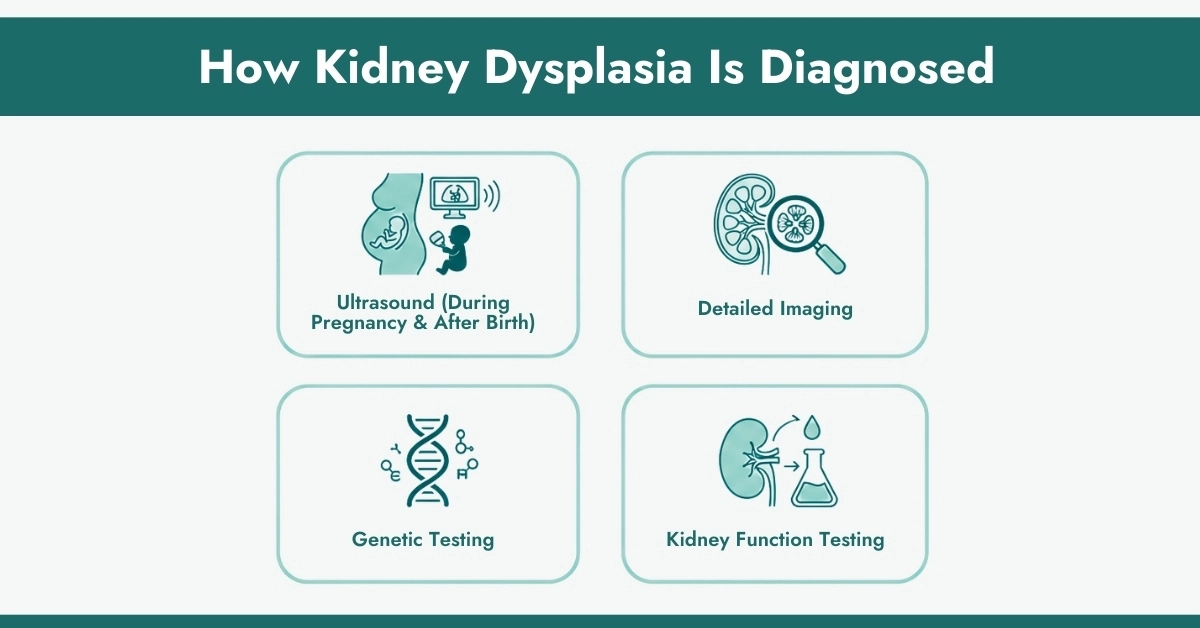
1. Ultrasound (During Pregnancy & After Birth)
Painless, quick, and the #1 diagnostic tool.2. Detailed Imaging
When needed:- VCUG to look for reflux
- Renal scan (MAG3 or DMSA) checks kidney function
- MRI detailed imaging without radiation
3. Genetic Testing
A simple saliva or blood test to check CAKUT-related genes.4. Kidney Function Testing
Blood and urine tests to monitor:- Creatinine
- GFR
- Protein in urine
Note: Managing kidney dysplasia can take an emotional toll on patients and caregivers. PGX Testing Optimize Mental Health Treatments by helping clinicians select safer, more effective medications, reducing side effects, and supporting overall emotional well-being as part of comprehensive kidney care
Treatment and Management Care for Kidney Dysplasia
The treatment plan is in process when the doctor confirms with the reports how many kidneys are affected and how well they work.Monitoring & Routine Care:
If a baby has only one healthy kidney:- Yearly blood pressure checks
- Urine protein test
- Ultrasound every 12-24 months
- Prompt UTI treatment
- No special diet or activity restrictions
Managing Problems:
If the kidneys do not perform their function accurately and too many complications arise:- Take medicine to control the high blood pressure
- If the quantity of red blood cells is low, take some supplements
- Take vitamin D and calcium supplements for bone health issues
- When you see the protein in urine, take medication to protect the kidneys
Surgery and Advanced Care:
- Sometimes, both kidneys don’t work properly doctors recommend a kidney transplant. The children with severe CAKUT complications may require a transplant.
- If the kidney cannot filter the blood properly, then dialysis is required.
- Kidney removal (nephrectomy) is recommended if a dysplastic kidney causes pain, infection, or high blood pressure
Conclusion
A diagnosis of kidney dysplasia can feel overwhelming, but it does not define your child’s future. Most kids grow up healthy, active, and limitless. Stay consistent with doctor-recommended monitoring. Explore genetic testing when appropriate. And consider tools like at-home PGx testing from RPH Labs to protect your child from medication risks as they grow. You’re not alone, and now you’re equipped with the knowledge to navigate this journey with confidence.Frequently Asked Questions
Can kidney dysplasia be cured?
No, kidney dysplasia cannot be cured because the malformed kidney cannot be repaired. However, if only one kidney is affected, most children can live normal, healthy lives with regular monitoring.
Will my child need dialysis?
Dialysis is only required if both kidneys are severely affected. Children with one healthy kidney usually do not need dialysis and can maintain normal kidney function.
Is kidney dysplasia the same as polycystic kidney disease?
No. Polycystic kidney disease is an inherited condition that progressively affects both kidneys, while kidney dysplasia is a developmental condition that may affect one or both kidneys.
Can adults develop kidney dysplasia later in life?
No. Kidney dysplasia is present at birth. Some adults may only discover the condition later if it was not diagnosed during childhood.
Can my child play sports if they have kidney dysplasia?
Yes. Most children with kidney dysplasia can play sports. For contact sports, standard protective gear is recommended to help protect kidney health.
Can adults be diagnosed with kidney dysplasia?
Yes. In some cases, a dysplastic kidney is discovered in adulthood if it was not identified earlier through imaging or symptoms.



Leave a Reply