
Choosing between a psychiatrist or psychologist is easier once you know what each one is allowed to do, what a first appointment looks like and what it usually costs. This guide gives you a practical way to decide, plus the other licensed professionals most people never hear about.
On this page
Often ignored, but mental health care is an important aspect of well-being. When working on mental health, it’s important to know where to head for the appropriate treatment, a psychiatrist or psychologist. These are two common roles in mental healthcare, and here we have explored the differences between them, their areas of expertise, and, based on your individual needs, how to decide who to visit.
Therapist vs Psychiatrist vs Psychologist
A therapist studies a master’s degree in counselling, social work, marriage and family therapy or any other mental health speciality and a state or regional licensure. They examine the behavior, feelings, and relationships among people to help them overcome stress, anxiety, depression, trauma, and relationship problems. Although a therapist is not a medical physician and does not prescribe drugs, they usually take into account family history and heredity to understand the moods of the clients and give them special instructions on how to stay mentally healthy.
A psychiatrist is a medical doctor (M.D. or D.O.) who specializes in diagnosing, treating, and preventing mental health conditions, such as depression, bipolar disorder, ADHD, autism, schizophrenia, and more. Psychiatrists can prescribe medications and, in some cases, administer medical treatments such as electroconvulsive therapy (ECT).
Psychologists are experts in human behavior and emotional processing, typically holds a doctoral degree in psychology (Ph.D. or Psy.D.) and specializes in assessing, diagnosing, and treating mental health conditions, such as anxiety disorders, mood, or substance abuse disorders, primarily through psychotherapy (talk therapy). They do not prescribe medications in most regions; however, in some U.S. states, privileges to prescribe medications may be obtained with additional training.
Expertise: Difference between Therapists, Psychiatrists, and Psychologists
Areas of Expertise of a Therapist
- Emotional Support: Therapists help you navigate life’s emotional ups and downs.
- Mental Health Challenges: They assist with anxiety, depression, stress, trauma, and relationship struggles.
- Life Guidance: They guide you through major life changes and support personal growth.
- Holistic Understanding: Many therapists consider family history or inherited traits that may influence how you feel and cope.
Psychiatrist: Area of Expertise
Psychiatrists are medical professionals who focus on the medical and biological aspects of mental health disorders. Their expertise lies in the following areas:
- Diagnosis and Treatment: Psychiatrists diagnose mental health conditions through a clinical interview and a detailed history, sometimes with lab tests to rule out other medical causes. Brain scans are not part of routine psychiatric diagnosis.
- Prescribing Medication: As medical doctors, psychiatrists are licensed to prescribe medications to manage conditions such as depression, anxiety, schizophrenia, and bipolar disorder.
- Complex Mental Health Conditions: Psychiatrists are often involved in the treatment of severe and chronic mental health disorders with biological components, including those with genetic, hormonal, or neurological roots.
- Medical Interventions: Psychiatrists may use other medical treatments such as electroconvulsive therapy (ECT) or transcranial magnetic stimulation (TMS) for severe cases.
Psychiatrists often specialize in subspecialties such as:
- Child and adolescent psychiatry
- Geriatric psychiatry
- Forensic psychiatry
- Addiction psychiatry
- Neuropsychiatry
Psychologist: Area of Expertise
Psychologists are highly trained professionals who specialize in understanding and treating emotional and behavioral issues. Their areas of expertise include:
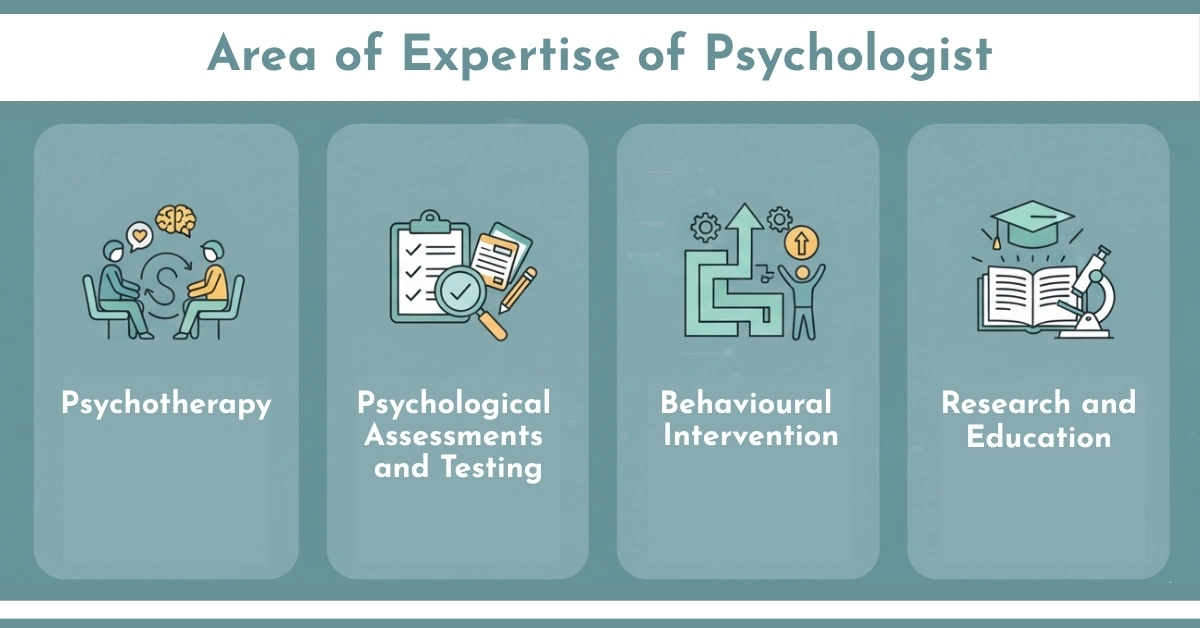
- Psychotherapy: Psychologists are experts in various types of psychotherapy, including cognitive-behavioural therapy (CBT), psychodynamic therapy, and dialectical behavior therapy (DBT). They help individuals process emotions, change behaviors, and manage mental health conditions.
- Psychological Assessments and Testing: Psychologists use tests to assess mental health conditions and cognitive abilities. These include IQ tests, personality assessments, and diagnostic tests for disorders like depression, anxiety, and PTSD.
- Behavioural Intervention: Psychologists develop strategies to help clients modify unhealthy behaviours and enhance their coping skills through therapeutic techniques.
- Research and Education: Many psychologists also engage in research, helping to advance the scientific understanding of human behavior and mental health.
Though psychologists generally cannot prescribe medications, some psychologists in specific regions, such as certain U.S. states, can gain the authority to prescribe psychiatric medications after additional training and certification.
Initial Treatments: Psychiatrist vs. Psychologist vs Therapist
Psychiatrist’s Initial Treatment Approach
- Medical Evaluation: The first step is a comprehensive evaluation, which may include a physical exam and lab tests to check for other medical causes of the symptoms. Imaging is ordered only when something in the history or exam points to a neurological problem.
- Medication Prescription: Psychiatrists often begin by prescribing medication to help manage symptoms. Medications like antidepressants (such as SSRIs), mood stabilizers (such as Lamotrigine, which is often prescribed for bipolar), antipsychotics (such as Clozapine and olanzapine), or anti-anxiety medications (SSRIs such as Celexa, Lexapro, or Zoloft) are commonly used.
- Ongoing Monitoring: After prescribing medication, psychiatrists continuously monitor a patient’s response to ensure the treatment is effective, adjusting dosages as needed.
- Psychotherapy (optional): In some cases, psychiatrists may offer psychotherapy, but they typically refer patients to psychologists or therapists for long-term therapy.
Did you know?
Based on genetic makeup, most mental health medications can affect individuals differently. PGx testing (pharmacogenomic testing) gives you insights into your genetic makeup, allowing you and your doctor to tailor your medication. Hence, minimising trial and error while increasing efficacy. Book your non-invasive at-home PGx test today from RPh LABS, and know your reaction to 240+ medications.
Psychologist’s Initial Treatment Approach
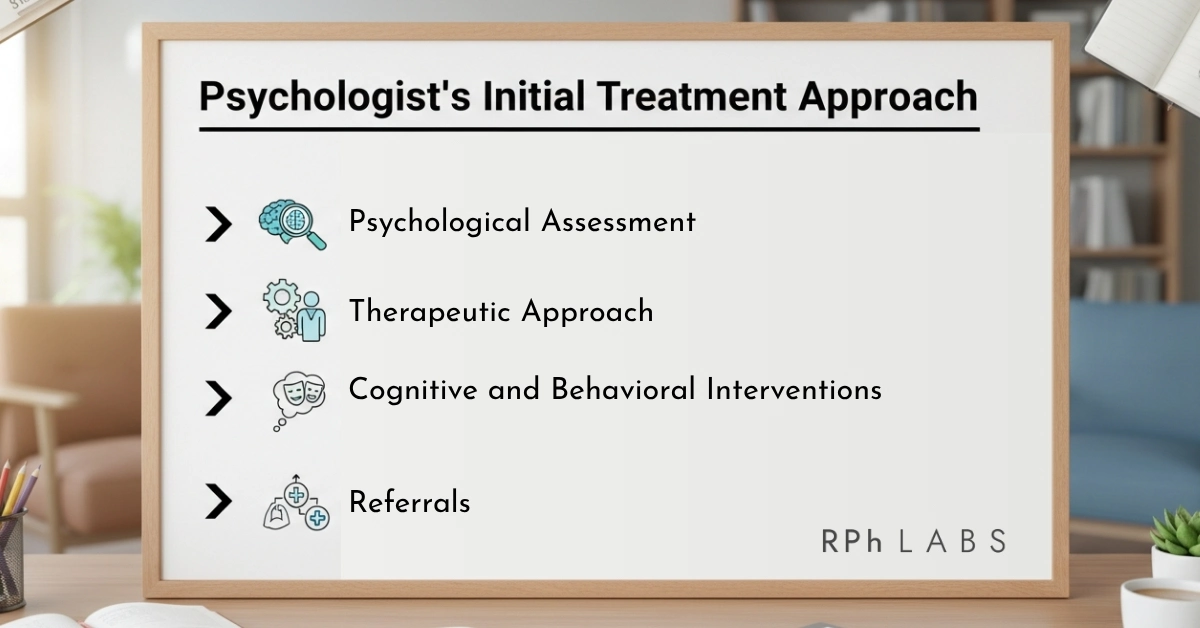
- Psychological Assessment: The psychologist will first conduct a thorough psychological evaluation, which may involve interviews and standardized assessments to understand the patient’s mental health.
- Therapeutic Approach: Based on the assessment, the psychologist will propose a treatment plan, which is typically centered around psychotherapy techniques such as CBT (Cognitive Behavioral Therapy), psychoanalysis, or family therapy.
- Cognitive and Behavioral Interventions: Treatment may involve developing coping strategies, addressing thought patterns, and managing behaviors to help improve emotional regulation and mental well-being.
- Referrals: In cases where medications may be necessary, psychologists may refer patients to a psychiatrist for prescription and management.
Initial Treatment Approach of a Therapist
- Assessment & Listening: The therapist begins by understanding your current challenges, emotional state, and personal history through open conversation.
- Goal Setting: Together, you identify what you want to achieve—whether it’s managing anxiety, improving relationships, or coping with life transitions.
- Therapeutic Plan: The therapist outlines a personalized plan, using strategies like talk therapy, coping techniques, or behavioral exercises.
- Ongoing Support: Sessions focus on building trust, exploring feelings, and gradually implementing strategies to improve emotional well-being, while monitoring progress and adjusting the approach as needed.
Choosing Between a Psychiatrist, Psychologist and Therapist
The choice between seeing a psychiatrist or a psychologist depends on the nature of your mental health concerns. Here’s how to decide:
-
See a therapist if:
- You are looking for talk therapy or counselling to address emotional or behavioural challenges such as anxiety, depression, or stress.
- You want guidance and coping strategies for life transitions, relationship difficulties, or personal growth.
- You prefer to focus on mental well-being without medication, and your therapist can also consider family history or genetic tendencies that may influence your emotional patterns.
-
See a Psychiatrist if:
- You are experiencing severe mental health symptoms that might require medication (e.g., psychosis, severe depression, bipolar disorder).
- You have a complex condition that may have biological or neurological components.
- You require medical treatment or regular medication adjustments.
-
See a psychologist if:
- You are looking for therapy to address emotional or behavioral challenges (e.g., anxiety, depression, trauma).
- You want psychological testing or assessments.
- You prefer to manage your mental health without medication. You are dealing with issues like relationship difficulties, stress management, or life transitions.
In many cases, a combination of both professionals may provide the most comprehensive care. Psychiatrists can handle the medical aspects, while psychologists can provide ongoing therapy and behavioural support.
Psychiatrist or psychologist: 5 clear ways to decide
Most people do not need a long comparison. They need to know which appointment to book this month. These five questions settle it in a few minutes.
- Do you want to discuss medication? A psychiatrist, or a psychiatric nurse practitioner, can prescribe. A psychologist usually cannot.
- Do you mainly want to talk something through and learn skills? Start with talk therapy from a psychologist or a licensed therapist.
- Do you need a formal evaluation for ADHD, a learning difference, autism or memory problems? That is psychological testing, and psychologists do it.
- Is the problem severe, unstable or already involving several medicines? Book the medical assessment first, then add therapy.
- What can you actually get? Wait times, insurance networks and telehealth availability decide more real appointments than theory does.
You are not locked in either way. Many people end up seeing both, because medication and talk therapy address different parts of the same problem, and each professional can refer to the other.
The difference between psychiatrist and psychologist, item by item
The difference between psychiatrist and psychologist comes down to training route and scope of practice, and everything else follows from that.
- Training: a psychiatrist completes medical school plus a psychiatry residency. A psychologist completes a doctorate in psychology plus supervised clinical hours.
- Prescribing: psychiatrists prescribe and manage medicines. Psychologists do not, except in a small number of US states that allow it after extra training.
- Physical health: a psychiatrist can order labs, review your other medicines and consider thyroid, sleep or drug interactions as causes.
- Session shape: psychiatry follow-ups are often short and focused on response and side effects. Therapy sessions are usually 45 to 60 minutes.
- Assessment tools: psychological testing with standardized instruments is a psychologist’s specialty.
- Cost and billing: psychiatry visits are billed as medical care, therapy as behavioral health. Your coverage may differ between the two.
One caution about the difference between psychiatrist and psychologist that you will see repeated online: brain scans are not part of a routine psychiatric assessment. Imaging is ordered to rule out another medical cause when there is a reason to, not to diagnose depression or anxiety.
Both can diagnose. That is worth saying because people often assume only the medical doctor can, and it delays care that a psychologist could have started weeks earlier.
Who else can help: psychiatric nurse practitioner and licensed therapists
Framing this only as psychiatrist or psychologist leaves out most of the workforce, and often the fastest appointment.
Prescribers besides psychiatrists
- A psychiatric nurse practitioner (often written PMHNP) is a registered nurse with graduate training in mental health who can assess, diagnose and prescribe in every US state, with supervision rules that vary by state.
- A physician assistant working in psychiatry can also prescribe under a collaborating physician.
- Your primary care clinician can start common antidepressants and manage stable treatment, which is how a large share of care actually happens.
Therapists who are not psychologists
- Licensed clinical social worker (LCSW), licensed professional counselor (LPC) and licensed marriage and family therapist (LMFT) all deliver talk therapy at master’s level.
- Many hold specific training in structured approaches such as CBT, DBT or EMDR, which matters more for results than the letters after the name.
In practice, a psychiatric nurse practitioner plus a master’s level therapist is a very common and perfectly good combination. If waiting three months for a psychiatrist is the alternative, a psychiatric nurse practitioner appointment next week is usually the better call.
What talk therapy actually looks like week to week
People often picture talk therapy as open-ended conversation. Most evidence-based therapy is more structured than that, with a focus, a plan and something to practice between sessions.
A first session covers history, current symptoms, safety and goals. After that you agree on an approach. Cognitive behavioral therapy works on thought patterns and behavior, and usually runs a defined number of sessions. Other approaches focus on emotion regulation, relationships or trauma processing.
Expect homework. The change tends to come from what you do between appointments, which is why talk therapy suits people ready to practice something new rather than only report on the week.
- Ask in the first session what approach the clinician uses and roughly how long it usually takes.
- Ask how progress will be measured, so a plateau gets noticed instead of drifting.
- Say early if the fit feels wrong. Changing therapists is normal and not a failure.
- Weekly is the usual starting cadence, spacing out as things improve.
The NIMH page on mental health medications is a good companion read if a prescriber has raised medication alongside talk therapy.
What psychological testing can and cannot tell you
Psychological testing is a specific service, not a blood test for mental illness. It uses standardized questionnaires, interviews and performance tasks scored against population norms.
It is most useful when the question is a differential one: is this ADHD or anxiety, is a learning difference involved, is memory change from depression or something else, does an autism assessment fit. A full battery can take several hours across more than one visit and produces a written report with recommendations.
What psychological testing cannot do is find a biological cause. There is no scan, swab or blood panel that diagnoses depression, bipolar disorder or ADHD, and no genetic test predicts whether you will develop them.
- Ask what question the testing is meant to answer before you book it.
- Ask what the report will be used for: treatment planning, school accommodations or workplace adjustments.
- Check coverage in advance, because psychological testing is often billed separately from therapy.
- Ask how long results take, since reports commonly take a couple of weeks.
Cost, insurance and how to get an appointment sooner
Access is the part that decides most choices between a psychiatrist or psychologist, so plan for it deliberately.
- Call your insurer or use its directory and ask specifically who is in network and accepting new patients, not simply who is listed.
- Ask about telehealth. Video appointments widen the pool well beyond your own town and often have shorter waits.
- Ask about a waitlist and a cancellation list. Cancellation lists move faster than people expect.
- Ask about sliding-scale fees, university training clinics and community mental health centers if you are paying out of pocket.
- Start with your primary care clinician if the wait is long. They can begin treatment and make the referral at the same time.
- Book the follow-up before you leave the first visit, because the gap between visits is where treatment usually stalls.
If you are in crisis, do not wait for any of this. Call or text 988 in the US to reach the Suicide and Crisis Lifeline, or call 911 if someone is in immediate danger. For a suspected overdose, call 911, and Poison Control is available at 1-800-222-1222.
How to prepare for a first appointment with either one
The first visit is largely information gathering, and what you bring changes how good the plan is. Thirty minutes of preparation is worth more than a second appointment.
- A written symptom timeline: when it started, what makes it better or worse, what has changed at work, school or home.
- Every medicine, supplement and vitamin with doses, including anything bought over the counter.
- Past treatment history: what you have tried, for how long, what helped and what side effects stopped you.
- Alcohol, cannabis, nicotine and caffeine use, answered honestly. All four change symptoms and interact with medicines.
- Family history of mental illness or of a relative who responded well or badly to a particular medicine.
- Sleep pattern for the past two weeks, which is often the single most useful item in the room.
- Your questions, written down, with the most important one first.
Bring someone with you if you find appointments hard, and ask for the plan in writing before you leave. If you are not sure whether to book a psychiatrist or psychologist at all, say exactly that at the start of the call and let the intake staff route you.
Where medication genetics fits after you choose
Pharmacogenomic testing is often mentioned in this context, so here is the honest version. It does not diagnose any mental health condition, it does not predict whether you will develop one, and it does not replace either a psychiatrist or psychologist. It reports how your body is likely to process specific medicines.
That is genuinely useful for some prescribing decisions. Many antidepressants depend on CYP2D6 and CYP2C19, atomoxetine on CYP2D6, and aripiprazole and risperidone on CYP2D6, all of which have published gene-drug guidance you can read in the CPIC guidelines.
It is not useful everywhere. Lithium is cleared by the kidneys, methylphenidate is handled by an enzyme called CES1, and olanzapine and clozapine depend mainly on CYP1A2 and UGT1A4. None of those are guided by the RPh Labs 20-gene panel, and results should never be read as a reason to change a medicine without the prescriber.
If your prescriber wants that information, the RPh Labs at-home cheek swab kit covers 20 genes against more than 240 medications, with a PharmD review and a free pharmacist consultation. There is more background on what PGx testing is and on genetic testing for antidepressants.
Conclusion:
Whether you notice symptoms in yourself, your child, or your parents, mental health should never be ignored. And to be clear about ‘Do I need a psychiatrist or psychologist?’, you need to be clear on psychologist or a psychiatrist. Do consult your regular medical expert if you are unsure about your condition. And on top of all, remember, every patient needs love and a balanced lifestyle with healthy food and a healthy routine.
Disclaimer: Always consult a healthcare expert before taking any medical treatment. This blog is only for informational purposes.
Psychiatrist or psychologist FAQ
Can a psychologist prescribe medication?
In most of the United States, no. Prescribing is done by psychiatrists, psychiatric nurse practitioners, physician assistants and primary care clinicians. A small number of states allow specially trained prescribing psychologists. If medication is on the table, book a prescriber and keep therapy with whoever you already trust.
Is a psychiatric nurse practitioner as good as a psychiatrist?
For most common conditions, a psychiatric nurse practitioner provides the same core service: assessment, diagnosis, prescribing and monitoring. Complex, unstable or treatment-resistant cases are where a psychiatrist’s longer medical training matters most. Availability is a fair reason to start with whichever one you can actually see.
Do I need a referral to book talk therapy?
Usually not. Most therapists and psychologists accept self-referrals, and many insurance plans no longer require one for behavioral health. A referral is more often needed for psychological testing or for a specialist psychiatry clinic, so ask when you call rather than assuming.
What is the difference between a therapist and a psychologist?
Training level. A psychologist holds a doctorate and can carry out formal psychological testing. Master’s level therapists such as LCSWs, LPCs and LMFTs are licensed to diagnose and deliver therapy. Both can provide excellent care, and the specific approach used matters more than the credential.
Should I see both a psychiatrist and a psychologist?
Often yes. Combining medication management with structured therapy works better than either alone for many conditions. The practical version is one prescriber and one therapist who know about each other, so ask each to share notes with your consent rather than keeping the two halves separate.
Can genetic testing tell me which antidepressant will work?
No test can promise that. Pharmacogenomic results can flag how you process certain medicines and help a prescriber avoid a predictable problem, which may shorten trial and error. Response also depends on diagnosis, dose, other medicines, alcohol, sleep and therapy, so it is one input among several.



Leave a Reply