
Melatonin and dna repair is a real research topic that gets stretched a long way in supplement marketing. The laboratory findings are genuine, the human evidence is weaker than the headlines, and this guide sets out clearly which is which.
On this page
Melatonin isn’t just the “sleep hormone.” The Melatonin and DNA Repair is not just a theory but a fact. This hormone helps the body repair its DNA, protecting your heart and keeping your metabolism balanced. Low melatonin has been studied in relation to DNA damage in the laboratory, and no trial has shown that low levels cause cancer in people or that supplements prevent it.
This hormone is a powerful antioxidant; hence, issues arising from insufficiency of antioxidants can be expected – these issues may differ in men and women, i.e., females may experience ovary issues like polycystic ovary syndrome (PCOS) while men may experience different issues. People working night shifts, due to disrupted circadian rhythm, are prone to these conditions; however, here we have discussed some ways to optimize them naturally.
Melatonin and Its Production
Melatonin is a hormone mainly produced by the pineal gland (a small gland in the brain). Its production increases when it’s dark and decreases when exposed to light. According to PubMed, peak levels occur between 2 a.m. – 4 a.m. Beyond sleep, melatonin also supports blood pressure regulation, heart health, metabolism, and immune function.
Melatonin and DNA Repair: Myth or Reality
Yes. Melatonin is a powerful antioxidant that scavenges harmful free radicals (unstable molecules that damage cells). It activates DNA repair enzymes, helping correct mistakes in DNA strands that could lead to mutations. Night shift workers often show diminished ability to repair DNA damage due to low melatonin. When DNA isn’t repaired due to low melatonin, the risk of cancers like prostate, breast, colon, and skin cancer may increase.
Melatonin Benefits Beyond Sleep
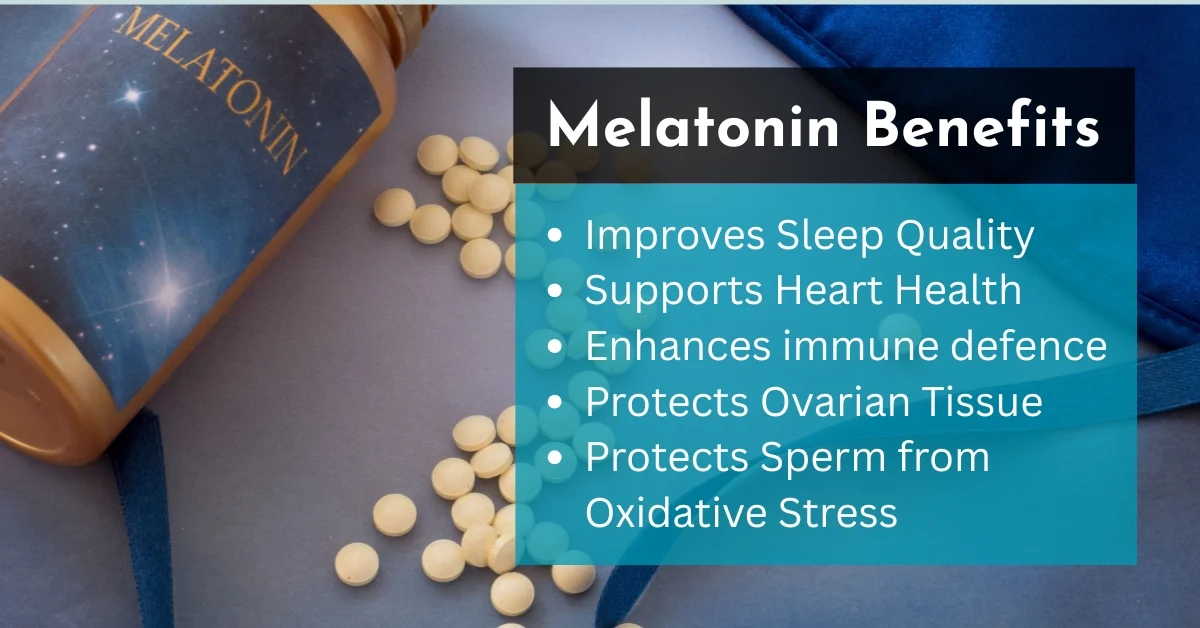
- Improves core sleep quality and circadian rhythm.
- Supports heart health by reducing blood pressure and oxidative stress.
- Enhances immune defence and protects organs from age-related damage.
- Protects ovarian tissue, slows ovarian ageing, supports fertility.
- Protects sperm DNA from oxidative stress, supporting reproductive health.
Is your mental health medication working as it should?
If not, Pharmacogenomic testing (PGx testing) from a CLIA-certified lab, such as RPh LABS, can help you and your doctor select drugs and dosages based on your genome.
Melatonin Deficiency May Cause
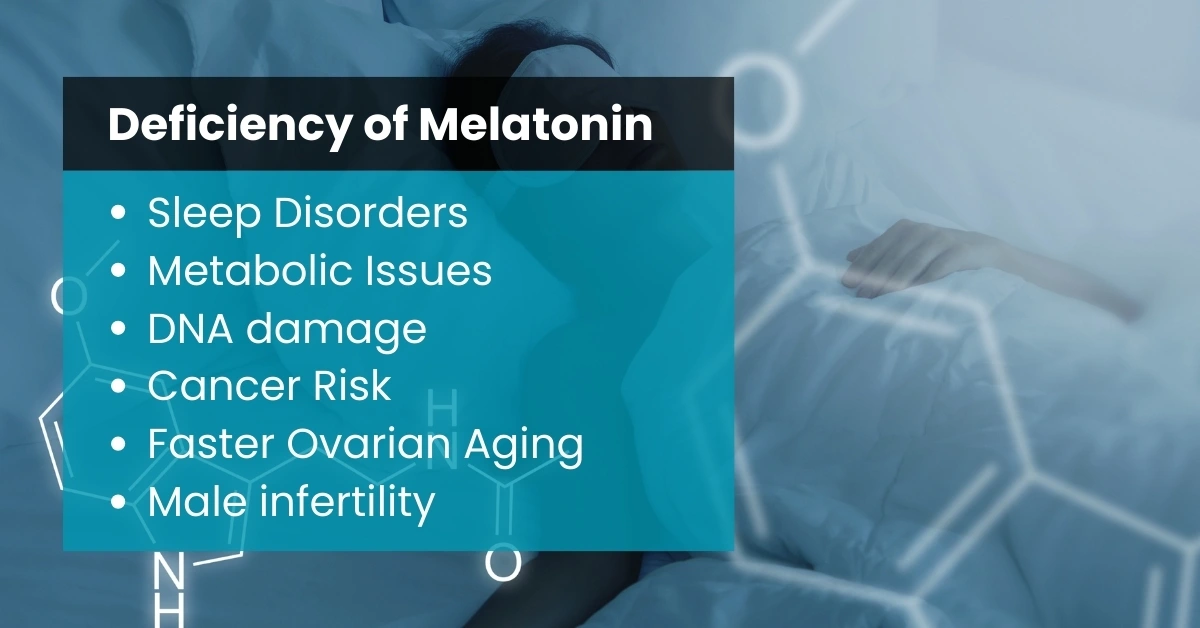
- Sleep Disorders: Insomnia, poor sleep quality.
- Metabolic Issues: Obesity, insulin resistance, type 2 diabetes risk.
- DNA damage and cancer risk: Breast, prostate, colon, skin cancers.
- Mood disorders: Anxiety, depression, irritability.
- Women: Faster ovarian aging, reduced fertility.
- Men: Reduced antioxidant defence in sperm, increasing mutation risk.
How Night Workers Can Boost Melatonin Naturally?
- Light Control: Avoid bright screens before bed, use blackout curtains, and wear eye masks.
- Temperature: Keep bedroom cool (60–67°F) to enhance melatonin production.
- Routine Adjustments: Sleep and wake at consistent times, even on days off.
- Meal timing: Avoid heavy meals late at night; eat earlier to improve melatonin rhythm.
- Exercise timing: Morning or early afternoon workouts maintain natural melatonin cycles.
- Melatonin Supplementation: Helps in restoring sleep and DNA repair rhythms when natural production is disrupted. It may be consumed an hour before sleeping with a not-so-heavy meal.
Recovering Melatonin Insufficiency
While some of the damages may or may not be compensated, adding some foods to your life (in a balanced manner), undisrupted sleep, and daily exercise can help you recover or at least minimize upcoming health damages. Following are some of the ways;
Foods That Repair DNA
Please keep in mind that maintaining a healthy portion size is the key to avoiding any side effects.
Berries (rich in flavonoids & antioxidants)
- Blueberries, strawberries, blackberries, raspberries.
- Help reduce oxidative stress and DNA damage.
Nuts & Seeds
- Almonds, walnuts, pistachios, flaxseeds, chia seeds.
- Provide vitamin E, selenium, and omega-3s to protect DNA.
Fish & Seafood
- Salmon, sardines, mackerel, tuna, oysters.
- Omega-3 fatty acids reduce inflammation and support DNA repair.
Whole Grains & Legumes
- Quinoa, oats, brown rice, barley, lentils, chickpeas, black beans.
- Provide folate, fiber, and antioxidants for healthy DNA replication.
Vegetables
- Spinach, kale, broccoli, Brussels sprouts.
- Rich in folate and carotenoids for DNA synthesis and repair.
| Food Category | Specific Foods | DNA Repair & Antioxidant Benefits | Melatonin Support |
| Berries | Blueberries, Strawberries, Blackberries, Raspberries | High in flavonoids and polyphenols; reduce oxidative stress and DNA strand breaks | May modestly increase circulating melatonin levels due to tryptophan content |
| Nuts & Seeds | Almonds, Walnuts, Pistachios, Flaxseeds, Chia Seeds | Rich in vitamin E, selenium, omega-3 fatty acids; protect DNA from oxidative damage | Omega-3 fatty acids and tryptophan promote melatonin synthesis |
| Fish & Seafood | Salmon, Sardines, Mackerel, Tuna, Oysters | Provide omega-3s and selenium, reduce inflammation, and enhance DNA repair enzymes | Selenium and tryptophan-rich, aiding melatonin production |
| Whole Grains | Quinoa, Oats, Brown Rice, Barley | Folate-rich; supports DNA synthesis and repair, stabilizes genome | Tryptophan content can boost melatonin |
| Legumes | Lentils, Chickpeas, Black Beans | Contain folate and polyphenols, reduce oxidative stress, aid DNA repair | Tryptophan in legumes helps melatonin production |
| Vegetables | Spinach, Kale, Broccoli, Brussels Sprouts | Carotenoids and folate protect DNA; antioxidants neutralize free radicals | Indirect support via overall antioxidant defense |
Melatonin DNA Repair Supplements
- Help in improving sleep, protect DNA, and reduce oxidative stress if natural melatonin is low.
- Look for high-quality, third-party tested products.
- Combined with lifestyle adjustments, supplements may support DNA repair naturally.
- Not a replacement for sleep, diet, or proper lifestyle habits.
Melatonin Reducers: You Should Avoid
- Bright light exposure at night.
- Irregular sleep schedules.
- Caffeine or alcohol close to bedtime.
- Night shift work without protective strategies.
What melatonin actually is, and what it does
Melatonin is a hormone made mainly by the pineal gland. Production rises in darkness and falls with light exposure, peaking in the middle of the night, which is why it functions as the body’s timing signal.
Calling it the sleep hormone is a useful shorthand and slightly misleading. It tells the body when night is, rather than forcing sleep. That distinction explains why timing matters more than dose when melatonin supplements are used well.
- It sets and shifts the circadian clock, which is its best-established role.
- It is present in many tissues beyond the brain, including the gut, in far higher local amounts than in blood.
- It acts as an antioxidant in laboratory conditions, scavenging reactive molecules.
- It influences immune and metabolic processes in ways still being characterized.
- Its production falls with age and is suppressed by light at night, particularly blue-enriched light.
That antioxidant property is the doorway to the melatonin and dna repair story, so it is worth walking through what that research does and does not establish.
Melatonin and dna repair: what the laboratory shows
DNA is damaged constantly, mostly by ordinary metabolism, and cells maintain several repair systems that correct the damage continuously. This is normal housekeeping rather than a crisis.
In cell and animal studies, melatonin reduces markers of oxidative damage and has been reported to increase the activity of repair pathways, including nucleotide excision repair. Those are genuine published findings.
- Laboratory experiments often use concentrations far above what a supplement produces in blood.
- Reducing a marker of damage is not the same as reducing disease.
- Antioxidant effects in a dish frequently fail to reproduce in people, a pattern seen repeatedly with vitamin E and beta-carotene trials.
- Some antioxidant supplementation trials have shown harm rather than benefit, which is why enthusiasm here is warranted with caution.
- No randomized trial shows that melatonin supplements reduce cancer incidence in humans.
So the honest position on melatonin and dna repair is that the mechanism is plausible and demonstrated in the laboratory, while the clinical claim, that taking melatonin protects your DNA and prevents cancer, is not established.
Night shift workers and circadian disruption
This is the part of the topic with the strongest human evidence, and it is worth stating precisely because it is often exaggerated in both directions.
Working at night disrupts the body clock and suppresses melatonin through light exposure. Long-term shift work involving circadian disruption has been classified as probably carcinogenic to humans by the International Agency for Research on Cancer, based mainly on studies of breast cancer risk, with evidence described as limited in humans and stronger in animals.
- Night shift workers also have higher rates of cardiovascular disease, metabolic syndrome, obesity and type 2 diabetes in observational studies.
- Confounding is difficult to eliminate: shift work correlates with smoking, poorer diet, less activity, sleep debt and socioeconomic factors.
- Whether low melatonin is the mechanism, a marker, or one of several pathways is not settled.
- Nothing in this literature shows that taking melatonin supplements reverses the risk.
- Reducing circadian disruption itself, where rota design allows, is the intervention with the most support.
That last point is the practical one. If you work nights, schedule design, consistent sleep opportunity, strategic light exposure and protected recovery days are where the effort should go, not a capsule.
Oxidative stress in context
Oxidative stress describes an imbalance between reactive oxygen species and the systems that neutralize them. It is a real phenomenon and a heavily oversold concept.
Reactive oxygen species are not simply poison. They act as signaling molecules, contribute to immune defense, and mediate some of the benefits of exercise. Suppressing them indiscriminately has, in several trials, blunted adaptations rather than improving health.
- The body has its own antioxidant systems, including glutathione, superoxide dismutase and catalase, which respond to demand.
- High-dose supplemental antioxidants have repeatedly failed to reproduce the benefits seen in observational studies of antioxidant-rich diets.
- Markers of oxidative stress are laboratory measures, not diagnoses, and there is no routine clinical test worth ordering for it.
- Sleep, exercise, not smoking and a diet with plenty of plants influence this system more reliably than supplements.
So when a product promises to reduce oxidative stress, the right follow-up question is which outcome that improves, measured in people. Usually there is no answer.
Melatonin supplements: what they are good for
Melatonin supplements have real uses, and they are narrower and more specific than the marketing implies.
- Jet lag, particularly eastward travel, where timing relative to your destination’s night is what matters.
- Delayed sleep-wake phase disorder, where a low dose taken several hours before the desired bedtime can shift the clock.
- Shift work sleep timing, in some circumstances and with clinical guidance.
- Sleep onset in some children with neurodevelopmental conditions, where it is used under specialist supervision.
- It is not first-line for chronic insomnia in adults, where cognitive behavioral therapy for insomnia carries the evidence.
Practical cautions matter. Doses sold over the counter are often far higher than needed, and higher is not better for a clock signal. In the United States melatonin is regulated as a supplement, and independent testing has repeatedly found content that differs substantially from the label, sometimes including serotonin.
Interactions and safety: melatonin can add to sedatives, may affect blood glucose and blood pressure, and is generally avoided in pregnancy and breastfeeding for want of safety data. Pediatric ingestions have risen sharply with the popularity of gummies, so store it like medicine. In the United States, Poison Control is 1-800-222-1222.
Protecting your sleep and your clock without a supplement
Almost everything melatonin is credited with starts with getting the light and timing right, which costs nothing.
- Hold a fixed wake time, including days off. Wake time anchors the clock more reliably than bedtime.
- Get bright light soon after waking, ideally outdoors.
- Dim the house in the last hour or two of the evening, and keep the bedroom dark.
- For night shift workers, use bright light during the shift, darkness and sunglasses on the journey home, and blackout conditions for sleep.
- Keep caffeine to the first half of your waking period, whenever that falls.
- Protect a consistent sleep opportunity even when the schedule rotates, and treat recovery days as part of the job.
If sleep problems persist despite this, ask for an assessment rather than escalating supplements. Sleep apnea, restless legs, depression and circadian rhythm disorders all have specific treatments, and none of them responds to melatonin.
Where genetic testing genuinely applies
To correct something in the earlier version of this article: RPh Labs is CLIA-certified and COLA-accredited, not CLIA-accredited, and our panel does not measure melatonin, assess DNA repair capacity or evaluate oxidative stress.
There is no clinical test for DNA repair capacity in general use, and no consumer test that tells you how well your DNA is being repaired. Inherited DNA repair disorders exist, such as Lynch syndrome and BRCA-related conditions, and they are diagnosed through clinical genetics services rather than wellness panels.
Pharmacogenomic testing answers a different question: how your body processes medicines. Melatonin itself is cleared largely by CYP1A2, which is not on our panel and is strongly induced by smoking, which is one reason responses to the same dose vary so much between people.
Where our panel does apply is the rest of a medicine list, including antidepressants via CYP2D6 and CYP2C19, statins via SLCO1B1 and anticoagulants via CYP2C9 and VKORC1. It covers 20 genes reported against more than 240 medications from an at-home cheek swab, reviewed by a PharmD pharmacist. See the testing kit page and the medication list by gene, and the MedlinePlus explainer on pharmacogenomics for a neutral summary.
Takeaway
- Melatonin is more than a sleep aid.
- It repairs DNA, protects your heart, and supports metabolism.
- Lifestyle, light control, and diet are key to maintaining melatonin.
- Supplements can help, especially for night shift workers.
- By understanding and supporting melatonin, you actively protect your DNA and overall health.
Disclaimer: This blog is for informational purposes only and does not constitute medical, legal, or professional advice. While we strive for accuracy, errors or omissions may occur.
Melatonin and dna repair FAQ
Does melatonin repair DNA?
By scavenging DNA-damaging agents and, as per some studies, stimulating DNA repair from oxidative mutations (more human evidence required), melatonin may help the body to repair its DNA.
Can melatonin supplementation improve sleep?
Yes, especially for night shift workers or low natural levels. Adults usually consume 1 – 3 mg 30 minutes to 1 hour before sleeping with a liquid or a meal.
How can night workers increase melatonin naturally?
Dark rooms, eye masks, cool temperature, routine sleep, early meals, and morning exercise. If still experiencing trouble, you may want to consult a doctor about melatonin supplements.
Which cancers are linked to melatonin deficiency?
Melatonin deficiency may lead to DNA damage, and this damage increases the chances of breast, prostate, colon, and skin cancers.
Are night shift workers at higher risk of cancer?
Long-term shift work involving circadian disruption has been classified as probably carcinogenic, based mainly on breast cancer studies, with evidence described as limited in humans. Confounding is hard to eliminate, and taking melatonin has not been shown to reverse the risk.
Should I take melatonin supplements every night?
Not as a routine sleep aid. They are most useful for jet lag, delayed sleep-wake phase and some shift work situations, at low doses and correct timing. Cognitive behavioral therapy for insomnia is first-line for chronic insomnia in adults.
Is more melatonin better?
No. It acts as a clock signal rather than a sedative, so low doses at the right time usually work better than high doses. Over-the-counter products often contain far more than needed, and label accuracy varies.
Can a test measure my oxidative stress or DNA repair?
Not usefully. Markers of oxidative stress are laboratory measures rather than diagnoses, and there is no routine clinical test of DNA repair capacity. Inherited DNA repair conditions are diagnosed through clinical genetics services.
Is melatonin safe with my other medicines?
Ask your pharmacist. It can add to sedatives and may affect blood glucose and blood pressure, and it is generally avoided in pregnancy and breastfeeding. Store it like medicine, since pediatric ingestions have risen sharply.
Leave a Reply