
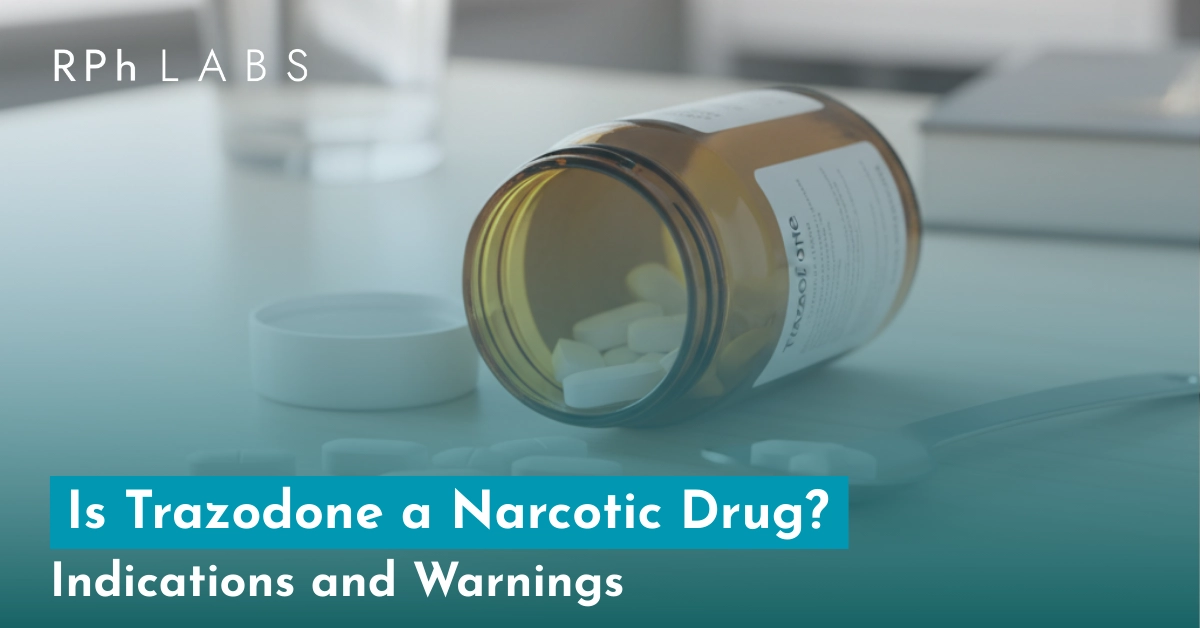
Is trazodone a narcotic is usually asked for a practical reason: people want to know whether they are taking something habit forming. The short answer is no, trazodone is not an opioid and it is not a federally controlled substance, but it still needs respect and a prescriber’s supervision.
On this page
Before diving into “Is Trazodone a narcotic drug?”, let’s first understand what narcotics are. In medicine, narcotic usually means an opioid: a drug that relieves pain and causes drowsiness, and that can lead to tolerance and dependence with repeated use. In legal language the word is used more loosely for controlled substances in general. Opioids include drugs derived from opium, such as morphine and codeine, and synthetic ones, such as fentanyl.
Is Trazodone a Narcotic drug?
No, Trazodone is not a narcotic medication. Trazodone is classified as an antidepressant with sedating effects. It blocks the reuptake of serotonin and also blocks certain serotonin receptors, which leaves more serotonin available in the synapse. It does not make your brain produce more serotonin.
Half-life of Trazodone:
The time taken by your body to reduce the drug by half is its half-life. The half-life of trazodone is 7-9 hours (approx.). However, depending on factors like an individual’s metabolism, it can take longer for the drug to be eliminated from your body.
How Does Trazodone Work?
Trazodone primarily works by inhibiting the reuptake of serotonin in the brain. This increases the availability of serotonin, which is thought to improve mood and reduce anxiety. Additionally, trazodone has antagonistic effects on certain serotonin receptors, which contribute to its sedative properties.
Metabolism:
Any drug you consume is metabolised or digested by your body. Different enzymes are responsible for metabolising different compounds in a drug. How quickly or slowly a drug is processed in your body can thus vary based on genetic factors, and a few other factors, including any medications a person might be consuming.
For these reasons, some individuals may metabolise a certain drug rapidly, while others don’t, and vice versa. Trazodone is metabolised in the liver by the enzyme CYP3A4.
Factors that can influence drug metabolism:
- Age: Older adults may experience more noticeable sedative effects and may have a slower metabolism of trazodone, requiring adjustments to dosage.
- Sex and body composition: These can shift blood levels somewhat, though interacting medicines and liver function usually matter more.
- Genetics: Differences in genes can affect CYP3A4 activity, which changes how quickly trazodone is broken down rather than how it is absorbed. For CYP3A4, interacting drugs usually change activity more than common gene variants do.
- Other factors: Liver function, kidney health, and overall health status play a significant role in how trazodone is processed and how it works.
How Quickly Does Trazodone Start Working
Trazodone usually starts to show effects within 30 minutes to 1 hour after taking it, especially for its sedative effects. However, it may take several weeks for the full antidepressant effects to become noticeable, as is common with many antidepressants.
FDA Warnings
The FDA has issued several warnings for trazodone, and patients should be aware of the following:
- Suicidal Thoughts: Like other antidepressants, trazodone carries a Black Box Warning regarding an increased risk of suicidal thoughts and behaviours, particularly in children, adolescents, and young adults.
- Serotonin Syndrome: Trazodone can increase serotonin levels, which can lead to a potentially life-threatening condition known as serotonin syndrome if combined with other drugs that increase serotonin (e.g., other antidepressants, certain pain medications).
- QT Prolongation: Trazodone can prolong the QT interval on the heart’s electrocardiogram (ECG), which could lead to serious heart arrhythmias. Patients with a history of heart problems should be monitored.
- Sedation: Due to its sedative properties, trazodone may cause drowsiness, so it is important to avoid activities that require alertness (such as driving) until you know how it affects you.
Your Genetic Makeup Can Help
An at Home PGx (Pharmacogenomics) Test by RPh LABS gives you clear insights into how your body processes 240+ medications. Here is how it works
Indications
Trazodone is prescribed for several conditions, including:
- Depression: As an antidepressant, trazodone is used to treat major depressive disorder.
- Anxiety: It may be prescribed off-label to help manage anxiety disorders.
- Insomnia: Due to its sedative effects, trazodone is frequently used off-label for managing insomnia or sleep disturbances.
- Chronic Pain: It is sometimes used off-label as an add-on where sleep disruption is part of the picture, although the evidence for pain itself is limited.
When Should Trazodone Be Taken?
Trazodone is typically taken at night due to its sedative effects. The exact timing and dosage should be guided by a healthcare provider based on the individual’s needs.
Drug Interactions:
Trazodone can interact with several medications, including:
- Other antidepressants, particularly SSRIs, SNRIs, or other MAO inhibitors, as these can increase the risk of serotonin syndrome.
- Alcohol and benzodiazepines can increase the sedative effects of trazodone, leading to excessive drowsiness and other serious side effects.
- CYP3A4 inhibitors (e.g., certain antifungal medications, antibiotics) can increase trazodone levels in the blood, raising the risk of side effects.
How to Know if the Drug Is Working:
If trazodone is working, you may notice improvements in mood, sleep quality, and a reduction in anxiety. However, judging the antidepressant benefit usually takes several weeks, often four or more. If you’re taking trazodone for sleep, you might feel more rested and find it easier to fall and stay asleep.
Negative Signs Needing Urgent Medical Assistance:
- Severe drowsiness or dizziness: Could indicate a dangerous drop in blood pressure.
- Symptoms of serotonin syndrome: Include rapid heart rate, high fever, muscle stiffness, confusion, and seizures.
- Signs of an allergic reaction: Rash, itching, swelling, and trouble breathing.
Is Trazodone Addictive?
Trazodone is generally not considered addictive. It does not produce the euphoria associated with substances that are typically addictive, such as narcotics or benzodiazepines. However, misusing the medicine or stopping trazodone suddenly can lead to withdrawal symptoms, so it is recommended to taper off the medication under the guidance of a healthcare provider if it needs to be discontinued.
Can PGx Testing Determine If Trazodone Is Suitable for You?
Not on its own. No published guideline turns a genotype into a trazodone dose. Trazodone is cleared mainly by CYP3A4, with CYP2D6 handling one of its metabolites, so genetics are context at most and interacting medicines matter more. A PGx test is more useful for the other medicines on your list, since the RPh Labs panel of 20 genes reports CYP2D6, CYP2C19 and CYP2C9 against 240+ medications, and every report is reviewed by a PharmD pharmacist with a free consultation included.
Is trazodone a narcotic? Five facts that settle it
The word narcotic is used loosely in everyday speech, where it often just means a drug that makes you sleepy or one that is illegal. In medicine and in law it points at opioids: drugs that act on opioid receptors, like morphine, oxycodone, hydrocodone and codeine. That is the sense in which is trazodone a narcotic has a definite answer.
- Trazodone is not an opioid. It does not act at opioid receptors, so it does not relieve pain the way an opioid does.
- It is classed as a serotonin antagonist and reuptake inhibitor, which is an antidepressant category.
- It blocks serotonin reuptake so more serotonin stays available in the synapse, and it also blocks certain serotonin and histamine receptors, which is what makes it sedating.
- It is not a federally scheduled controlled substance in the United States, unlike opioids and benzodiazepines.
- It does not produce the euphoria that drives opioid misuse, which is the main reason it is often chosen for sleep instead of a sedative-hypnotic.
So the answer to is trazodone a narcotic is a clear no. That is not the same as saying it is harmless. Sedation, low blood pressure on standing, heart rhythm effects and serotonin-related risks are all real, and the trazodone side effects section below covers them.
If someone has taken far more than prescribed, do not wait to see what happens. Call 911 or your local emergency number, and in the United States Poison Control is 1-800-222-1222.
Is trazodone a controlled substance?
No. If you are asking is trazodone a controlled substance because of refill rules, trazodone is a prescription-only medicine that is not placed in a federal controlled substance schedule, so it does not carry the refill limits and prescribing restrictions that come with opioids or benzodiazepines.
That has a few practical consequences. Refills are simpler, your prescriber has more flexibility, and it is generally not reported to controlled substance monitoring programs the way scheduled drugs are. That is part of why trazodone for sleep became so common.
Two caveats are worth knowing. First, is trazodone a controlled substance is a different question from whether it can be misused. Any sedating medicine can be misused, and combining it with alcohol or other sedatives is genuinely dangerous. Second, standard workplace urine screens do not look for trazodone, but there are published reports of trazodone producing a false positive on some amphetamine immunoassays.
If a screen ever comes back unexpectedly, tell the reviewing clinician every prescription you take. Confirmatory laboratory testing exists precisely to sort out that kind of result, and disclosing your medicines up front is the way it gets resolved.
Trazodone for sleep: why low doses are so widely used
Trazodone for sleep is not what the drug was approved for. It was approved as an antidepressant, and the doses studied for depression are substantially higher than the doses most people are given at bedtime. Using trazodone for sleep is an off-label practice, which simply means the use is common and accepted but not part of the original approval.
The sedation comes from blocking histamine H1 and serotonin 5-HT2A receptors, which is why a small dose can be sleep-promoting while a full antidepressant dose is needed for mood.
Things worth knowing before you settle into it:
- Next-day grogginess is common, particularly if you take it late or need to be up early.
- Dizziness when getting out of bed is frequent, and it raises fall risk for older adults.
- The sedating effect can feel weaker over time for some people. That is a reason to talk with your prescriber, not to take extra.
- Cognitive behavioral therapy for insomnia outperforms sedating medicines over the long term and is considered first-line for chronic insomnia.
- Alcohol and other sedatives stack on top of it and should not be combined without your prescriber’s input.
Your prescriber sets the dose and the timing for trazodone for sleep. Do not split, double or shift doses on your own, because the same tablet behaves quite differently at different amounts.
Trazodone side effects worth recognizing early
Most trazodone side effects are mild and settle, but a handful need prompt action, and knowing which is which saves a lot of worry. The list below splits trazodone side effects into those two groups.
Common and usually manageable
- Drowsiness, which is often the intended effect at bedtime doses.
- Dizziness or lightheadedness on standing up, caused by a drop in blood pressure.
- Dry mouth, blurred vision and headache.
- Nausea or an upset stomach, which is often eased by taking it with a light snack if your prescriber agrees.
Get medical help promptly
- A painful or prolonged erection. This is a rare but genuine emergency that can cause permanent damage, and it needs immediate care rather than a wait-and-see approach.
- Agitation, fever, sweating, muscle twitching, fast heart rate or confusion, which can indicate serotonin syndrome, especially when combined with other serotonergic drugs.
- Fainting, or a pounding or irregular heartbeat, since trazodone can prolong the QT interval.
- New or worsening thoughts of suicide or self-harm, which antidepressant labeling warns about particularly in children, teens and young adults. Call or text the 988 Suicide and Crisis Lifeline in the United States, or 911 if there is immediate danger.
- Unusual bruising or bleeding, which matters more if you also take a blood thinner.
Report trazodone side effects to your prescriber rather than adjusting the dose yourself. Many of them are dose-related, and the fix is usually a conversation rather than stopping.
Trazodone withdrawal and how stopping is handled
Trazodone withdrawal is not the same thing as addiction. The drug does not cause the craving and compulsive use that define a substance use disorder, but your body does adapt to it, and stopping abruptly after regular use can produce a discontinuation reaction.
Reported trazodone withdrawal effects include rebound insomnia, anxiety, irritability, dizziness, nausea and flu-like feelings. For people taking it as an antidepressant, stopping suddenly also risks the depression coming back.
Because of that, coming off it is planned as a gradual reduction with your prescriber, with the pace set by your dose, how long you have taken it and how you respond. There is no schedule that is safe to copy from an article, and that includes this one.
If rebound insomnia is the main thing you fear, say so before you start tapering. Pairing the reduction with sleep-timing changes or therapy for insomnia gives you something to lean on, which makes trazodone withdrawal considerably easier to get through.
Interactions that matter more than the narcotic question
For most people the real safety issue is not whether is trazodone a narcotic has a yes or no answer. It is what else is in the medicine cabinet.
- Monoamine oxidase inhibitors, which must not be combined, with a washout period between them set by your prescriber.
- Other serotonergic drugs, including SSRIs, SNRIs, triptans, tramadol, linezolid and St John’s wort, which raise serotonin syndrome risk.
- Alcohol, benzodiazepines, opioids and sleep aids, which deepen sedation and slow breathing.
- Strong CYP3A4 inhibitors such as certain antifungals, clarithromycin and ritonavir, which raise trazodone levels, and inducers such as carbamazepine and rifampin, which lower them.
- Other QT-prolonging medicines, including some antipsychotics, antiarrhythmics and antibiotics.
- Blood pressure medicines, since the combination can make lightheadedness worse.
Interactions also shape how strong trazodone side effects feel. Keep one current list on your phone, including over-the-counter products and supplements, and show it at every appointment and pharmacy visit. That single habit prevents more problems than any article can.
Ask your pharmacist before adding anything new, including cold remedies and melatonin. A free pharmacist consultation is included with every RPh Labs report, and you can see how the process works if you want your whole list reviewed.
What genetics can and cannot tell you about trazodone
Trazodone is cleared mainly by the CYP3A4 enzyme, and CYP2D6 converts part of it into an active metabolite called mCPP. That has led to a lot of speculation, so here is the honest position: there is no CPIC dosing guideline for trazodone based on genotype, and common CYP3A4 variation is not a reliable dial for its dose.
What this means in practice is that a panel will not hand you a trazodone dose. A CYP2D6 result can still be informative context, since poor metabolizers accumulate less mCPP while people taking strong CYP2D6 inhibitors such as fluoxetine, paroxetine or bupropion shift the same way, an effect called phenoconversion.
Where pharmacogenomics is genuinely actionable is the rest of a mental health regimen. Several SSRIs and SNRIs have well-established guidance through CYP2D6 and CYP2C19, which CPIC publishes free at cpicpgx.org, and the FDA keeps a table of pharmacogenomic biomarkers in drug labeling.
RPh Labs reports 20 genes against 240+ medications from an at-home cheek swab kit, and a PharmD pharmacist reviews every report so you know which results actually change something. See the medication list by gene for coverage, or genetic testing for antidepressants for the drugs where the evidence is strongest. Genotype is one input alongside age, liver and kidney function, and everything else you take.
Questions to bring to your prescriber
A few minutes of preparation turns a rushed visit into a useful one, whether you are starting trazodone for sleep or planning trazodone withdrawal. These are the questions that tend to change the plan.
- Am I taking this for mood, for sleep, or both, and what dose range does that use call for?
- How long is this meant to last, and when will we reassess?
- What should I do about a missed dose, and how early in the evening should I take it?
- Which of my other medicines interact with it, including over-the-counter products?
- What side effects should make me call you, and which ones mean going to an emergency room?
- If I want to stop later, how would we plan the reduction?
Write the answers down. If you also want to know whether is trazodone a narcotic came up because someone told you it was habit forming, bring that too, since correcting the misunderstanding out loud usually settles it faster than reading about it.
If cost or coverage is part of the decision, our insurance page lists the plans we bill, and testing is HSA and FSA eligible.
Conclusion:
Trazodone is not a narcotic drug. It belongs to SARIs and is primarily prescribed for its sedative and antidepressant effects. Belonging to the cytochrome family P450, CYP3A4 enzyme is responsible for metabolizing this drug in the liver. Since mental health medications affect people differently, a pharmacogenomics test at home can give you and your prescriber useful information about the other medicines on your list, even though it does not set a trazodone dose.
References:
https://pubmed.ncbi.nlm.nih.gov/7032872/
https://www.accessdata.fda.gov/drugsatfda_docs/label/2015/071196s062lbl.pdf
https://pubmed.ncbi.nlm.nih.gov/22712761/
Disclaimer: This blog is only for informational purposes. Always consult a healthcare specialist before taking any medical action.
Is trazodone a narcotic FAQ
Is trazodone a controlled substance in any state?
Asking is trazodone a controlled substance has the same answer nationally: it is not placed in a federal schedule, which is why refills are handled like other prescription medicines. Rules can be adjusted at state level for individual drugs, so your pharmacist is the fastest source of truth where you live. Either way, a prescription is required.
Can trazodone show up on a drug test as an opioid?
It is not an opioid and standard screens do not test for it, so it should not register as one. There are published reports of trazodone causing a false positive on some amphetamine immunoassays. Tell the reviewing clinician about every prescription you take so confirmatory testing can clarify the result.
Is trazodone for sleep habit forming?
Trazodone for sleep does not cause the craving and compulsive use that define addiction, and the drug is not scheduled. Your body can still adapt, so rebound insomnia is common if it is stopped abruptly. Plan any reduction with your prescriber, and ask about therapy for insomnia alongside the medicine.
Which trazodone side effects need emergency care?
A painful or prolonged erection, signs of serotonin syndrome such as fever with agitation and muscle twitching, fainting, or an irregular heartbeat all need urgent attention. Thoughts of self-harm warrant calling or texting 988 in the United States. For a suspected overdose, call 911 and Poison Control at 1-800-222-1222.
How long does trazodone withdrawal last?
Trazodone withdrawal varies with the dose and how long you took it, and a gradual reduction planned by your prescriber usually keeps symptoms mild and short. Rebound insomnia and anxiety are the most commonly reported effects. Report anything severe rather than pushing through or restarting the medicine on your own.
Can I drink alcohol on this medicine?
Combining alcohol with trazodone deepens sedation, worsens dizziness and impairs coordination, which raises the risk of falls and accidents. Because the interaction depends on your dose, your other medicines and your health, ask your prescriber about your own situation rather than assuming a small amount is fine.

Leave a Reply