

Asking is POTS genetic is reasonable when two people in the same family faint on standing, but no single gene has been shown to cause postural orthostatic tachycardia syndrome. This guide covers what raises risk, how the diagnosis is confirmed, and how treatment is built step by step.
On this page
Introduction
Postural Orthostatic Tachycardia Syndrome (POTS) is a dysfunction of the autonomic nervous system, which controls involuntary processes like heart rate, blood pressure, digestion, sweating, and temperature regulation. Is POTS Genetic? No, there is no scientific evidence of genetic mutation leading to this disorder; however, evidences show that some people, following a family history of POTS, are at higher risk of catching this condition.
- Key feature: rapid heartbeat when standing. Other POTS symptoms include dizziness, fainting (syncope), fatigue, brain fog, and exercise intolerance.
- It is most often diagnosed in people aged 15 to 45, and the large majority of those diagnosed are women.
Types of POTS
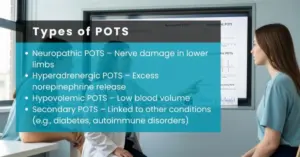
The following are the main subtypes of POTS. Four are listed here, other subtypes exist, and one person can have features of more than one:
- Hyperadrenergic POTS: A recognized subtype in which standing pushes norepinephrine higher than usual, causing palpitations, tremors, and anxiety.
- Neuropathic POTS syndrome: Small fiber nerve damage impairs blood flow to the legs, leading to blood pooling in the legs and lightheadedness.
- Hypovolemic POTS: Associated with extremely low blood volume, Hypovolemic POTS reduces cardiac output, worsening symptoms like dizziness and fainting.
- Secondary POTS: Linked to other conditions (e.g., diabetes, autoimmune disorders)
Postural Orthostatic Tachycardia Syndrome (POTS) is a condition whose etiology is still unclear. This condition has numerous underlying causes, out of which, one prominent reason is lack of blood (Hypovolemia).
Is POTS Genetic?
- Evidence indicates POTS is rarely familial, with most cases being irregular.
- As per Hopkins Medicine, no single gene mutation has been definitively linked to POTS.
- Some familial clustering exists, suggesting a possible predisposition, but this is uncommon.
POTS and Ehlers-Danlos Syndrome (EDS)
- Individuals with hypermobile EDS are at higher risk for POTS.
- Coexisting Ehlers-Danlos syndrome (EDS) may increase the severity of postural orthostatic tachycardia syndrome symptoms.
Moreover, EDS patients experience excessive flexibility (looseness) of connective tissue, which may impair vascular tone (network of blood vessels), contributing to orthostatic intolerance, a condition characterized by symptoms such as lightheadedness, sweating, nausea, anxiety, and even unconsciousness. Orthostatic intolerance is a different condition that drops your blood pressure upon standing, whereas in POTS, your heart rate increases upon a change in position.
Hypovolemic Syndrome Explained
- Hypovolemia means reduced blood volume, often due to low plasma volume.
- Hypovolemic syndrome worsens (limits) blood in the lower body, triggering tachycardia (high heart rate) and dizziness.
- Treatments focus on increasing fluid and salt intake, sometimes using fludrocortisone or midodrine to boost circulation.
Experiencing mental health issues?
Many mental health medications affect people differently, partly because of how quickly the body processes them. Pharmacogenomic testing (PGx testing) reports those differences for genes such as CYP2D6 and CYP2C19, and your prescriber weighs that alongside everything else. It does not diagnose POTS, anxiety or any other condition.
Book an at-home PGx test from CLIA-certified, COLA-accredited RPh Labs and see how you may process 240+ medications. There is no gene-drug guideline for the medicines used off label in POTS itself.
Mechanisms Behind POTS
- Norepinephrine overactivity: Seen in hyperadrenergic POTS; high levels cause rapid heart rate and anxiety.
- Peripheral denervation: In neuropathic POTS, nerve damage reduces vasoconstriction in the legs.
- Autoimmune and inflammatory triggers: Some cases follow viral infections or autoimmune disorders.
- Secondary triggers: Surgery, trauma, or prolonged immobility can precipitate POTS.
POTS Symptoms Checklist
- Rapid heartbeat upon standing
- Dizziness or lightheadedness
- Fatigue and brain fog
- Fainting or near-fainting episodes (syncope)
- Palpitations, tremors
- Exercise intolerance
- Panic attacks, due to overactivation of the sympathetic nervous system, which is responsible for the ‘fight or flight’ response of our body.
POTS Syndrome Treatment:
While there are no POTS syndrome treatments yet, management of this syndrome is possible.
Lifestyle and non-pharmacologic:
- Hydration (2–3 liters/day)
- Salt intake (5–10 g/day unless restricted). 1 teaspoon on level is approx. 6g of salt.
- Compression garments to reduce blood pooling
- Gradual exercise (recumbent cycling, rowing, swimming)
Medications:
Although the FDA has approved no POTS medications, your doctor may suggest you some off-label medication, including;
- Beta-blockers to reduce heart rate
- Fludrocortisone to increase blood volume
- Midodrine for peripheral vasoconstriction
- Pyridostigmine for autonomic support
- Individualized approach: Type-specific management is critical, e.g., hyperadrenergic POTS may respond better to beta-blockers, neuropathic POTS to midodrine.
Natural Approaches to POTS
- Consistent hydration and electrolytes
- Gradual aerobic conditioning
- Avoid triggers like prolonged standing, heat, or alcohol
- Mindfulness and paced breathing for POTS and panic attacks
Prevention and Long-Term Management
- No guaranteed prevention exists.
- Early recognition and structured lifestyle adjustments reduce symptom severity.
- Regular monitoring, hydration, and exercise improve long-term quality of life.
| POTS Type | Key Mechanism | Recommended Treatments | Notes / Tips |
| Hyperadrenergic POTS | Excess norepinephrine on standing → rapid heart rate, palpitations, anxiety | – Beta-blockers (e.g., propranolol) to control heart rate- Low-dose clonidine in some cases- Increased salt and fluids- Gradual exercise (recumbent first) | Avoid stimulants (caffeine, decongestants). Monitor BP closely. |
| Neuropathic POTS Syndrome | Small fiber nerve damage → poor blood return from legs | – Midodrine to constrict blood vessels- Compression stockings- Salt and fluid loading- Recumbent or seated exercise | Focus on improving venous return. Elevate legs during rest. |
| Hypovolemic POTS | Low blood volume → insufficient cardiac output | – Fludrocortisone to expand plasma volume- High salt and fluid intake- Compression garments- Recumbent exercise | Monitor electrolytes regularly. Gradually increase activity levels. |
| Mixed / Other Forms | Combination of the above mechanisms | – Tailored combination of above treatments- Lifestyle changes (hydration, salt, exercise)- Medications based on dominant mechanism | Requires close follow-up with neurologist/cardiologist. |
Additional Practical Tips for All Types:
- Keep a daily symptom and heart rate log to track triggers.
- Avoid prolonged standing and hot environments.
- Small, frequent meals can prevent postprandial hypotension, which worsens POTS symptoms.
- Consider mindfulness, paced breathing, or therapy if anxiety or POTS and panic attacks occur.
Is pots genetic? What the evidence actually shows
The short version: is POTS genetic is best answered as not in any simple, testable way. No single gene variant has been established as a cause of postural orthostatic tachycardia syndrome, and there is no genetic test that confirms or rules it out.
At the same time, POTS is reported more often in some families than chance would explain, and it overlaps with conditions that do have a hereditary component, such as hypermobile connective tissue disorders and some autoimmune diseases. Shared biology and shared environment are both plausible explanations.
Researchers have described rare families with specific variants affecting norepinephrine handling, but these account for a tiny fraction of cases and are not part of routine care. Treating POTS as an inherited condition would overstate what is known.
What that means for you is practical. A relative with POTS is a reason to recognize the pattern early and mention it to your clinician, not a reason to order a gene panel. Diagnosis stays clinical, and so does treatment.
What tends to set pots off
Most people can point to a trigger, and the pattern is often more informative than any test result.
- A viral illness, including COVID-19, mononucleosis, or influenza, with symptoms starting weeks afterwards.
- Prolonged bed rest after surgery, injury, or hospital admission, which reduces blood volume and deconditions the legs.
- Puberty or a rapid growth spurt, which is why teenagers make up a large share of new cases.
- Pregnancy or the postpartum period.
- Concussion or other trauma.
- An underlying condition such as diabetes, an autoimmune disease, anemia, or a connective tissue disorder, in which case POTS is described as secondary.
None of these make the condition genetic. They do make the history worth writing down, because a clear onset after a known illness helps a clinician separate POTS from anxiety, dehydration, or a heart rhythm problem.
Deconditioning deserves a special mention. It is rarely the whole story, and telling someone their POTS symptoms are simply from being unfit is both inaccurate and unhelpful. Reduced activity is usually a consequence of the illness as much as a contributor to it.
Pots symptoms beyond a fast heartbeat
The defining feature is a sustained rise in heart rate on standing, but the POTS symptoms people find hardest are usually the ones that have nothing to do with pulse.
- Brain fog, slow word finding, and trouble concentrating, often worse late in the day.
- Fatigue that does not improve with a normal night of sleep.
- Nausea, early fullness, and bloating from slow stomach emptying.
- Headaches, including a coat-hanger ache across the neck and shoulders.
- Heat intolerance and sweating changes.
- Blue or mottled legs after standing for a while.
- Tremor, chest discomfort, and shortness of breath on standing or mild exertion.
- Sleep disruption and vivid awareness of the heartbeat when lying down.
Symptoms often swing between days, which is one reason POTS symptoms get dismissed. A two-week log of standing heart rate, fluid intake, and what you were doing beforehand carries real weight at an appointment.
Fainting is not required for the diagnosis. Many people with POTS never lose consciousness, while others faint regularly, and both patterns are consistent with the condition.
How a pots diagnosis is confirmed
A POTS diagnosis rests on a measured heart rate response plus the absence of a better explanation. The widely used criteria are a sustained rise in heart rate of at least 30 beats per minute within ten minutes of standing, or at least 40 beats per minute for people under 20, with symptoms lasting at least three months and no drop in blood pressure that would indicate orthostatic hypotension.
- A standing test or tilt-table test records heart rate and blood pressure lying down and then at intervals while upright.
- An ECG, and sometimes an echocardiogram or heart monitor, looks for arrhythmias and structural heart problems.
- Blood tests check for anemia, thyroid disease, electrolyte problems, and sometimes adrenal or autoimmune causes.
- Medicines and supplements are reviewed, because diuretics, stimulants, and some antidepressants can worsen the picture.
- Additional testing is added if the history suggests a secondary cause such as diabetes or a connective tissue disorder.
You can help a great deal by bringing measurements taken at home. Record heart rate after lying down for five minutes, then at one, three, five, and ten minutes of standing, on several different days.
A POTS diagnosis is usually made by a cardiologist, neurologist, or an autonomic specialist. If a clinician has attributed everything to anxiety without ever measuring your standing heart rate, it is fair to ask for that test.
Pots and ehlers-danlos syndrome: why they travel together
The link between POTS and Ehlers-Danlos syndrome, specifically the hypermobile type, is well recognized. Many people carry all three of POTS, hypermobility, and gastrointestinal problems, and each one makes the others harder to manage.
The likely mechanism is mechanical. Stretchier connective tissue means veins that distend more easily, so more blood pools in the legs on standing and the heart rate rises to compensate. Joint pain and fatigue then limit the exercise that would otherwise help.
Hypermobile Ehlers-Danlos syndrome is diagnosed clinically, using joint mobility scoring, skin features, and family history, because no confirmatory gene test exists for that subtype. Other, rarer types of Ehlers-Danlos do have identified genes and are assessed by a geneticist. None of these genes appear on a pharmacogenomic panel.
Where the overlap changes care is in the details: compression garments help venous pooling, physical therapy is adapted to protect unstable joints, and pain management avoids repeated joint injury. If pots and ehlers-danlos syndrome are both present, ask whether your physical therapist has experience with hypermobility.
Pots treatment that starts without a prescription
Non-drug measures are the foundation of POTS treatment, and for many people they do more than medicine. Agree targets with your clinician, especially if you have kidney, heart, or blood pressure conditions that limit salt or fluid.
- Fluids: a steady intake through the day, often around two to three liters, rather than large amounts at once.
- Sodium: commonly increased under medical guidance, which is not appropriate for everyone.
- Compression: waist-high or abdominal compression works better than knee-high socks for venous pooling.
- Recumbent exercise: rowing, recumbent cycling, or swimming first, progressing slowly over months toward upright activity.
- Counter-pressure moves: crossing the legs, squeezing the buttocks, or squatting at the first sign of lightheadedness.
- Meal structure: smaller, more frequent meals to limit the post-meal blood pressure drop.
- Sleep and heat: raising the head of the bed slightly, and avoiding hot showers and long standing in heat.
Progress is measured in months, not days, and setbacks are normal. Keeping the log going through a flare is what shows a slow upward trend that would otherwise be invisible.
Medicines used in pots treatment
No medication is approved by the FDA specifically for POTS, so drug options in POTS treatment are prescribed off-label. That is common in medicine and does not mean unsupported, but it does mean the choice depends on your dominant mechanism and your other conditions.
- Beta blockers such as low-dose propranolol, to blunt an excessive heart rate response.
- Ivabradine, which slows heart rate without lowering blood pressure.
- Fludrocortisone, to expand blood volume, with electrolyte monitoring.
- Midodrine, to constrict blood vessels, taken while upright rather than before lying down.
- Pyridostigmine, sometimes used for autonomic support.
- Clonidine or methyldopa, considered in some hyperadrenergic presentations.
Every one of these needs a prescriber to set the dose and to plan monitoring. Do not start, stop, split, or increase any of them on your own, and tell your clinician about caffeine, decongestants, and stimulants, which can work against the plan.
If something is not working after a fair trial, say so rather than quietly stopping. Switching within this list is normal, and the first choice is rarely the last.
Where pgx testing fits with pots, and where it does not
To be clear, a pharmacogenomic (PGx) test does not answer the question is POTS genetic, does not diagnose POTS, and does not predict who will develop it. It reports how your body is likely to process certain medicines, which is a prescribing question rather than a diagnostic one.
Some overlap with POTS care does exist. Metoprolol and propranolol are broken down largely by CYP2D6, which is on the RPh Labs 20-gene panel, and dosing guidance for metoprolol based on that gene has been published by European pharmacogenetics working groups. Several antidepressants used for coexisting anxiety, migraine, or pain also depend on CYP2D6 and CYP2C19.
Just as importantly, much of the POTS medicine cabinet has no gene-drug guidance at all. Midodrine, fludrocortisone, ivabradine, and pyridostigmine are not guided by any gene on the panel, and the panel does not include connective tissue or autonomic disease genes.
If beta blockers or antidepressants have given you unusual side effects at low doses, that is a fair thing to raise with a prescriber. Our medication list shows which drugs map to which genes, what PGx testing is covers the limits, and the at-home cheek swab kit covers all 20 genes. Published gene-drug recommendations are freely available from CPIC.
Conclusion
Postural Orthostatic Tachycardia Syndrome (POTS) isn’t just passed down through from your forefathers to you. Still, genetics might play a part alongside triggers like environmental factors, autoimmune issues, or lifestyle habits. Spotting POTS symptoms—such as dizziness, a fast heartbeat, or constant tiredness—is key to getting diagnosed and starting treatment early. With the right medical advice, lifestyle tweaks, and therapies, you can take control and improve your day-to-day life with POTS.
Researchers are diving deeper into its genetic roots and causes, which could lead to better, more personalized treatments down the road, giving hope to everyone managing this condition.
Disclaimer: This blog is for informational purposes only and does not constitute medical, legal, or professional advice. While we strive for accuracy, errors or omissions may occur.
Is pots genetic? Frequently asked questions
Is POTS syndrome genetic?
Currently, no reports confirm that POTS is genetic; however, prevalence in people with family history is higher.
What is POTS disease?
No, POTS is not a disease but an autonomic nervous system disorder causing rapid heart rate and orthostatic intolerance (increased heartbeat, headache, anxiety, sweat, or anxiousness upon standing).
Can a cardiologist diagnose POTS?
Yes. A cardiologist or a neurologist may diagnose POTS. Diagnosis involves heart rate monitoring, tilt-table testing, and blood pressure assessment.
Does POTS cause anxiety?
Yes. POTS can cause sympathetic nervous system overactivity, which is responsible for the ‘fight or flight’ of our body; thus, not only anxiety, but also POTS and panic attacks may be possible.
Should my family be tested if I have POTS?
There is no genetic test for POTS, so there is nothing useful to order. Rare families with variants affecting norepinephrine handling have been described, but they are a tiny minority and testing is a research or specialist matter. Recognizing POTS symptoms early is more valuable than any panel.
How long does POTS last?
It varies. Many people, especially teenagers whose POTS followed a virus or a growth spurt, improve substantially over a few years with consistent fluids, salt, compression, and graded exercise. Others manage it long term. Course depends on the trigger and any underlying condition, so ask your own specialist.
Can POTS develop after COVID-19?
Yes. POTS following viral illness, including COVID-19, is well documented and is one of the more common patterns now seen in autonomic clinics. The same criteria apply, so a standing or tilt-table test still confirms the POTS diagnosis and other causes of fatigue and breathlessness are ruled out first.
Do I need a tilt-table test, or is a standing test enough?
A carefully performed ten-minute standing test is often enough when the heart rate rise is clear and reproducible. Tilt-table testing is used when results are borderline, when fainting is prominent, or when a clinic prefers standardized conditions. Your cardiologist or neurologist decides which fits your case.
Is POTS a form of anxiety?
No, although the two can feel similar and often coexist. The surge in heart rate and adrenaline on standing produces tremor, palpitations, and dread that resemble a panic attack. Measuring heart rate and blood pressure while upright separates them, and treating POTS often improves the anxiety.
Can I exercise with pots and ehlers-danlos syndrome together?
Usually yes, with adjustments. Start recumbent or in water to protect unstable joints, build very gradually, and work with a physical therapist who knows hypermobility. Compression garments and pacing help. Talk with your clinician before starting, particularly if joint dislocations or chest symptoms are part of the picture.


Leave a Reply