

If you are asking is lupus genetic, the honest answer sits between yes and no: inherited variants raise risk, and something in the environment usually has to push as well. This guide covers which genes are involved, how lupus is diagnosed, what sets off flares, and where a gene test genuinely helps.
On this page
Is Lupus Genetic? Partly. Genes raise the risk, but lupus is multifactorial, and it is not passed down in a simple, predictable way. Lupus is a complex autoimmune disease that can affect almost any part of the body. It causes the immune system to mistakenly attack healthy tissue. Studies suggest that lupus is often a result of a combination of genetic and environmental factors.
This article breaks down what lupus is, its genetic factors, and the triggers that contribute to the disease. We also address the most common signs, symptoms, and how lupus can be differentiated from other conditions.
What is Lupus?
Lupus is a chronic autoimmune disease, meaning that the immune system attacks the body’s own tissues. There are several types of lupus, but the most common is systemic lupus erythematosus (SLE), which can affect organs like the skin, kidneys, heart, and lungs.
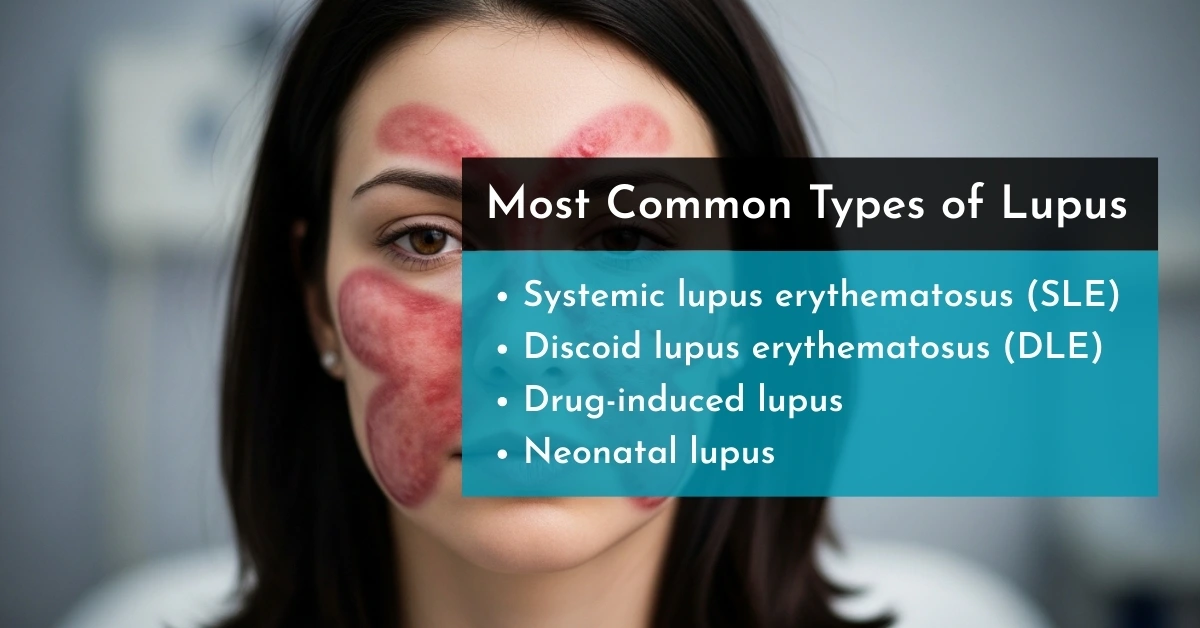
Most Common Types of Lupus
- Systemic lupus erythematosus (SLE): The most severe form of lupus, involving multiple organ systems.
- Discoid lupus erythematosus (DLE): A type of lupus affecting only the skin, causing red, scaly rashes.
- Drug-induced lupus: Caused by certain medications, usually reversible once the drug is discontinued.
- Neonatal lupus: A rare condition affecting newborns, typically due to antibodies passed from the mother.
Did you know?
Lupus is diagnosed far more often in women than in men, and most often during the childbearing years.
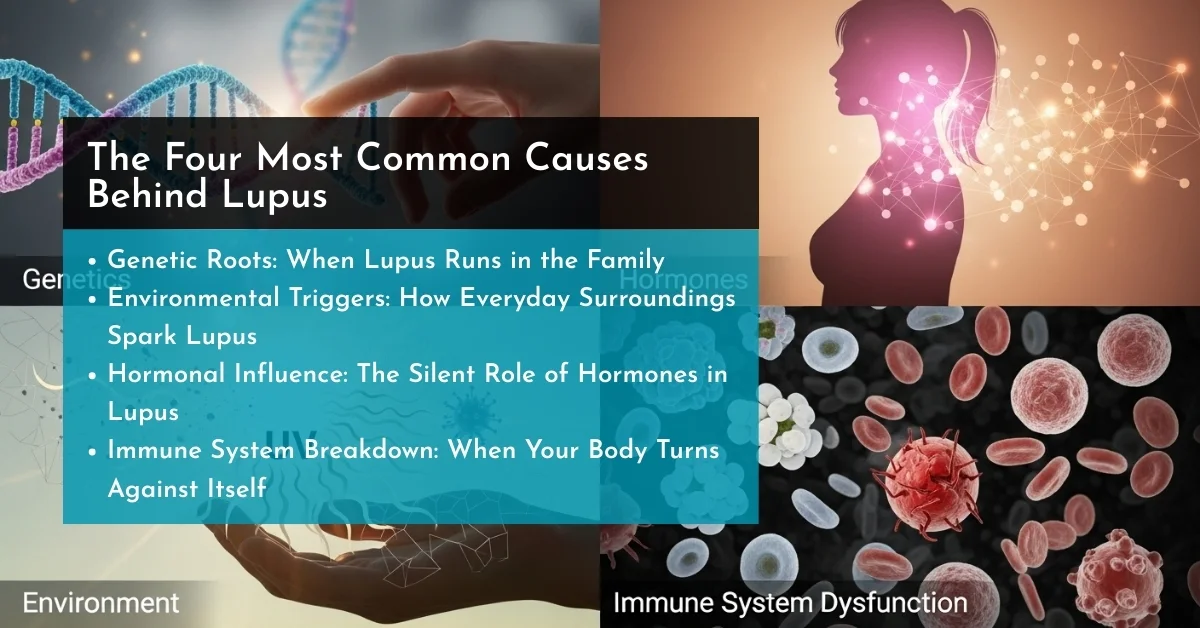
Most Common Causes Behind Lupus
Yes, lupus can have a genetic component. However, it’s important to note that genetics alone doesn’t guarantee someone will develop lupus. Genetic lupus or lupus inheritance is influenced by multiple factors.
1. Genetics Root
Several genes have been linked to lupus, with some people carrying genes that make them more susceptible. Key genes include the HLA class II genes, such as HLA-DR2 and HLA-DR3, which are important for immune system regulation. Studies suggest that lupus can run in families, but it’s not a simple genetic disease. As Johns Hopkins explains, having a tendency toward lupus does not mean a person is definitely going to experience it.
- HLA genes: These genes help the immune system distinguish between harmful and healthy cells.
- HLA-DR2 and HLA-DR3: HLA class II variants that studies have associated with systemic lupus erythematosus. HLA-B27 is sometimes mentioned in this context by mistake; it is linked to ankylosing spondylitis and reactive arthritis, not to lupus.
- Is lupus hereditary? Yes, lupus can be hereditary, meaning it may run in families. However, it doesn’t always get passed down in a clear-cut way.
- Does lupus skip generations? It’s possible, but rare. If a parent has lupus, there’s an increased risk in children, though not guaranteed.
2. Environmental Triggers
African Americans and Hispanic people tend to get lupus at an early age. Researchers are still working on finding the exact reasons and believe there are some genetic factors involved in this. Certain environmental factors can activate lupus in genetically predisposed individuals:
- Sun exposure: Ultraviolet (UV) rays from the sun can trigger lupus flare-ups, especially the characteristic butterfly-shaped rash.
- Infections: Viral infections like Epstein-Barr virus (EBV) are linked to lupus flares.
- Medications: Certain drugs, like hydralazine, procainamide, and isoniazid, can induce lupus-like symptoms.
- Epstein-Barr virus (EBV): A common virus that causes mononucleosis, often linked with triggering autoimmune diseases like lupus.
Been prescribed an immunosuppressant?
There is no pharmacogenomic dosing guideline for sirolimus, so genetics will not tell your rheumatologist how to dose it. A pharmacogenomic test from RPh Labs is a medication-response test: it does not detect lupus or any disease risk, and it reports how your body may process certain other medicines you could be prescribed along the way. Any change is decided with your prescriber.
3. Hormonal Factors
Women are more likely to develop lupus, especially during their reproductive years, suggesting that hormones play a role.
4. Immune System Breakdown
Lupus is an autoimmune disorder, meaning that the body’s immune system mistakenly attacks its own tissues, including skin, joints, kidneys, and other organs.
Common Signs and Symptoms of Lupus
The signs of lupus can vary widely and overlap with other conditions, making it difficult to diagnose at first. Here’s a breakdown of common signs:
- Skin rashes: A butterfly-shaped rash across the nose and cheeks is classic, but lupus rashes can appear anywhere on the body, including the legs, chest, and arms.
- Fatigue: One of the most common symptoms.
- Joint pain and swelling: Often affects the hands, wrists, and knees.
- Photosensitivity: Sensitivity to sunlight, causing rashes or flare-ups.
- Chest pain: Due to inflammation of the heart or lungs.
- Kidney problems: Lupus can damage the kidneys, leading to protein in the urine and swelling in the legs and feet.
- Neurological symptoms: Headaches, dizziness, and even seizures in severe cases.
Differentiating Lupus from Other Conditions:
The butterfly-shaped rash, while common, does not always appear in lupus. It can also manifest on the chest, arms, or other areas, and in different shapes. Lupus rashes may be confused with pimples or other skin infections due to their redness and irritation, but lupus rashes often have a distinctive pattern and can cause lasting skin damage.
Treatment Options for Lupus
Lupus is not fully curable, but it can be managed with proper treatment. Management involves controlling symptoms and preventing flare-ups.
1. Medications:
- Non-steroidal anti-inflammatory drugs (NSAIDs): To reduce pain and inflammation.
- Antimalarial drugs: Hydroxychloroquine is commonly used to control skin and joint symptoms.
- Corticosteroids: Used for flare-ups but should be used sparingly due to side effects.
- Immunosuppressive drugs: Help to suppress the overactive immune response in severe cases.
2. Lifestyle Modifications:
- Sun protection: Using sunscreen and wearing protective clothing is crucial.
- Balanced diet and exercise: Essential for overall health and managing fatigue.
- Stress management: Since stress can trigger lupus flare-ups, managing stress through relaxation techniques or therapy is beneficial.
3. Regular Monitoring:
Patients need regular checkups to monitor organ function, especially the kidneys and heart.
Table: Key Differences Between Lupus and Other Skin Conditions
| Condition | Symptoms | Key Differentiators |
| Lupus | Butterfly rash, fatigue, joint pain, photosensitivity | Butterfly rash, systemic symptoms (fatigue, kidney issues) |
| Pimples | Red, inflamed bumps on the skin | No systemic symptoms, localized to the face or chest |
| Eczema | Dry, itchy skin patches | Itchy skin, often on the elbows, knees, and face |
| Psoriasis | Thick, silvery scales | More common on scalp, elbows, knees; no systemic issues |
By understanding the genetics of lupus, along with environmental triggers and symptoms, you can better assess your condition and seek timely treatment.
Glossary of Terms:
- Autoimmune disease: A condition in which the body’s immune system mistakenly attacks its own healthy cells and tissues.
- HLA genes: HLA (human leukocyte antigen) genes that play a role in regulating the immune system.
- Photosensitivity: Increased sensitivity to sunlight, often triggering skin rashes in people with lupus.
- Immunosuppressive drugs: Medications that suppress or reduce the strength of the body’s immune system to prevent it from attacking healthy tissues.
- Corticosteroids: A class of drugs that reduce inflammation and suppress the immune system. Commonly used to treat flare-ups in lupus.
Corticosteroids carry potential side effects such as blood sugar, myopathy (muscle weakness), and more. Thus, they should only be administered under a doctor’s supervision.
Is lupus genetic, or does it just run in families?
The question is lupus genetic usually gets answered as a flat yes or no, and neither is accurate. Lupus is multifactorial. Inherited variants load the dice, and an environmental trigger such as an infection or heavy sun exposure usually has to arrive as well. Relatives of someone with lupus carry a higher risk than the general population, yet most people with a lupus-prone genetic background never develop the disease.
That distinction changes what you do next. A raised family risk is a good reason to know the early lupus symptoms and to mention your family history at routine checkups. It is not a diagnosis, and no test reads your DNA and tells you a lupus flare is coming.
It cuts the other way too. Many people diagnosed with lupus have no affected relative at all, so a clean family tree does not rule the condition out. Unexplained joint pain, rashes, or fatigue that lasts for weeks is worth a visit no matter who else in the family is affected.
Think of inheritance as one input among several, alongside sex, age, ancestry, infections, smoking, and ultraviolet light. That is also how clinicians weigh it when they decide whether to run antibody tests.
Which lupus genes are real, and what a gene test cannot do
Large studies have linked dozens of regions of the genome to systemic lupus erythematosus. Most sit in genes that regulate the immune system, including the HLA class II region, complement genes such as C1q, C2 and C4, and immune signaling genes such as IRF5 and STAT4. Each one contributes a small amount of risk on its own.
Two things follow from that. First, there is no single lupus gene to be tested for. Second, a panel of small-effect variants cannot tell an individual whether they will develop lupus, which is why risk genotyping is not part of routine care.
Rare exceptions exist. When lupus or a lupus-like illness appears in early childhood, a single-gene cause is sometimes found, and that evaluation belongs with a specialist and a genetic counselor rather than with any consumer test.
The RPh Labs panel is a pharmacogenomic panel, not a disease risk panel. It reports 20 genes that affect how the body processes medicines, and HLA and the other lupus risk genes are not among them. Pharmacogenomic results do not diagnose lupus and do not predict whether anyone will develop it. If you want diagnostic or risk testing, ask your clinician for a referral.
Lupus symptoms that are easy to miss
The classic butterfly rash gets all the attention, but the lupus symptoms that delay diagnosis are usually quieter and come and go over months.
- Mouth or nose ulcers that keep returning and are often painless.
- Hair thinning along the front hairline, or hair that breaks easily.
- Low-grade fevers with no infection found.
- Cold, color-changing fingers (Raynaud phenomenon) in mild cold.
- Chest pain that is worse on a deep breath, from inflammation of the lining of the lung or heart.
- Foamy urine or new ankle swelling, which can signal kidney involvement.
- Brain fog, headaches, or trouble finding words.
- Swollen glands and morning joint stiffness in the hands and wrists.
Because these lupus symptoms overlap with thyroid disease, fibromyalgia, viral illness, and anemia, keeping a simple dated log helps more than you would expect. Note what appeared, how long it lasted, and whether sun exposure or an infection came first.
Anything suggesting kidney, heart, lung, or brain involvement needs prompt attention rather than a wait-and-see approach. Call your clinician about new swelling, chest pain, shortness of breath, seizures, or confusion.
How doctors confirm a lupus diagnosis
There is no single lupus test. A diagnosis is built from your history, an exam, and a pattern of laboratory results over time, which is why a first visit rarely settles it.
- An antinuclear antibody (ANA) test is usually the screening step. A positive ANA is common in healthy people, so it supports a diagnosis rather than making one.
- More specific antibodies follow, such as anti-double-stranded DNA, anti-Smith, anti-Ro and anti-La, and antiphospholipid antibodies.
- Complement levels (C3 and C4) and a complete blood count help show whether the disease is currently active.
- A urinalysis looks for protein and blood, the earliest sign of lupus nephritis.
- A kidney biopsy is considered when the urine suggests nephritis, because it guides how aggressive lupus treatment needs to be.
Bring a symptom log, a list of every medicine and supplement you take, and your family history. Certain drugs can cause a reversible lupus-like illness, so an accurate medication list genuinely changes the work-up.
If tests are inconclusive, a rheumatologist may simply recheck in a few months. That is a reasonable plan, not a brush-off, because the picture often clarifies with time.
Lupus flare triggers and how to plan around them
A lupus flare is a period when the disease becomes more active. Triggers vary between people, but several show up often enough to plan around.
- Ultraviolet light from sun and some fluorescent sources, including reflected light on cloudy days.
- Infections, which is one reason vaccines are discussed early with your prescriber.
- Stopping a maintenance medicine on your own. Interrupting hydroxychloroquine is a well-recognized route to a lupus flare.
- Physical and emotional stress, including surgery and poor sleep.
- Pregnancy and the weeks after delivery, which is why planning matters.
- Smoking, which is also linked to worse response to some lupus treatment.
Practical planning beats vigilance. Keep broad-spectrum sunscreen and a hat where you will actually use them, treat infections early, refill prescriptions before they run out, and agree in advance with your prescriber on what you should do at the first sign of a lupus flare.
Write down what preceded past flares. Patterns that look random in the moment often turn out to be predictable across a year.
Lupus treatment options and what each one does
Lupus treatment aims to quiet the immune system enough to protect organs while keeping side effects tolerable. Every choice below is made with your prescriber, based on which organs are involved and how active the disease is.
- Antimalarials such as hydroxychloroquine, usually the long-term backbone for skin, joint, and fatigue symptoms.
- NSAIDs for joint pain and pleurisy, used cautiously if the kidneys are involved.
- Corticosteroids for flares, at the lowest dose and shortest course that controls the problem.
- Immunosuppressants such as azathioprine, mycophenolate, or methotrexate for organ involvement.
- Biologics such as belimumab or anifrolumab, added when standard therapy is not enough.
- Blood pressure and kidney protection, often an ACE inhibitor or ARB when there is protein in the urine.
Some of these drugs must not be used in pregnancy, and some need regular blood counts or eye checks. Never stop or change a lupus treatment on your own, including steroids, which have to be reduced on a planned schedule.
Ask what each medicine is for, what monitoring it needs, and what you should watch for at home. Those three questions make the plan much easier to stick with.
Lupus and pregnancy: planning ahead
Most people with lupus can have healthy pregnancies, and the single biggest factor is how quiet the disease is beforehand. Conversations about lupus and pregnancy work best several months ahead of trying to conceive.
- Disease activity is usually reviewed first, because conceiving during stable disease lowers the risk of a lupus flare later.
- Medicines are reviewed and sometimes changed well in advance. Some, including mycophenolate and methotrexate, are avoided in pregnancy, while hydroxychloroquine is often continued.
- Anti-Ro and anti-La antibody results matter, because they are linked to neonatal lupus and to heart rhythm monitoring in the fetus.
- Antiphospholipid antibodies change how clotting risk is managed during pregnancy.
- Blood pressure and urine protein are watched closely, since lupus nephritis and preeclampsia can look alike.
Care is usually shared between a rheumatologist and an obstetrician experienced with high-risk pregnancy. Bring your full medication list to the first visit, including anything over the counter.
The postpartum weeks deserve the same attention as the pregnancy itself. Agree in advance on who you call if symptoms change after delivery.
Where pharmacogenomics helps with lupus medicines, and where it does not
To be clear about the limits: pharmacogenomic (PGx) testing does not diagnose lupus, does not measure disease activity, and does not predict a lupus flare. What it does is describe how your body is likely to process certain drugs, which is a prescribing question rather than a diagnostic one.
For lupus specifically, a few links are well established. TPMT and NUDT15 variants raise the risk of serious bone marrow suppression from azathioprine, and both genes are on the RPh Labs 20-gene panel; you can read more in our guide to TPMT testing. If antiphospholipid antibodies mean warfarin is on the table, CYP2C9, VKORC1 and CYP4F2 influence dosing.
Plenty of lupus drugs have no gene-drug guidance at all, including hydroxychloroquine, mycophenolate, belimumab, and anifrolumab. Saying so is more useful than implying a gene result covers everything in the cabinet. Current gene-drug recommendations are published openly by CPIC.
Where PGx often earns its place is the rest of the medicine list that builds up around a chronic condition: antidepressants, acid reducers, pain medicines, and statins. Our medication list shows which drugs map to which genes, and the at-home cheek swab kit covers all 20 genes in one sample.
Conclusion
Lupus can be inherited; however, it’s not guaranteed. Researchers suggest that lupus is an autoimmune disease often caused by the combination of genetic and environmental factors. Women are more prone to getting Lupus, especially among African Americans. And though it’s not fully curable until now, the good thing is, with the right treatment and lifestyle changes, managing lupus is possible.
Disclaimer: This blog is for informational purposes only and does not constitute medical, legal, or professional advice. While we strive for accuracy, errors or omissions may occur.
Is lupus genetic? Frequently asked questions
Can You Get Lupus Without Any Family History?
Yes, although genetic lupus increases susceptibility, lupus can occur without any hereditary effects as well.
Is lupus hereditary from father?
Not solely from the father, either of the parents having lupus increases the susceptibility of children to experience lupus.
Is lupus hereditary from mother?
Not solely from the mother, either of the parents having lupus increases the susceptibility of children to experience lupus.
Is lupus a genetic disease?
Lupus may be experienced without lupus in genetics. According to the researchers, it is often a result of genetics and environmental factors; moreover, it may also occur without involvement of genetics.
Can I get tested for the lupus genes?
Not in any useful way. Dozens of variants each add a small amount of risk, so no panel can tell an individual whether lupus will develop. Diagnosis relies on symptoms, an exam, and antibody and urine tests. If a single-gene cause is suspected, usually in early childhood disease, a specialist and a genetic counselor arrange that testing.
Does a positive ANA test mean I have lupus?
No. A positive antinuclear antibody result is common in healthy people, and it rises with age. It is a screening clue, not a diagnosis. Clinicians look at the pattern of more specific antibodies, complement levels, blood counts, urine protein, and your lupus symptoms before drawing any conclusion.
How long does a lupus flare usually last?
It varies from days to several weeks, depending on which organs are involved and how quickly treatment is adjusted. Fatigue often outlasts the rash or joint pain. Tell your prescriber early rather than waiting, since a lupus flare caught sooner usually needs a shorter course of steroids.
Can men get lupus?
Yes. Lupus is diagnosed far more often in women, especially during the reproductive years, but men develop it too and can have significant kidney and blood involvement. Being male sometimes delays diagnosis, so mention a family history of autoimmune disease when symptoms do not add up.
Is drug-induced lupus the same as systemic lupus?
No. Drug-induced lupus follows certain medicines, tends to spare the kidneys and brain, and usually settles after the drug is stopped under medical supervision. Do not stop a prescribed medicine on your own. Bring a full medication list, since it changes both the diagnosis and the plan.
Should I stop my lupus treatment once I feel well?
No, not without your prescriber. Feeling well often means a medicine is working, and stopping maintenance treatment such as hydroxychloroquine is a common route to a lupus flare. If side effects or cost are the problem, say so, because there is usually another option.



Leave a Reply