
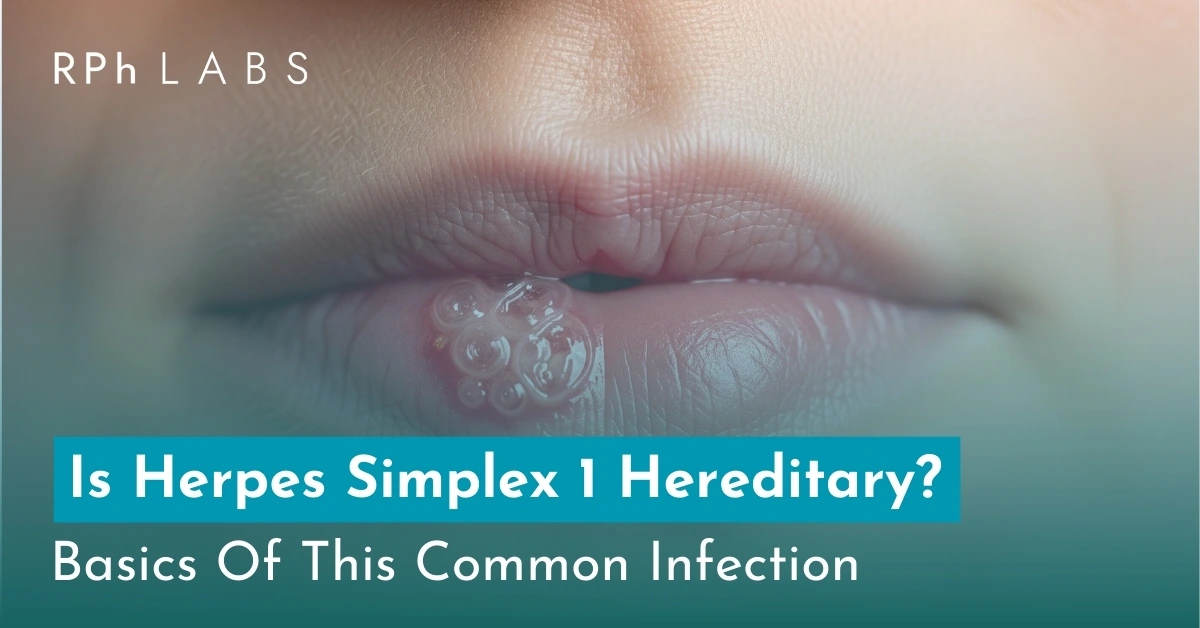
What is Herpes Simplex Virus 1 & How Common is It?
Herpes simplex virus 1 is contagious and spreads through direct contact with infected typically through saliva or skin contact (like kissing) with someone who is shedding the virus (with or without visible cold sores). According to the World Health Organization (WHO), about 3.8 billion people under age 50, roughly 64% of the world’s population, are estimated to carry HSV-1. That shows just how common HSV-1 is globally. Often, people get infected in childhood, through non-sexual, everyday contact, like sharing cups, utensils, or a kiss from a family member. Once the herpes simplex virus enters your body, it travels to nerve cells where it remains dormant. The virus can reactivate periodically, causing those familiar blisters we call cold sores or fever blisters. But here’s the interesting part: while most people carry the virus, only about 20-40% will ever experience visible symptoms.Mode of Transmission HSV-1 Virus (Not via Genes)
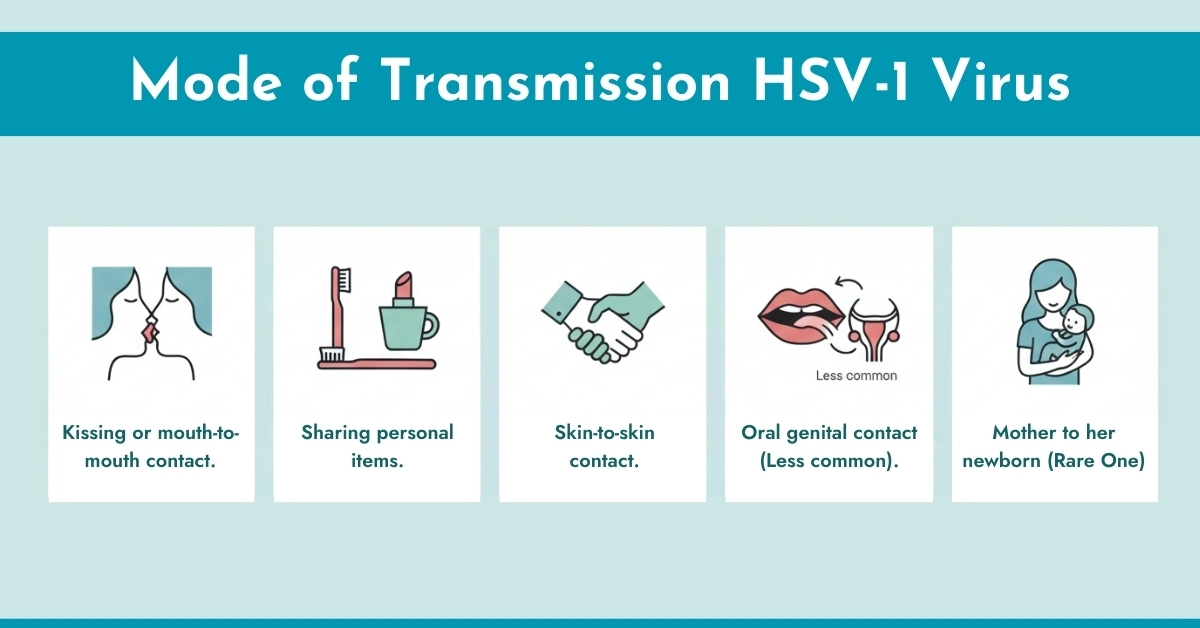
HSV-1 spreads through simple, close contact, not through genes. Modes of transmission include:- Kissing or mouth-to-mouth contact, especially when there are active cold sores.
- Sharing personal items: utensils, cups, lip balm, razors, towels, anything that contacts saliva or skin near the mouth.
- Skin-to-skin contact, even if no visible sore is present, because the virus can be shed asymptomatically (without symptoms).
- Less commonly, oral genital contact (oral sex) can transmit HSV-1 to genital areas, causing genital herpes.
- Rare but possible: transmission from a mother to her newborn during childbirth (if active lesions at delivery).
Health Tips: Never let anyone with an active cold sore kiss a newborn. The virus can be life-threatening for infants whose immune systems aren’t fully developed yet.
Is HSV-1 Hereditary or Genetic?
Many people equate “family patterns” with genetic inheritance. However, for HSV-1 1 the truth is different. What is true:- HSV-1 itself is not inherited like a gene. You don’t have it built into your DNA from birth. You acquire it through contact.
- Cold sores appearing in several family members usually reflect shared exposure — e.g., same household, close contact, shared items, especially in childhood.
- While the virus isn’t genetic, some people appear genetically predisposed to get frequent or intense outbreaks once infected.
- Studies have identified regions on chromosome 21 that seem linked to increased susceptibility to recurrent cold sores.
- This doesn’t mean that the virus is inherited — it means the body’s immune response (how well you control the virus) may depend partly on your genes.
Bottom line: You cannot inherit HSV 1 itself, but you might inherit a tendency for more frequent outbreaks — if you get infected. This doesn’t mean you inherit the virus, only that your body may react more intensely if infected. Genetic testing like RPh Labs’s at-home PGx Testing, can provide insights into how your body may respond to medication, including antivirals for frequent outbreaks
Are Cold Sore & Fever Blisters Genetic?
Are fever blisters genetic? Like cold sores (they’re the same condition), fever blisters aren’t genetically transmitted, but genetic factors influence outbreak frequency. Common triggers that reactivate dormant HSV-1 include:- Stress and fatigue
- Other illnesses or infections
- Hormonal changes (menstruation)
- Sun exposure (UV radiation)
- Immune suppression
- Physical trauma to the lip area
Why Some Carriers Never Show Symptoms
Even among people who carry HSV-1, cold sores show up in only a fraction. Why? Because a combination of factors influences whether this virus reactivates. Common Triggers:- Sunlight/UV exposure: Ultraviolet rays weaken local immunity and can trigger cold sores.
- Stress or illness: Physical or emotional stress reduces immune defenses.
- Fatigue, fever, surgery, or immunosuppression: Can provoke reactivation.
- Skin trauma at lip/mouth area: Minor cuts, dryness, cold weather, etc.
- Some people have immune system genes that make them less efficient as surprising latent viruses, thus more prone to repeated outbreaks.
- Others may clear or suppress the virus better, so they remain asymptomatic despite being infected.
Did You Know? Research from Scientific American highlights that genetics can determine whether HSV-1 remains dormant or triggers visible outbreaks.
Why Cold Sores Sometimes “Run in the Family”
If you notice cold sores in multiple family members, it may feel like a “hereditary disease”. But more often, these patterns reflect shared living conditions and common exposure, not inherited virus. For Example:- In families where partners kiss each other or parents kiss kids on the lips, share utensils, or live in close quarters, early childhood is a common time for HSV-1 spread.
- Siblings may share similar lifestyle factors, stress levels, sun exposure, and immune health, which influence outbreak risk.
- Genetic predisposition (immune response genes) may also play a role, meaning some family members get frequent outbreaks, others don’t, even though all carry the virus.
For your information: A study from the University of Utah Health Sciences identified a region on chromosome 21 linked to increased risk of cold-sore outbreaks, pointing to potential “cold-sore susceptibility genes.”
Common Myths and Facts Related to Herpes Simplex
| Myth | Fact |
| “Cold sores run in my genes” | Susceptibility runs in genes, not the virus itself |
| “I inherited herpes from my parents” | You acquired it through childhood contact |
| “Genetic cold sores aren’t contagious” | All HSV-1 is contagious, regardless of genetics |
| “If it’s genetic, I can’t prevent it” | Infection is preventable; outbreak frequency is gene-influenced |
| “My DNA test shows HSV-1” | Standard DNA tests don’t detect viruses; PGx tests show drug metabolism |
Managing Cold Sores and Reducing Transmission of HSV 1
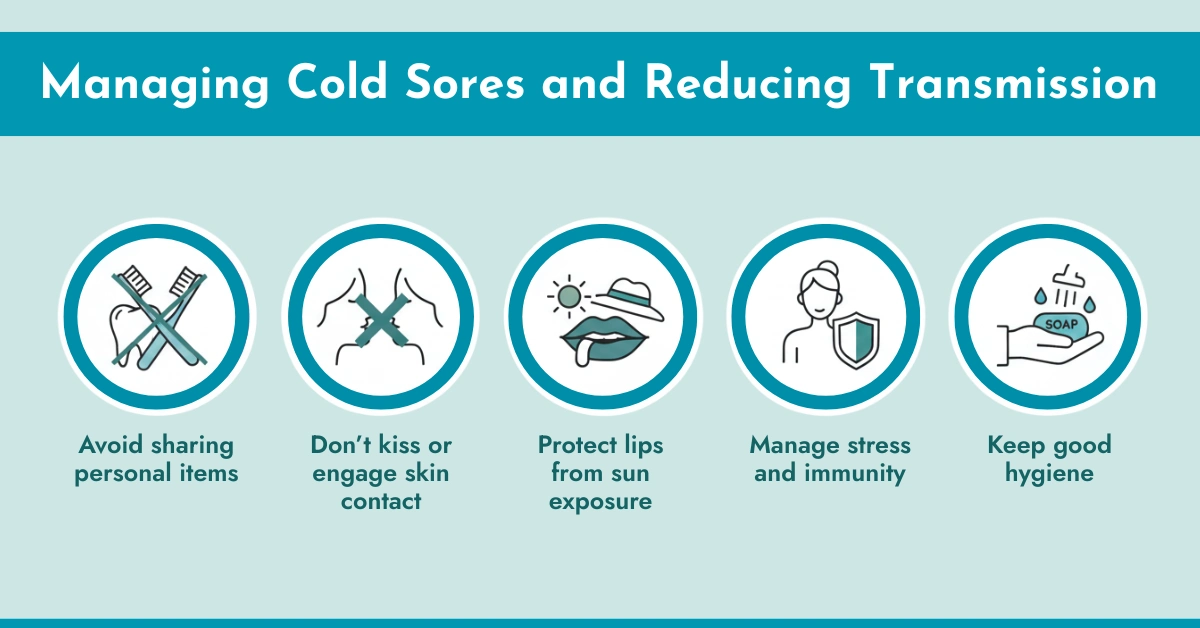
If you have HSV-1 or suspect you might, there are ways to reduce outbreaks and lower the risk of transmitting to others.Practical tips for preventing and caring:
- Avoid sharing personal items when you and someone else have cold sores, cups, lip balm, towels, utensils, etc.
- Skin-to-skin contact while a cold sore is active and avoid oral genital contact during this time.
- Protect lips from sun exposure, wear lip balm with SPF to reduce sun-triggered reactivations.
- Manage stress and immunity, good sleep, healthy diet, stress reduction; strong general health helps keep HSV-1 dormant.
- Keep good hygiene, wash hands frequently, and avoid touching sores.
When to Seek Medical Advice
Consult your healthcare provider if you:- Experience frequent or severe cold sore outbreaks.
- Pregnant or planning pregnancy with a history of herpes.
- Have a compromised immune system.
- Notice herpes symptoms in different body areas.
- Want to understand your genetic risk factors.
Conclusion:
So, is herpes simplex 1 hereditary? The definitive answer: The virus itself is not inherited, but your genetic code writes the rulebook for how your body handles it. Herpes simplex virus 1 is contagious through simple human contact, yet your DNA determines if you’ll battle monthly outbreaks or live symptom-free. Modern HSV-1 management now merges infectious disease protocols with pharmacogenomic precision. Knowing your CYP2C19 status before starting suppressive therapy is as crucial as knowing your triggers. Disclaimer: The information provided here is for educational purposes and should not replace consultation with a qualified healthcare professional. Certain images in this post are AI-generated for illustrative purposes only.Frequently Asked Questions
Is herpes simplex 1 hereditary in any way?
No. Herpes simplex 1 is contagious, not genetically inherited. However, genes controlling immune response affect outbreak frequency.
Can herpes be passed down genetically through sperm or eggs?
No. Unlike HHV-6 (a different herpesvirus), HSV-1 does not integrate into human DNA. It’s transmitted through contact, not conception.
Are cold sores hereditary if my entire family gets them?
You share genetic susceptibility and exposure habits. The virus spreads through close contact in childhood, creating family patterns that mimic heredity.
Is HSV genetic testing available?
Standard DNA tests don’t detect HSV. RPh LABS PGx testing examines drug metabolism genes (CYP2C19, CYP3A4) that process antivirals, optimizing treatment.
Are genetic cold sores contagious?
This phrase is misleading. All HSV-1 is contagious. “Genetic” refers to susceptibility, not a different type of virus.


Leave a Reply