
What Is Genetic Testing for Breast Cancer
A genetic test for breast cancer checks your DNA for little shifts known as mutations or harmful changes. These passed-down tweaks can make it much more likely you’ll face breast cancer at some point in life.How the test is done:
- A small blood sample, saliva sample, or cheek swab sample is taken.
- Then sent to a genetics laboratory.
- Results typically return within 2-4 weeks, and sometimes it takes a bit longer.
Types of Test Results:
When you get your test reports from a breast cancer genetic testing panel, they fit into one of three results:- Positive: A gene change that raises your risk of breast cancer is found
- Negative: Nothing unusual showed up in the genes they checked
- Variant of Uncertain Significance (VUS): There’s a change, but no one’s sure yet if it matters for cancer risk
Key Genes Linked to Breast Cancer
BRCA1 and BRCA2: The Primary Gene
When some people talk about genes for breast cancer, they often mean BRCA1 and BRCA2. These genes fix broken DNA and cause cells to grow out of control.- Women with a shift in the BRCA gene face a much higher chance of breast cancer, plus risks for ovarian, pancreatic, or other types too. The numbers can feel heavy.
- For women with a BRCA1 or BRCA2 mutation, the risk of breast cancer by age 70 is between 50 and 85 percent.
- But keep in mind, only about 0.25 percent of people overall have one of these changed BRCA genes—that’s roughly one in 400.
Other Important Genes
New steps forward in genomic testing for breast cancer have pointed out more genes that play a part in raising risks:- PALB2: Works with BRCA2 to repair damaged DNA and also increases breast cancer risk.
- PTEN: Regulates cell growth; mutations can raise cancer and non-cancer growth risks.
- TP53: Associated with multiple cancers, including breast, blood, and brain cancers.
- CDH1: Linked to lobular breast cancer and stomach cancer.
- ATM, CHEK2, STK11: Moderate increase in breast cancer risk.
Who Should Consider Genetic Testing?
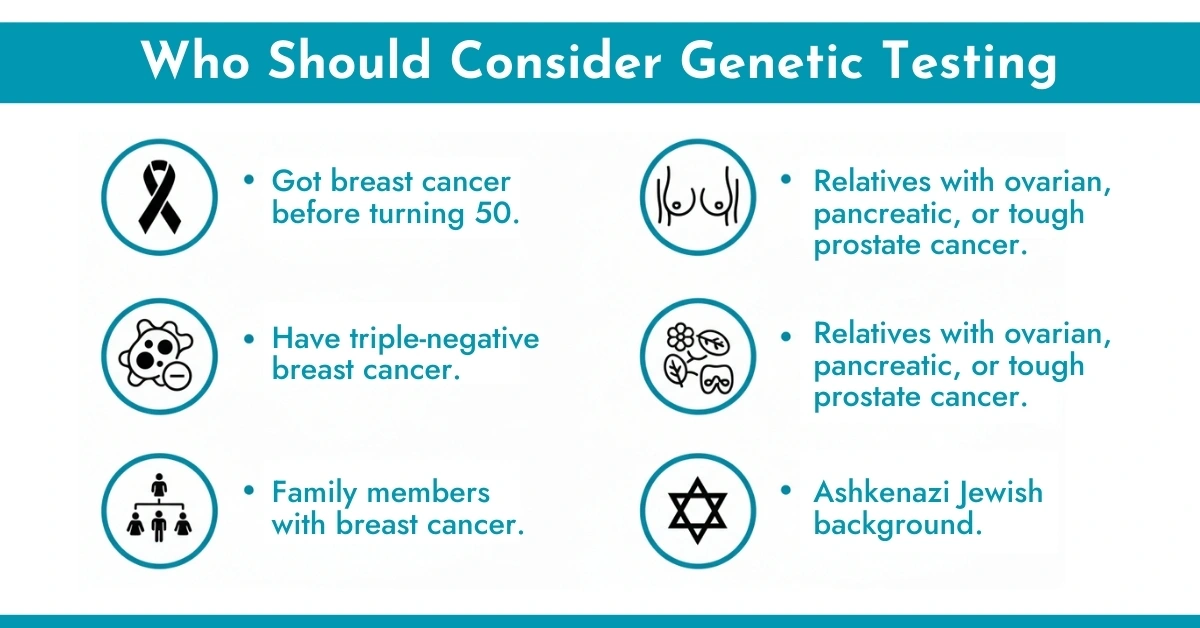
Not everybody needs a genetic test for the breast cancer gene. It’s most helpful for those with certain signs in their own or family health stories. Talk to your doctor about genetic testing for breast cancer if you have:- Got breast cancer before turning 50
- Have triple-negative breast cancer found before 60
- Dealt with breast cancer on both sides
- Have several close family members with breast cancer, like mom, sister, or daughter
- Know of male breast cancer in the family
- Have relatives with ovarian, pancreatic, or tough prostate cancer
- Come from an Ashkenazi Jewish background (some BRCA changes are more common there)
- Have a family member known to have a BRCA or other cancer-linked change
Note: Genetic testing for breast cancer identifies markers like HER2 that guide treatment. For HER2-positive patients, TCHP chemotherapy is often recommended. Knowing your genetic profile helps personalize therapy for better outcomes.
Understanding BRCA Testing CPT Codes
BRCA testing CPT codes are standard numbers used for billing and insurance. Common ones are:- CPT 81162: Full check of BRCA1 and BRCA2 genes
- CPT 81212: BRCA testing for known changes (often the Ashkenazi Jewish set)
- CPT 81432: Panel for hereditary breast cancer (covers many genes)
Where to Get Genetic Testing for Breast Cancer
Starting the Process
Figuring out where to get genetic testing for breast cancer starts with talking to your doctor. It’s a good idea to see a counselor before and after. Counselors review family history, discuss risks, and help determine which genes to test.Testing Locations:
You can get a genetic test for breast cancer through:- Programs at hospitals for genetics
- Labs that do genetic work on their own
- Centers focused on cancer care
- Doctors in regular care who know genetics well
What Happens After Testing?
Understanding Your Results
After receiving your results, meet with a genetic counselor or your doctor to discuss what they mean for you and your family.- Positive: High-risk mutation detected
- Negative: No known mutation detected
- Uncertain: Mutation found, but impact unknown
Risk Management Options
If you’re positive for a high-risk change, there are solid ways to lower the chances:Enhanced Screening:
- Mammograms starting sooner and more often
- Adding breast MRI to mammograms
- Breast checks by a doctor every 6 to 12 months
Preventive Medications (Chemoprevention):
- Tamoxifen or raloxifene before menopause
- Aromatase inhibitors after menopause
Risk-Reducing Surgery:
- Preventive breast removal (prophylactic mastectomy)
- Ovarian removal for BRCA carriers (prophylactic oophorectomy)
Implications for Family Members
The results of your genetic test may also be relevant for your family members, as they could share the same gene changes. If you test positive, your siblings and children have a 50% chance of carrying the same mutation. Encourage them to consider genetic counseling and testing.Hereditary vs. Sporadic Breast Cancer
- Hereditary Breast Cancer: Approximately 5-10% of breast cancer cases are hereditary, which means the mutational gene comes from the parents.
- Sporadic Breast Cancer: But 90-95% breast cancer cases are not inherited. These cancers usually occur due to aging, daily habits, environmental exposure, and random changes in DNA that occur naturally over a lifetime.
Recent Advancement and Research Updates
- Expanding Testing Criteria: Wider rules for who gets tested are opening up more info on genes, making care for breast cancer more exact.
- Polygenic Risk Scores: Past just one-gene checks, experts are building polygenic risk scores that mix data from hundreds of small gene tweaks for a finer look at risks. These new scores provide additional detail to the standard genetic testing for inherited cancer risk.
- Cost Trends: Testing costs have dropped a ton. Today, comprehensive panel tests are more affordable than ever, making genetic testing accessible to a wider range of people who may benefit from it.
Information:
The American Society of Breast Surgeons now recommends that any breast cancer patient who wants genetic testing should be offered it, a major shift from older, more restrictive guidelines.Conclusion:
Genetic testing for breast cancer can be a valuable resource in cancer prevention. If you have a family history or other risk factors that put you at increased risk, speaking to your physician about testing is important. Remind yourself that knowledge is power! Understanding your genetic risk allows you to take proactive steps toward protecting your health through improved screenings, preventive strategies, and informed decision-making. RPH Labs remains committed to precision healthcare through our at-home PGx testing services, helping you understand how your genes influence medication responses. Disclaimer: This blog does not provide medical diagnosis or treatment recommendations. Always seek the advice of a licensed medical professional for health decisions. Images used in this article may be AI-generated and are shown for illustrative purposes.Frequently Asked Question
Frequently Asked Questions
How do you test for the breast cancer gene?
Blood is drawn, saliva is taken, or a cheek swab is performed, and the sample is sent to a laboratory for genetic testing to look for specific breast cancer gene mutations.
Can men get genetic testing for breast cancer?
Yes! Men can get breast cancer as well, and BRCA mutations can also cause cancers of the pancreas, prostate, and skin cancer, such as melanoma. Men with BRCA mutations should undergo genetic testing and appropriate screening.
What if I had tested years ago?
Patients who had genetic testing previously may benefit from updated testing, especially if their testing occurred before 2013, when panels were much more limited.

Leave a Reply