
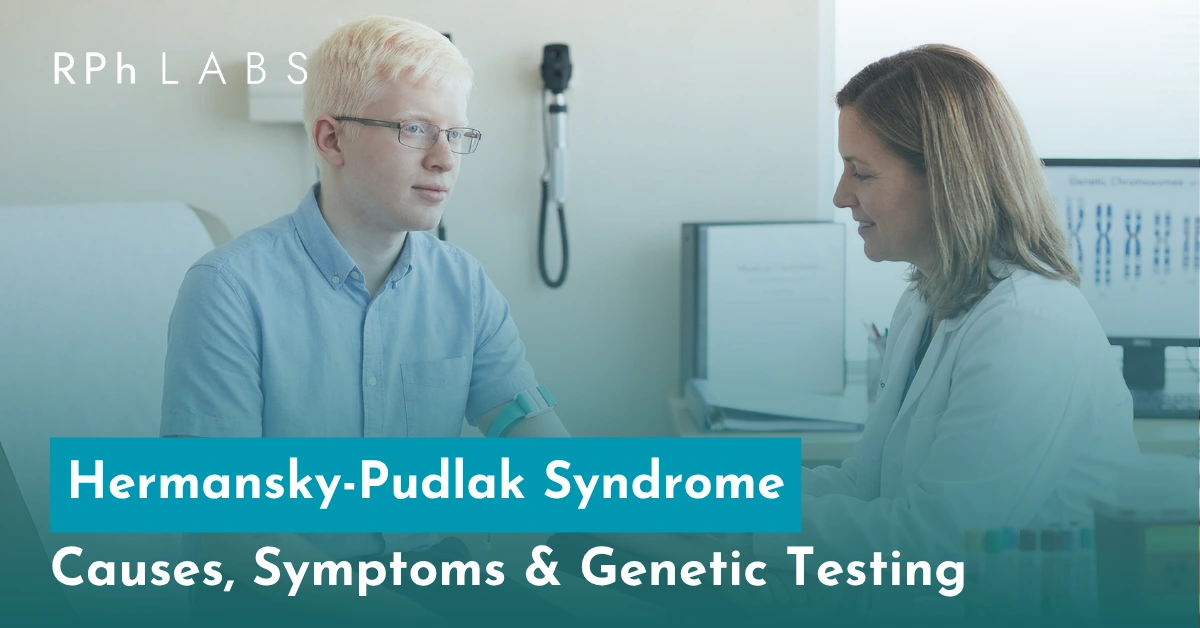
Hermansky-pudlak syndrome brings together three things that rarely travel as a group: reduced pigment, a bleeding tendency and, in some types, progressive lung scarring. This guide focuses on the practical side of living with it and the questions worth raising with your own care team.
On this page
Hermansky-Pudlak Syndrome (HPS) is a rare inherited disorder causing albinism, dangerous bleeding problems, and life-threatening lung disease. It affects roughly 1 in 500,000 people worldwide and remains underdiagnosed. Without genetic testing, a diagnosis is often delayed for years, and precautions that matter are missed.
Thousands of families spend years visiting specialists without answers. Surgeries happen without proper precautions. Lung damage progresses silently. Children grow up without a diagnosis that would change everything.
This guide covers HPS causes, symptoms, types, and why genetic testing changes everything.
What Is Hermansky-Pudlak Syndrome?
Hermansky-Pudlak Syndrome is a rare genetic condition disrupting pigmentation, blood clotting, and lung function simultaneously.
First described in 1959 by Czech physicians Frantisek Hermansky and Pavlina Pudlak, it remains one of the most underdiagnosed rare conditions worldwide.
HPS is most common in Puerto Rico, affecting 1 in 1,800 people in the northwestern region. Globally, it occurs in 1 in 500,000 to 1,000,000 individuals. Cases also appear in India, Japan, and Western Europe.
The Three Core Features of HPS:
Every person with Pudlak syndrome shares three characteristics:
- Oculocutaneous albinism: Reduced pigment in skin, hair, and eyes.
- Bleeding diathesis: Impaired blood clotting due to platelet dysfunction.
- Ceroid accumulation: A buildup of fatty pigment in body tissues.
Recognizing the Symptoms of Hermansky-Pudlak Syndrome
Symptoms are present from birth. However, most families don’t connect them until years later.
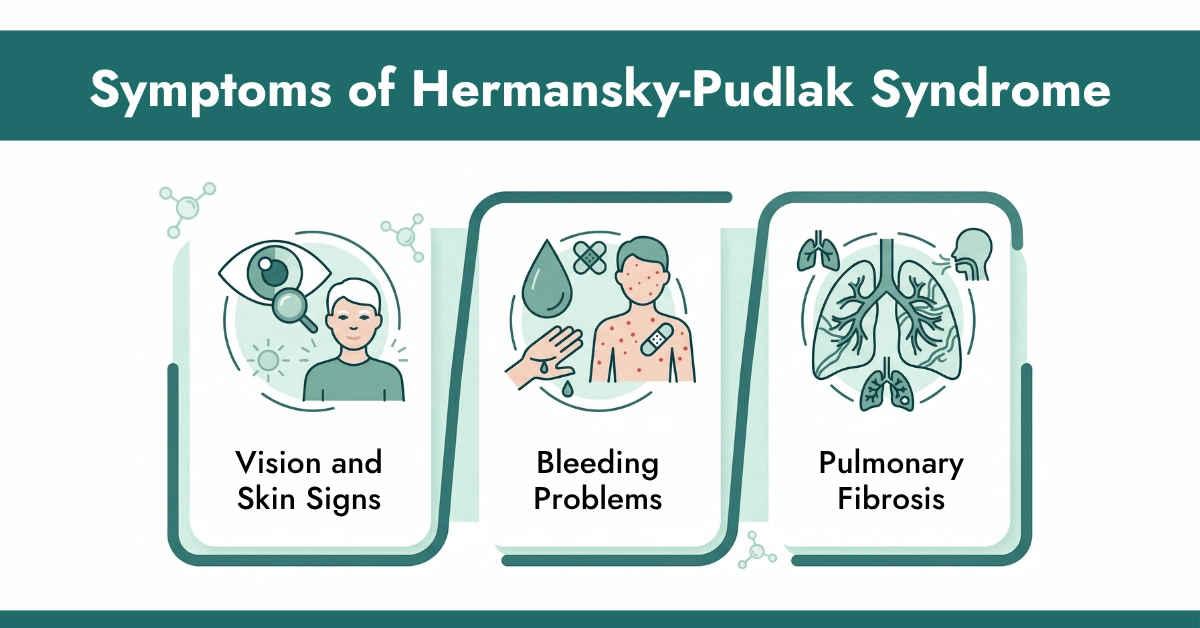
1. Vision and Skin Signs:
Patients with HPS often have pale skin, white or light hair, and light-colored eyes. Common symptoms include:
- Involuntary eye movement (nystagmus).
- Light sensitivity.
- Reduced vision.
Due to reduced melanin, individuals with HPS also have a higher risk of skin cancer.
2. Bleeding Problems:
HPS patients bruise easily and experience prolonged bleeding. Even minor cuts, dental procedures, or surgeries can lead to severe complications due to platelet dysfunction, where platelets lack dense bodies necessary for clotting.
Without early diagnosis, surgeries and medical procedures are carried out without precaution, risking severe hemorrhage. Proper diagnosis can help prevent these risks.
3. Pulmonary Fibrosis:
The most dangerous aspect of HPS is pulmonary fibrosis, progressive lung scarring that occurs in types 1, 2, and 4. This condition typically emerges in the early thirties and can seriously affect breathing.
Genetic testing identifies the subtype and tells your care team whether pulmonary fibrosis is a risk, so lung function can be monitored from early on.
Pulmonary fibrosis in HPS gets worse over time, so once the diagnosis is known, lung function is checked regularly by a pulmonologist. Finding it early gives you and your care team more time to plan monitoring and treatment.
The Genetic Causes Behind HPS
HPS is not caused by a single gene. It results from mutations in any of 11 different genes, each disrupting lysosome-related organelles (LROs), tiny cell structures essential for pigmentation, blood clotting, and lung function.
The genes that cause HPS:
- HPS1: Responsible for ~75% of Puerto Rican cases.
- HPS3: Common in central Puerto Rico and other populations.
- HPS4, HPS5, HPS6: Each account for a smaller percentage.
- AP3B1, BLOC1S3, DTNBP1, BLOC1S6: Rarer but clinically significant.
Mutations in these genes prevent LROs from forming correctly, disrupting melanin production, platelet function, and lung cell integrity all at once.
How HPS Is Inherited:
HPS is inherited in an autosomal recessive pattern; both parents must pass on a defective gene copy. Carriers appear healthy but carry a 25% risk per pregnancy of having an affected child.
If HPS runs in your family, genetic counseling is strongly recommended before having children.
The 11 Types of Hermansky-Pudlak Syndrome
HPS is not one condition. It is a spectrum of 11 distinct types, each caused by a different gene mutation and carrying different clinical outcomes.
- Severe Types: Types 1, 2, and 4 are the most serious. All three are linked to pulmonary fibrosis and need the closest monitoring. Type 1 dominates Puerto Rican cases (~75%). Type 2 additionally causes immune deficiencies, making patients highly vulnerable to repeated infections.
- Milder Types: Types 3, 5, and 6 present milder symptoms. Vision problems and mild bleeding tendencies occur, but pulmonary fibrosis typically does not develop. Types 7 through 11 are extremely rare, and limited data exists on the full clinical impact.
Knowing your specific subtype through HPS genetic testing directly shapes your treatment plan, surgical protocols, and long-term monitoring needs.
What Happens Without a Diagnosis?
This is where many patients with HPS suffer: Without a confirmed diagnosis. Individuals undergo necessary procedures, surgeries, and treatments that fail to account for their bleeding tendencies or lung complications.
For Example:
- Surgeons operate without accounting for bleeding diathesis, causing preventable hemorrhages.
- Ophthalmologists treat vision problems without recognizing the underlying syndrome.
- Pulmonologists discover lung scarring too late to meaningfully slow its progression.
Families visit multiple specialists for years, receiving partial explanations for each symptom. Nobody connects the dots.
Misdiagnosis is common. Many HPS cases are initially mistaken for simple albinism or isolated platelet disorders, leading to years of confusion.
A single HPS gene panel test can end years of diagnostic confusion, often within just a few weeks.
Hermansky-Pudlak Syndrome Genetic Testing
Genetic testing is the only definitive way to confirm HPS. It identifies your subtype and shapes every care decision that follows.
What Does an HPS Gene Panel Cover?
An HPS NGS panel sequences multiple genes associated with the condition, including HPS1, HPS3, HPS4, HPS5, HPS6, AP3B1, BLOC1S3, DTNBP1, and BLOC1S6, to identify exact pathogenic variants.
Results help doctors:
- Predict likely complications by subtype.
- Adjust surgical protocols for bleeding safety.
- Guide to family risk planning.
Who Should Get Tested?
Consider Hermansky-Pudlak genetic testing if you have:
- Unexplained oculocutaneous albinism.
- Easy bruising or prolonged bleeding.
- Breathing difficulties alongside albinism signs.
- Family history of HPS.
RPh Labs is a CLIA-certified and COLA-accredited lab offering PGx testing, which reports how your genes may affect your response to certain medications. It does not test for HPS. The reason people with HPS avoid NSAIDs and other drugs that worsen bleeding is the platelet dysfunction the syndrome itself causes, not a pharmacogenomic result, so that advice comes from your hematologist whatever a PGx report says.
Our at-home cheek (buccal) swab kit reports on 240+ medications, delivers results 7 to 10 business days after your sample reaches the lab, and is HSA/FSA eligible. No blood sample is required.
Managing Life With HPS: Medications, Care, and Genetic Testing
Medications HPS Patients Should Avoid:
- NSAIDs (e.g., ibuprofen, aspirin).
- Anticoagulants and blood thinners.
- Fish oil supplements (which can increase bleeding risks).
Many HPS patients unknowingly use harmful medications because their diagnosis wasn’t made in time.
Where Pharmacogenomics Fits Into HPS Care
Pharmacogenomic (PGx) testing reports how your genes may affect the way you process certain medications. It cannot tell you whether a drug is safe with a bleeding disorder, but it gives your prescriber one more piece of information when a medicine is chosen or a dose is set.
At RPh Labs, every report is reviewed by a PharmD pharmacist, and a free pharmacist consultation is included so you can go through the results with your prescriber.
Hermansky-Pudlak syndrome: 5 practical takeaways
The science is complicated. The day-to-day priorities are not. These five points are what most families say they wish someone had told them in the first month after a diagnosis of hermansky-pudlak syndrome.
- Tell every clinician, dentist and surgeon about the bleeding tendency before any procedure, not on the day of it.
- Ask which subtype you have, because the lung risk is not the same across all of them and your monitoring plan follows from it.
- Treat sun protection and low-vision support as core medical care rather than optional extras.
- Keep one current medicine and supplement list, and have a pharmacist check anything new against your bleeding risk.
- Ask for a referral to a center that has seen this condition before. Rare conditions go better with clinicians who recognize the pattern.
None of that replaces your own specialists. It does give you the four or five sentences that get a busy clinician’s full attention, which is often the difference between routine care and a preventable complication.
If you have not yet had a confirmed diagnosis, the sections on genetic testing and on misdiagnosis are the ones to read first, because this condition is regularly mistaken for albinism alone or for an isolated platelet problem.
Oculocutaneous albinism: vision and skin care that helps
The pigment side of the condition is oculocutaneous albinism, meaning reduced melanin in skin, hair and eyes. The eye findings usually matter more than the cosmetic ones, because melanin is involved in how the retina and optic pathways develop.
Common findings include involuntary eye movements (nystagmus), light sensitivity, reduced sharpness of vision that glasses cannot fully correct, and problems with depth perception. These are stable rather than progressive for most people, but they do need proper assessment.
What good eye care looks like
- A low-vision assessment, not just a refraction, so that magnification, contrast and lighting are addressed.
- Tinted lenses or wide-brimmed hats for glare, which for many people is the most disabling symptom indoors and out.
- Large-print or high-contrast materials and a conversation with school or workplace about reasonable adjustments.
- Regular review rather than one assessment in childhood.
Skin protection is a medical priority
Reduced melanin means less natural protection from ultraviolet light and a higher lifetime risk of skin damage and skin cancer. Daily broad-spectrum sunscreen, covering clothing, shade in the middle of the day and a scheduled skin check with a dermatologist all belong in the plan.
Report any new, changing or non-healing spot promptly rather than waiting for the next routine appointment. With oculocutaneous albinism, skin surveillance is one of the few parts of care where early action clearly changes the outcome.
Living with a bleeding disorder: procedures and daily life
The bleeding tendency is the feature most likely to cause an avoidable emergency, simply because it is invisible until something cuts, drills or stitches. Treating it as a bleeding disorder in its own right is the safest mental model.
Before any planned procedure, including dental extractions, biopsies, endoscopy, childbirth and cosmetic work, the team needs advance notice so a hematologist can advise. Plans may involve local measures, medicines that support clotting, or arranging platelet support in reserve. Those decisions are made by your specialists in advance, never improvised.
Everyday habits that reduce risk
- Carry a card or wear an alert bracelet that names the diagnosis and the bleeding risk.
- Use a soft toothbrush and see a dentist who knows your history before problems build up.
- Choose lower-impact activities where a head injury or deep bruise is less likely, and ask your clinician about specific sports rather than guessing.
- Treat heavy periods, frequent nosebleeds or unexplained bruising as something to report, not something to tolerate.
One rule matters more than the rest: if you already take a prescribed blood thinner or antiplatelet medicine for another condition, do not stop it on your own. That balance between clotting risk and bleeding risk has to be weighed by the prescriber who started it.
For a bleeding disorder of this kind, seek urgent care for bleeding that will not stop, a significant head injury, or bleeding after a procedure that is heavier than you were told to expect. Call 911 or your local emergency number rather than waiting it out.
Why platelet dysfunction is missed on routine blood tests
Here is the trap that delays diagnosis for years. In this condition the platelet count is usually normal. What is abnormal is how the platelets work, because they lack the dense granules that release the signals needed to build a stable clot.
So a standard full blood count comes back reassuring, and a clinician may conclude there is no clotting problem at all. Standard coagulation tests such as PT and aPTT also measure clotting factors rather than platelet function, so they can look normal too.
Confirming platelet dysfunction takes specific testing arranged through a hematologist, which may include platelet function studies or electron microscopy that looks for the missing dense bodies. Those tests are not part of routine panels and have to be requested deliberately.
What to say so the question gets asked
- “My platelet count is normal but my platelets do not function normally.”
- “This is a qualitative platelet problem, so a normal count and normal clotting screen do not rule it out.”
- “Please contact hematology before any procedure.”
Writing those sentences on your own summary sheet sounds excessive until the one appointment where it prevents a hemorrhage. Misdiagnosis is genuinely common here, with the pigment findings labelled as simple albinism and the platelet dysfunction either missed or filed as an unrelated bruising tendency.
Pulmonary fibrosis monitoring and breathing changes
Progressive lung scarring is the most serious complication, and it is associated with some subtypes rather than all of them. Knowing your genetic subtype is therefore not academic. It sets how closely your lungs are watched and by whom.
Monitoring is usually led by a pulmonologist and may include breathing tests such as spirometry and gas transfer measurement, exercise oxygen saturation, and imaging at intervals your team decides. The point of scheduled testing is to notice change against your own baseline rather than against a population average.
Changes worth reporting early
- Breathlessness with activities that used to be comfortable, such as stairs or carrying shopping.
- A dry cough that has lasted weeks without an obvious cause.
- Reduced exercise tolerance, or needing to stop and catch your breath more often.
- New fatigue that does not match your sleep or workload.
Practical protective steps apply regardless of subtype. Do not smoke and avoid secondhand smoke, keep vaccinations for respiratory infections current as advised by your clinician, treat chest infections promptly, and ask about pulmonary rehabilitation if breathlessness is limiting you.
Prognosis in pulmonary fibrosis varies a great deal between individuals and subtypes, and general figures found online may not describe your situation at all. Your pulmonologist, with your actual test results in front of them, is the only reliable source for that conversation. Bring your questions to it rather than to a search engine.
How genetic testing for the syndrome is arranged
Confirming the diagnosis and naming the subtype is done with diagnostic genetic testing, ordered through a clinical genetics service, a hematologist or a specialist center. It is usually a panel that sequences the genes known to cause the condition, including HPS1, HPS3, HPS4, HPS5, HPS6 and AP3B1 among others.
The result does real work. It supports or refines the clinical diagnosis, it tells the team whether your subtype carries a recognized lung risk, it shapes surgical planning, and it allows accurate advice for siblings and for future pregnancies.
Two things to expect from the report
- A variant of uncertain significance is genuinely uncertain and needs a genetic counselor to interpret, not a web search.
- A negative panel does not always overturn a clinical diagnosis, because gene discovery in rare conditions is still ongoing.
The condition is inherited in an autosomal recessive pattern, which means a child is affected when they inherit a non-working copy from each parent. Carriers usually have no symptoms. Because the arithmetic of recurrence risk is easy to get wrong from a summary, genetic counseling before family planning is worth the appointment.
To be direct about what we do: RPh Labs is a pharmacogenomics laboratory and does not offer diagnostic gene panels for hermansky-pudlak syndrome. Ask your clinician for a clinical genetics referral, and see our testing FAQ if you want to understand the difference between the two kinds of test.
Medicines and supplements to double-check with your team
Because platelets are already working at a disadvantage, anything that further impairs them or thins the blood deserves a conversation before it is started. That is a review with a clinician or pharmacist, not a list to apply on your own.
- Aspirin and other NSAIDs such as ibuprofen and naproxen, including versions bought over the counter and combination cold remedies that contain them.
- Anticoagulants and antiplatelet medicines, which are sometimes still necessary and are then managed with extra care.
- Supplements with reported effects on bleeding, including fish oil, high-dose vitamin E, ginkgo and some herbal preparations.
- Any new prescription, because interactions are easier to prevent than to unpick.
Pain and fever still need treating. Ask your clinician which options are appropriate for you rather than defaulting to whatever is in the cupboard, and tell the pharmacy about your diagnosis so it is on your record where it can prompt a check.
Keep one list, keep it current, and bring it to every appointment. Our medication list by gene is a useful prompt for naming everything you take, including the things people forget, such as occasional painkillers, inhalers and supplements.
Where a medication-response panel fits, and where it does not
Pharmacogenomic (PGx) testing looks at genes that affect how your body processes certain medicines. It does not diagnose disease, it does not predict whether you will develop one, and it does not measure bleeding risk. Those are separate questions answered by separate tests.
The RPh Labs panel covers 20 genes, including CYP2D6, CYP2C19, CYP2C9, VKORC1, SLCO1B1, TPMT and DPYD, and reports against more than 240 medications. It does not include HPS1, HPS3, HPS4, HPS5, HPS6 or AP3B1, so it cannot confirm or exclude this diagnosis.
Being plain about it: the reason to avoid aspirin and other NSAIDs with this condition is platelet dysfunction, not pharmacogenomics. No gene on any PGx panel changes that advice, and any article implying otherwise has the science backwards.
When a panel does add something
If you also take medicines with published gene-drug guidance, a panel can inform those specific choices with your prescriber. Examples include several antidepressants through CYP2D6 and CYP2C19, codeine and tramadol through CYP2D6, statins through SLCO1B1, and warfarin through CYP2C9 and VKORC1, which is relevant precisely because anticoagulation here needs care.
For the underlying evidence, the CPIC guidelines are the clinical reference clinicians use. If it is relevant to your medicine list, the RPh Labs at-home cheek swab kit is $299 self-pay, HSA and FSA eligible, needs no blood sample, and every report is reviewed by a PharmD pharmacist with a free consultation included.
Conclusion
Hermansky-Pudlak Syndrome is rare, but its consequences are serious and largely preventable with early action. Genetic testing confirms the diagnosis, identifies your subtype, and shapes every clinical decision that follows.
If you or someone you love shows signs of HPS, don’t wait. Talk to your doctor about an HPS gene panel test today.
Order your at-home RPh Labs PGx test at RPh Labs, results in 7-10 business days, HSA/FSA eligible. Connect with us on Facebook and Instagram for updates on personalized medicine and genetic health.
Your genes tell a story. Make sure your care team can read it.
Disclaimer:
The information provided in this article is for educational purposes only and should not be considered medical advice. Always consult with a healthcare professional for diagnosis and treatment options. RPh Labs doesn’t offer genetic testing for Hermansky-Pudlak Syndrome but provides pharmacogenomic testing to support safe medication management. Images are AI-generated just for illustration purposes.
Frequently Asked Question
More questions about Hermansky-Pudlak syndrome
Is Hermansky-Pudlak Syndrome curable?
There is currently no cure for HPS. Care focuses on managing complications, monitoring lung function, preventing bleeding events, and protecting skin from UV damage.
Can HPS carriers show symptoms?
No, carriers with one mutated gene copy show no symptoms. Both copies must be defective for the condition to develop.
How is HPS different from regular albinism?
Regular albinism affects pigmentation only. HPS also causes platelet dysfunction and, in severe types, progressive pulmonary fibrosis, making it a complex multi-system disorder.
When should genetic testing for HPS be done?
Testing can be performed at any age, including newborns. Earlier testing means bleeding precautions and lung monitoring can start sooner.
Does HPS affect life expectancy?
It depends on the subtype. Types 1, 2, and 4 involve pulmonary fibrosis and need close follow-up. Types 3, 5, and 6 usually do not, and care focuses on vision, skin protection and bleeding precautions. Your own outlook is a question for your specialist.
Can RPh Labs test for HPS gene mutations?
No. RPh Labs specializes in pharmacogenomic testing, which reports how you may process certain medications rather than testing for HPS. For full HPS gene panel sequencing, ask your specialist for a referral to a genetics laboratory.
Why do my normal blood test results not rule out a bleeding problem?
Because the platelet count is usually normal in this condition and the problem is how the platelets work. Routine clotting screens such as PT and aPTT measure clotting factors, not platelet function. Confirming platelet dysfunction takes specific platelet function testing arranged by a hematologist, which is not part of a standard panel.
Do all subtypes lead to pulmonary fibrosis?
No. Progressive lung scarring is associated with some genetic subtypes and not with others, which is one of the main reasons to have the subtype confirmed. Your pulmonologist decides what monitoring you need based on that result and your own breathing tests, rather than on general figures about pulmonary fibrosis found online.
Is oculocutaneous albinism in this syndrome different from albinism alone?
The pigment and eye findings can look very similar, which is exactly why the diagnosis is missed. The difference is that here the oculocutaneous albinism comes with platelet dysfunction and, in some subtypes, lung disease. That is why unexplained bruising or bleeding alongside albinism deserves a specialist opinion.
What should I tell a surgeon or dentist before a procedure?
Give the diagnosis by name, say that you have a qualitative platelet problem with a normal platelet count, and ask them to contact hematology before the appointment rather than on the day. Advance notice is what allows a plan to be put in place. Carrying a written summary makes this much easier.
Can RPh Labs test for this condition?
No. RPh Labs performs pharmacogenomic testing, which reports how you may process certain medicines. Diagnostic gene panels for this syndrome are ordered through a clinical genetics service or specialist center. The two tests answer different questions, and a PGx result never confirms or excludes a rare genetic diagnosis.
Do carriers need any special care?
Carriers have one non-working copy and generally have no symptoms of the condition. The practical relevance of carrier status is family planning, because two carriers can have an affected child. A genetic counselor can explain the recurrence risk for your specific situation and discuss testing options for partners and relatives.

Leave a Reply