

What Is Kallmann Syndrome?
Kallmann syndrome (KS) is a genetic disorder that causes two problems: hormonal deficiency and loss of smell. It is a form of hypogonadotropic hypogonadism, in which the brain fails to signal the body to produce sex hormones. The issue starts in the hypothalamus. It does not release enough GnRH (gonadotropin-releasing hormone), so the pituitary never triggers testosterone or estrogen production. The result is: no hormones means no puberty, no fertility, and in most cases, no sense of smell.Kallmann Syndrome Karyotype
Most people with KS show a normal 46, XY (male) or 46, XX (female) karyotype. This rules out chromosomal disorders like Klinefelter syndrome. KS is a gene mutation problem, not a chromosome count problem, an important distinction for choosing the right treatment.Note: Kallmann Syndrome is a genetic condition that affects hormone regulation and brain signaling pathways. Understanding how genes influence neurological and hormonal functions is essential in diagnosing such disorders. You can explore more about gene behavior and its impact in this detailed guide on the DRD2 Gene.
What Causes Kallmann Syndrome?
KS happens when gene mutations prevent GnRH-producing neurons from migrating properly to the hypothalamus during fetal development. That migration failure drives every symptom. The most common mutations involve KAL1, FGFR1, PROKR2, and CHD7. Each gene affects how GnRH neurons develop and travel during fetal growth. The specific gene involved also influences symptom severity; some mutations cause complete anosmia, while others cause only partial smell loss (hyposmia). Some cases are inherited through X-linked, autosomal dominant (FGFR1 mutations), or autosomal recessive (PROKR2) patterns. Others arise as spontaneous (de novo) mutations with no family history at all. If you have KS, your children have a meaningful chance of inheriting the mutation depending on which gene is involved.Symptoms of Kallmann Syndrome in Females and Males
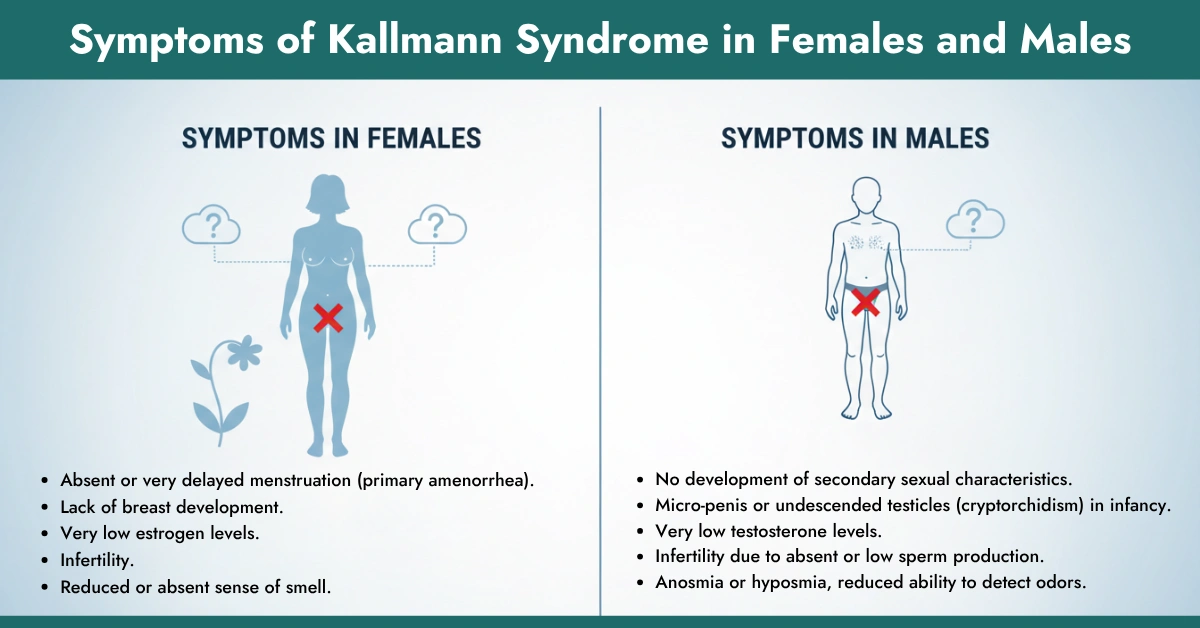
Symptoms of Kallmann syndrome vary between individuals, but two defining features appear in nearly every case: absent or delayed puberty and a reduced or absent sense of smell.Symptoms in Males
In males, the most recognizable signs include:- No development of secondary sexual characteristics (facial hair, voice deepening, muscle growth).
- Micro-penis or undescended testicles (cryptorchidism) in infancy.
- Very low testosterone levels.
- Infertility due to absent or low sperm production.
- Anosmia or hyposmia, reduced ability to detect odors.
Symptoms in Females
Females with KS are often diagnosed later because symptoms can be subtler:- Absent or very delayed menstruation (primary amenorrhea).
- Lack of breast development.
- Very low estrogen levels.
- Infertility.
- Reduced or absent sense of smell.
How Is Kallmann Syndrome Diagnosed?
Doctors look for the classic pairing: absent puberty plus smell dysfunction. From there, three tests confirm the diagnosis:- Hormone blood panel: LH, FSH, and testosterone (or estrogen), and GnRH from the foundation of diagnosis are typically very low.
- Brain MRI & Smell Testing: Reveals absent or underdeveloped olfactory bulbs. Formal smell testing using standardized kits confirms the degree of olfactory impairment.
- Genetic testing: Identifies the exact mutation and guides family planning decisions. Genetic testing can be performed from a simple saliva or blood sample.
Treatment Options for Kallmann Syndrome
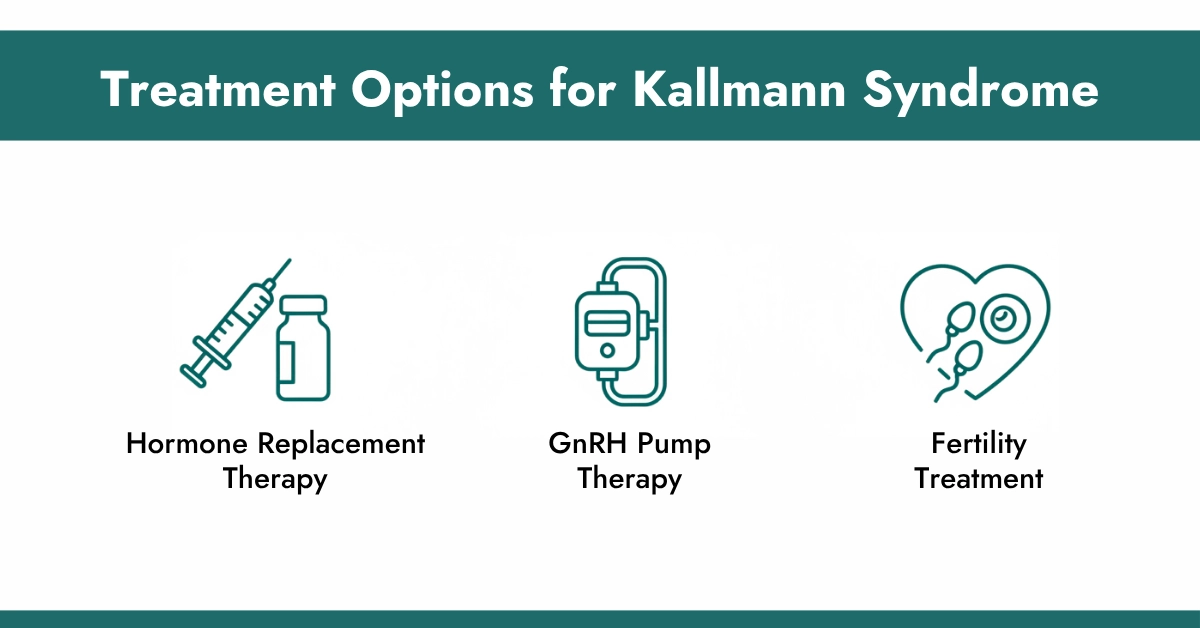
With the right treatment, most people with KS develop normally and can have biological children.Hormone Replacement Therapy
Testosterone therapy for males and estrogen-progesterone therapy for females restore sexual characteristics, protect bone density, improve muscle mass and improve quality of life. Long-term treatment is typically needed because KS doesn’t resolve on its own.GnRH Pump Therapy
A pulsatile GnRH pump mimics the brain’s natural signals. It is particularly effective for restoring fertility by stimulating the full hormonal axis naturally. It requires regular management but produces outcomes closer to natural reproductive function.Fertility Treatment
- Gonadotropin injections (FSH + LH) can trigger sperm production or ovulation.
- IVF and ICSI are options when natural conception remains difficult.
Important Notice: Kallmann Syndrome highlights the importance of genetic variations in how the body functions and responds to biological processes. Some genes also influence metabolism and overall physiological balance. To understand this further, check out this guide on the CYP1A2 gene.
Living With Kallmann Syndrome: Your Next Steps
A KS diagnosis is manageable. Here is what to focus on:- See an endocrinologist experienced in rare hormonal conditions.
- Monitor bone density and cardiovascular health regularly.
- Consider a genetic counselor if family planning matters to you.
- Ask your doctor: “Could a PGx test optimize my current medications?”
Why Your Genes Affect More Than Just Diagnosis
Treatment does not end at diagnosis. Most people with KS take long-term medications, and here is what matters a lot: your genes directly affect how those medications work in your body. Genes like CYP2D6, CYP2C19, and CYP3A4 control how your liver processes drugs. A poor metabolizer on standard testosterone therapy or antidepressants may experience serious side effects. An ultra-rapid metabolizer may get no benefit at all. Neither is visible without testing.How PGx Testing Can Support Your Treatment Plan
A pharmacogenomic (PGx) test analyzes the genes that control your drug metabolism, covering 240+ medications. For anyone managing KS long-term, this removes guesswork from your treatment. RPh Labs offers a CLIA-accredited at-home PGx testing kit, just a cheek swab, results in 7-10 days, written in plain language. It tells you and your doctor exactly how your body may respond to your current and future medications. Visit rphlabs.leadcroc.dev/ to order yours today.Conclusion
Kallmann syndrome is rare, but it is treatable. With proper hormone therapy, many people develop normally, live full lives, and have biological children. The key is early diagnosis, the right medical team, and a willingness to go beyond the basics, including understanding how your individual genetics shape your response to treatment. If you are managing a long-term condition like KS and want to make smarter, safer medication decisions, explore what RPh Labs' CLIA-accredited PGx testing can reveal about your genetic makeup. It takes one cheek swab. It can change how you and your doctor approach your entire care plan. Visit rphlabs.leadcroc.dev/ to order your kit today.Follow RPh Labs on Facebook and Instagram for more on personalized medicine and smarter healthcare.References
- Wikipedia – Kahmann Syndrome.
- Medline – Kalmann Syndrome Description.
- NIH – Kalmann Syndrome Article.
Frequently Asked Questions
Is Kallmann syndrome curable?
No, but it is very manageable. Hormone replacement therapy or GnRH pump therapy effectively replaces the missing hormones. Most individuals live full, healthy lives with consistent medical monitoring.
Can women have Kallmann syndrome?
Yes, women can have Kallmann syndrome. Symptoms in females include absent menstruation, no breast development, and smell loss. They are frequently diagnosed later than males because symptoms can be less obvious or attributed to other causes.
What is the difference between Kallmann syndrome and hypogonadism?
Hypogonadism is the broader term for insufficient sex hormone production. Kallmann syndrome is a specific genetic cause of it, traced to GnRH deficiency from the hypothalamus. Not all hypogonadism is Kallmann syndrome, but all Kallmann syndrome involves hypogonadism.
Can someone with Kallmann syndrome have children?
Yes, with treatment. Gonadotropin injections or GnRH pump therapy can restore sperm production or ovulation. Many people with KS have biological children through natural conception or assisted reproductive technologies such as IVF or ICSI.
Does Kallmann syndrome affect life expectancy?
Not directly. Untreated, it raises risks for osteoporosis, metabolic issues, and heart disease. With proper treatment and monitoring, these risks are well controlled.
Can a genetic test detect Kallmann syndrome?
Yes. A genetic panel testing for mutations in genes like KAL1, FGFR1, PROKR2, and CHD7 can confirm a KS diagnosis and identify the specific mutation involved. This also informs inheritance risk for family planning purposes.
How do I know if my medications are right for my genetics?
A pharmacogenomic (PGx) test analyzes the specific genes that control how your body metabolizes medications. For individuals on long-term treatment for Kallmann syndrome, a PGx test from RPh Labs can identify whether your current medications are a good genetic fit or if adjustments could improve outcomes and reduce side effects.


Leave a Reply