
The Role of Genetics in Antipsychotic Response
Every person’s body reacts differently to antipsychotic medicines. Traditionally, doctors rely on trial and error. But with pharmacogenomic biomarkers for antipsychotics, we now know specific genes explain much of this variation:- CYP1A2 clozapine metabolism: Decides how quickly your body breaks down clozapine. Slow metabolizers risk toxic levels; fast metabolizers may not get enough benefit.
- CYP2D6 olanzapine metabolism: Strongly tied to antipsychotic-induced weight gain and sedation risks with olanzapine.
- HTR2C variants: Predict antipsychotic-induced weight gain genetic risk, especially with clozapine and olanzapine.
- UGT1A4 & CYP3A4: Important in clozapine clearance and drug–drug interactions.
- DRD2 & HTR2A: Affect how well symptoms respond to treatment.
Clozapine: Highly Effective but Carries High-Risk
Clozapine is known as the gold standard for treatment-resistant schizophrenia. But it carries serious risks:- Dangerous drop in white blood cells, like Agranulocytosis (Agranulocytosis)
- Seizures and heart rhythm problems
- Severe metabolic effects like weight gain and diabetes
Olanzapine: Powerful but Metabolically Challenging
Olanzapine is widely used for schizophrenia and bipolar disorder. But it is often associated with:- Intense sedation and drowsiness
- Rapid weight gain
- Higher cholesterol and triglycerides
Lifestyle and Environment Factor in Antipsychotic Response
Genetics isn’t the whole story. Lifestyle and environmental factors strongly influence antipsychotic response:- Smoking → Induces CYP1A2, lowering clozapine levels.
- Caffeine intake → Competes with CYP1A2 metabolism, raising clozapine levels.
- Diet and exercise → Can buffer or worsen genetic risks for weight gain.
- Concurrent medications → Drug–drug interactions may amplify genetic effects.
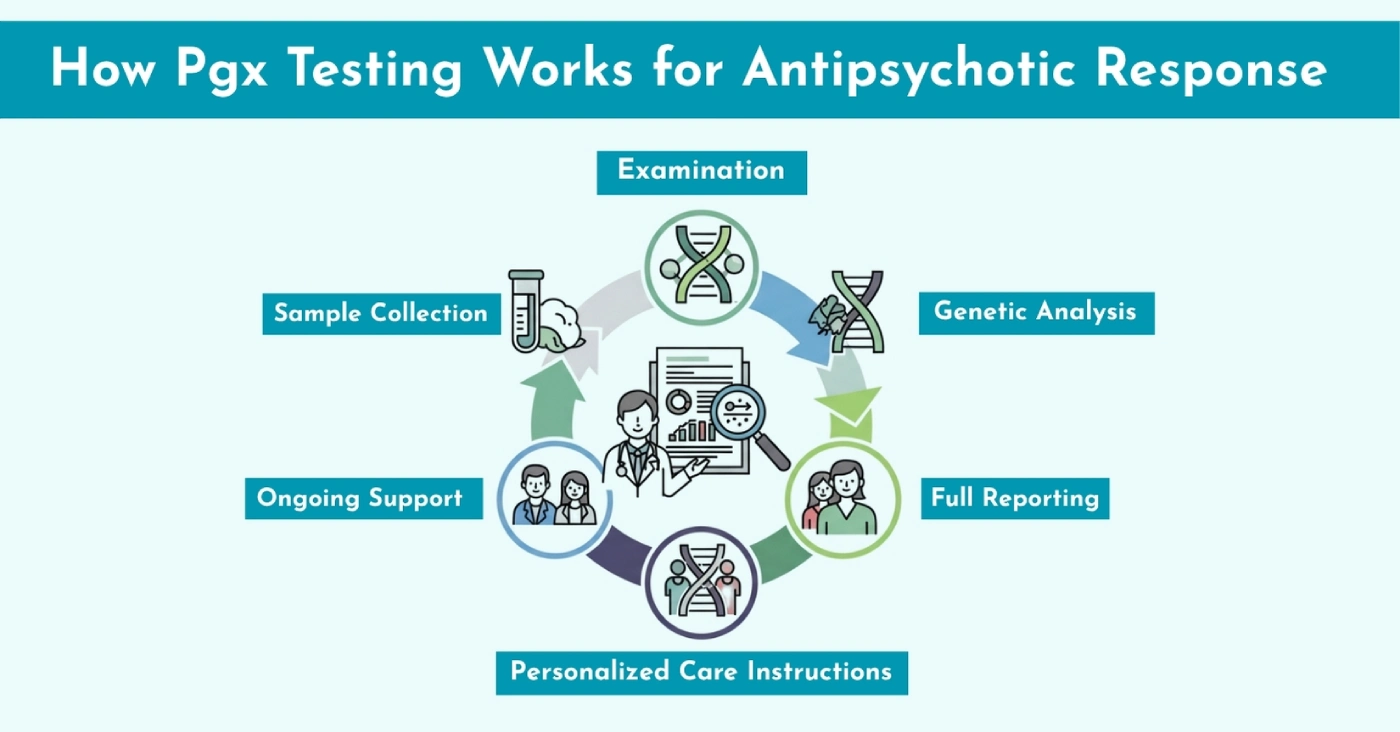
How Pgx Testing Works for Antipsychotic Response
- Sample Collection: A DNA sample is obtained by means of a non-invasive and simple procedure that could involve the use of a cheek swab and saliva.
- Genetic Analysis: The sample is then forwarded to our accredited laboratory – Rph Labs where the latest technology determines the genetic differences that determine how your body responds to medications.
- Full Reporting: The lab is easy-to-read with a report on gene-drug interactions, metabolism status, and possible side effects.
- Personalized Care Instructions (Unique Step): On top of the report, the patients and the physicians will be provided with supportive tools, such as guidance about the design of the dosage, alternative medications, and the material to be used in counselling to make sure that the outcome is pragmatic and actually helpful.
- Ongoing Support: Unlike most of the services, we also offer follow-up support, providing patients and doctors with new information should any new gene-drug interactions be found, allowing care to be up-to-date and reliable.
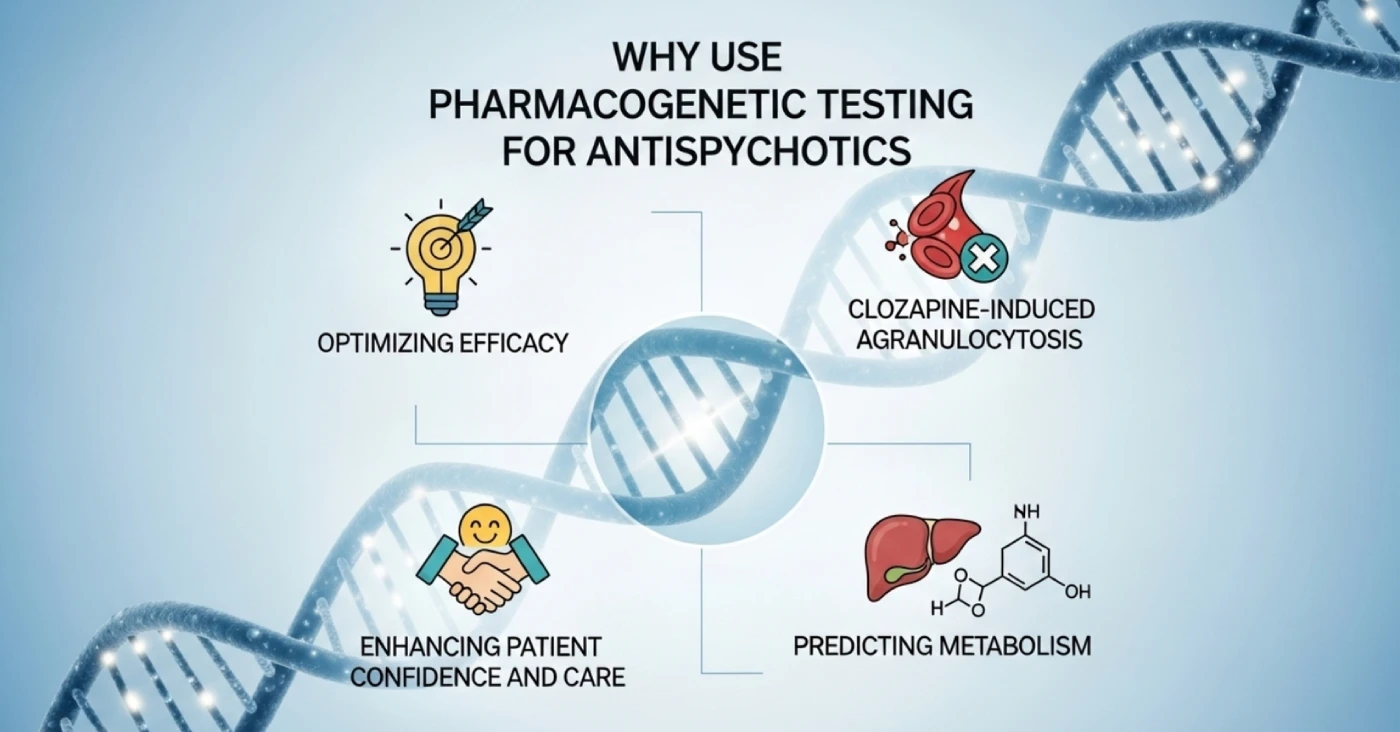
Why Use Pharmacogenetic Testing for Antipsychotics
1. Optimizing Efficacy
By identifying genetic factors, PGx testing can guide the selection of medications likely to be most effective for an individual, improving treatment outcomes.
2. Clozapine-Induced Agranulocytosis
Specific human leukocyte antigen (HLA) variants are associated with a higher risk of agranulocytosis, a serious side effect of clozapine, enabling preventative measures.
3. Enhancing Patient Confidence and Care
Beyond science, PGx testing reassures patients that their treatment is personalized to their unique biology. This reduces trial-and-error prescribing, eases anxiety, and fosters trust between patients and their healthcare providers, making them feel cared for rather than just treated.
4. Predicting Metabolism
It helps predict a patient’s capacity to metabolize an antipsychotic, allowing for dose adjustments to prevent toxic levels or insufficient efficacy.
5. Minimizing Side Effects
Genetic variations in neurotransmitter receptors or metabolic enzymes can increase the risk of adverse drug reactions (ADRs).
Personalized Medicine for Antipsychotics
This is personalised medicine for antipsychotics in action. With pharmacogenomics, clinicians can:- Avoid drugs with high genetic risk for adverse drug reactions (ADRs)
- Adjust dosing to gene–drug interactions
- Reduce polypharmacy in psychiatry by minimising failed trials
- Improve adherence by lowering side effects
Note: For a deeper look at how genetic testing guides safer psychiatric treatments, see our article on Mental Health Medication Management
RPH Labs: Bringing Science Into Real-World Care
At RPH Labs, our mission is to bring clarity to psychiatric prescribing. Unlike generic DNA tests, our CLIA-accredited pharmacogenomic testing focuses on psychiatry and provides:- Coverage of 125+ medications, including leading antipsychotics
- Integration of key genes (CYP1A2, CYP2D6, HTR2C, DRD2, COMT, ABCB1, LEPR)
- Clear reports → Patient-friendly and clinically actionable, not just raw codes
- Support for both patients and clinicians in making safer prescribing decisions
Conclusion
If you are facing a tough time related to the side effects from clozapine or olanzapine, don’t worry, you’re not alone, and many things can help you solve this problem. A simple genetic test for antipsychotic response can show how your body works and handles these medicines. By getting this information, your doctor can choose the right dose and adjust the dose accordingly. And also give you the right dose. Instead of endless trial and error, you get treatment that’s built around your DNA. Disclaimer: This blog is for educational purposes only and not a substitute for professional medical advice. Always consult a qualified healthcare provider before making decisions about medications or genetic testing. Some images in this blog are AI-generated or stock visuals used for illustration; they are for reference only and may not represent actual results.Frequently Asked Questions
Frequently Asked Questions
What is the genetic test for clozapine?
It’s a simple test that checks your genes, like CYP1A2, to see how your body processes clozapine. This helps doctors adjust your dose more safely.
Can olanzapine and clozapine be taken together?
Sometimes doctors use both when symptoms don’t improve with one. But side effects get stronger. Testing shows if your body can handle this combination.
How do you know if olanzapine is working?
You’ll notice changes in symptoms, sleep, and mood. Doctors also run labs. Genetic testing helps predict if your body will likely respond well.
Can you get a genetic test for schizophrenia?
Yes, but it doesn’t diagnose the illness. It only shows genetic risks and how you may respond to medicines like clozapine or olanzapine.
Does clozapine cause weight gain?
Yes, it often does. Some people carry HTR2C variants that increase the risk. Testing can warn you early so you can take preventive steps.
What’s the best treatment for schizophrenia?
If other medicines fail, clozapine is still the gold standard. Genetic testing helps doctors choose the safest dose for you.



Leave a Reply