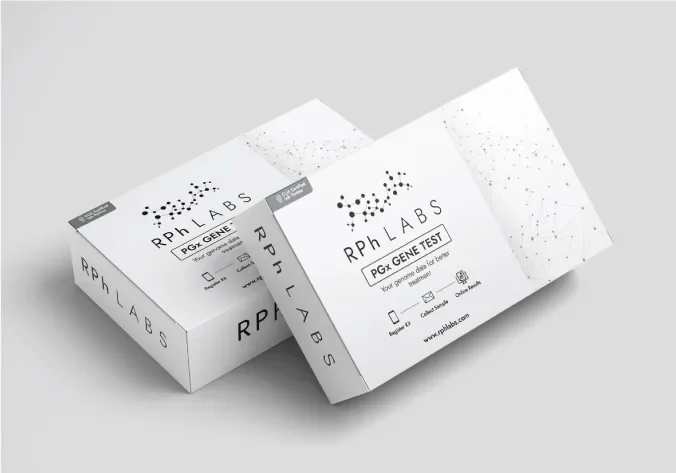
RPh Labs forms
Download required forms for testing & billing
All RPh Labs lab forms in one place: the Medicare ABN form, the insurance billing form and the lab requisition form. Download a PDF or complete it online, then submit it with your PGx test kit or give it to your provider.
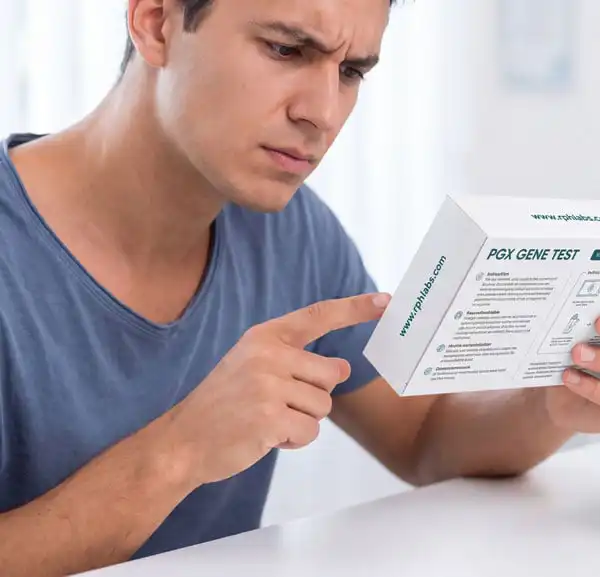
Every form online and as a PDF
How it works
Pick the form you need, fill in the required sections, and return it with your test kit or hand it to your provider. Our team handles the rest.

1. Order your kit
Ships free within one business day, in discreet packaging.

2. Swab at home
A two-minute cheek swab. No blood draw, no clinic visit.

3. Mail it back
Use the prepaid mailer. Postage is covered both ways.

4. Get results
A clinician-ready report lands in your account in 7 to 10 business days.

5. Prescribe precisely
Share it with your prescriber and put the guesswork behind you.
Forms directory
Every available form and document in one place. Use the tabs to move between categories and open the forms relevant to you. New categories are added as they are released.
Requisition forms
1 form
The laboratory requisition that starts a pharmacogenomic order. Complete it online for a self-pay order, or download the printable copy to send with the specimen.
-
New order — PGx requisition form (RX order and payment)
Self-pay PGx test form.
Medicare ABN & insurance forms
1 form
Complete the Advance Beneficiary Notice (ABN) and insurance billing forms required for Medicare coverage and insurance claims. Accurate submission keeps processing and reimbursement moving.
-
Medicare ABN form
Required before testing when Medicare may not cover the service.
Pharmacogenomic test forms
1 form
The forms needed for pharmacogenomic testing. Complete information means reliable results and medication guidance matched to the patient's genetic profile.
-
Insurance billing — pharmacogenomic testing order form
Use when testing is billed to insurance rather than self-pay.
Which lab forms do I need?
Most people need only one or two lab forms, and many need none at all. It depends on who is ordering the test and how it is being paid for:
| Your situation | Lab forms to complete |
|---|---|
| You are buying the at-home kit yourself (self-pay, HSA or FSA) | None. Your details are collected at checkout and when you activate the kit. |
| The test is being billed to your insurance | The insurance billing form, completed with your prescriber. |
| You have Medicare and coverage for the test is uncertain | The Medicare ABN form, plus the insurance billing form. |
| A clinician is ordering the test for a patient | The lab requisition form. |
Not sure which applies to you? Call (888) 383-2181, 9am to 5pm CT, Monday to Friday, and we will tell you before you order.
Before you start: what to have ready
Gathering these details first means you can complete everything in one sitting:
- Your full name, date of birth, address, phone and email, exactly as they appear on your insurance card.
- Your insurance card, front and back, with the policy and group numbers.
- The name of the person insured, and their date of birth, if that is not you.
- Your prescriber’s name, practice, phone, email and NPI.
- A list of your current medications and the conditions they treat.
- Any prior authorization reference your plan has already given you.
If you are missing something, submit what you have and we will contact you for the rest; there is no need to wait.
What is an ABN form?
What is an ABN form? The Advance Beneficiary Notice of Noncoverage (ABN), form CMS-R-131, is a Medicare notice a provider or laboratory gives you before a service when there is a reason to believe Medicare may not pay for it. It is used under Original Medicare, not for Medicare Advantage plans, which have their own process.
The ABN does not mean Medicare will refuse the claim. It tells you ahead of time that it might, gives an estimated cost, and asks you to choose whether to go ahead. That way you are not surprised by a bill later, and you keep your right to have Medicare decide.
- Option 1: you want the test, and you ask for Medicare to be billed for an official decision. If Medicare denies payment, you are responsible, but you can appeal.
- Option 2: you want the test but do not want Medicare billed. You pay, and there is no Medicare decision to appeal.
- Option 3: you do not want the test, and you are not responsible for payment.
If a provider should have given you an ABN and did not, you generally cannot be billed for a denied service. The official form and instructions are published by CMS.
Medicare ABN form PDF, section by section
You can download our Medicare ABN form PDF from the directory above or complete it online. The Medicare ABN form PDF follows the standard CMS layout, with lettered sections:
- A. Notifier: the laboratory’s name, address and phone number.
- B. Patient name and C. Identification number (optional; never your Medicare number).
- D. Items or services: the pharmacogenomic test being ordered.
- E. Reason Medicare may not pay: for example, that coverage depends on meeting specific criteria.
- F. Estimated cost of the test.
- G. Options: you choose Option 1, 2 or 3.
- H. Additional information, if any.
- I. Signature and J. Date.
Sign it before the sample is collected, keep a copy, and send the original with your kit or give it to your provider. For how Medicare covers pharmacogenomic testing, see our guide: Does Medicare cover pharmacogenomic testing?
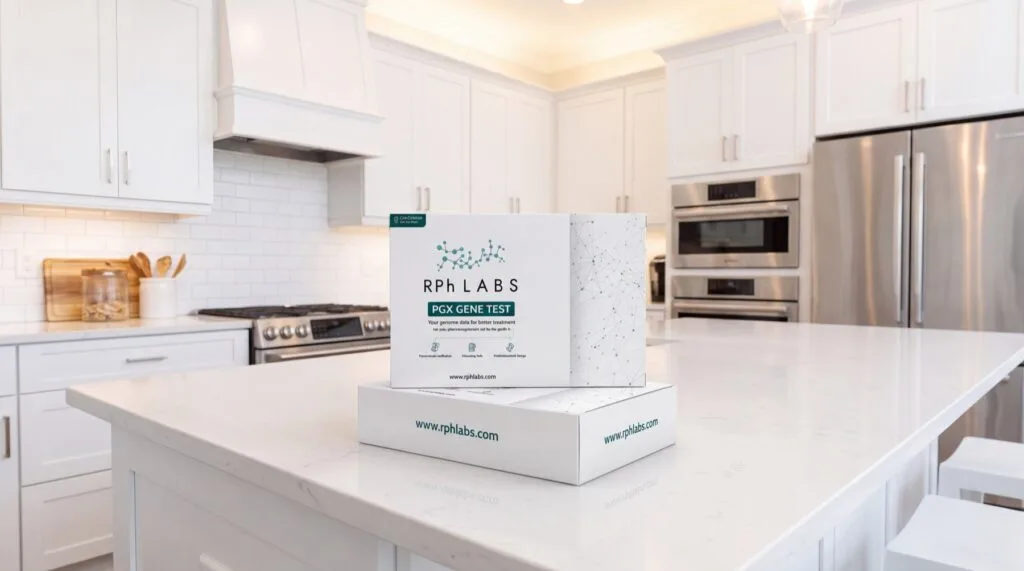
Medicare coverage for pharmacogenomic testing
Medicare covers pharmacogenomic testing in defined circumstances rather than for everyone. Nationally, a coverage determination (NCD 90.1) covers testing of CYP2C9 and VKORC1 for warfarin dosing. Most other testing is decided by regional Medicare contractors through local coverage policies, including the MolDX program that covers much of the country.
In practice, coverage is most likely when you are taking, or about to start, a medication with FDA labeling or published CPIC guidance tied to a gene on the panel. When a covered clinical laboratory test is paid by Medicare Part B, you usually pay nothing for the test itself.
Because each case is decided against those policies, we cannot promise in advance that Medicare will pay. That uncertainty is exactly what the ABN is for. Medicare Advantage plans follow their own rules and may need prior authorization instead.
Insurance billing form
Use the insurance billing form when your pharmacogenomic test is billed to a health plan rather than paid for directly. It gives the plan everything it needs to process the claim, so it is completed together with your prescriber. The insurance billing form has seven sections:
- Patient information.
- Provider information, including the prescriber’s NPI.
- Specimen information: collection date, time and collector.
- Insurance information: carrier, group and policy numbers, and a copy of the insurance card.
- Test selection: the medications and their ICD-10 diagnosis codes.
- Other medications, notes and supporting documentation.
- Authorizations from the physician and the patient.
Complete the insurance billing form online or download the PDF. See the insurances we accept before you start, and ask us to verify your benefits.
Lab requisition form
The lab requisition form is how a clinician orders a pharmacogenomic test for a patient. It tells the laboratory who the patient is, why the test is being ordered, which test is needed and where to send results. The lab requisition form has four sections: patient information, medical history, requested PGx test and prescriber information, followed by the consent.
Clinicians can complete the lab requisition form online, or send the printable requisition (PDF) with the specimen.
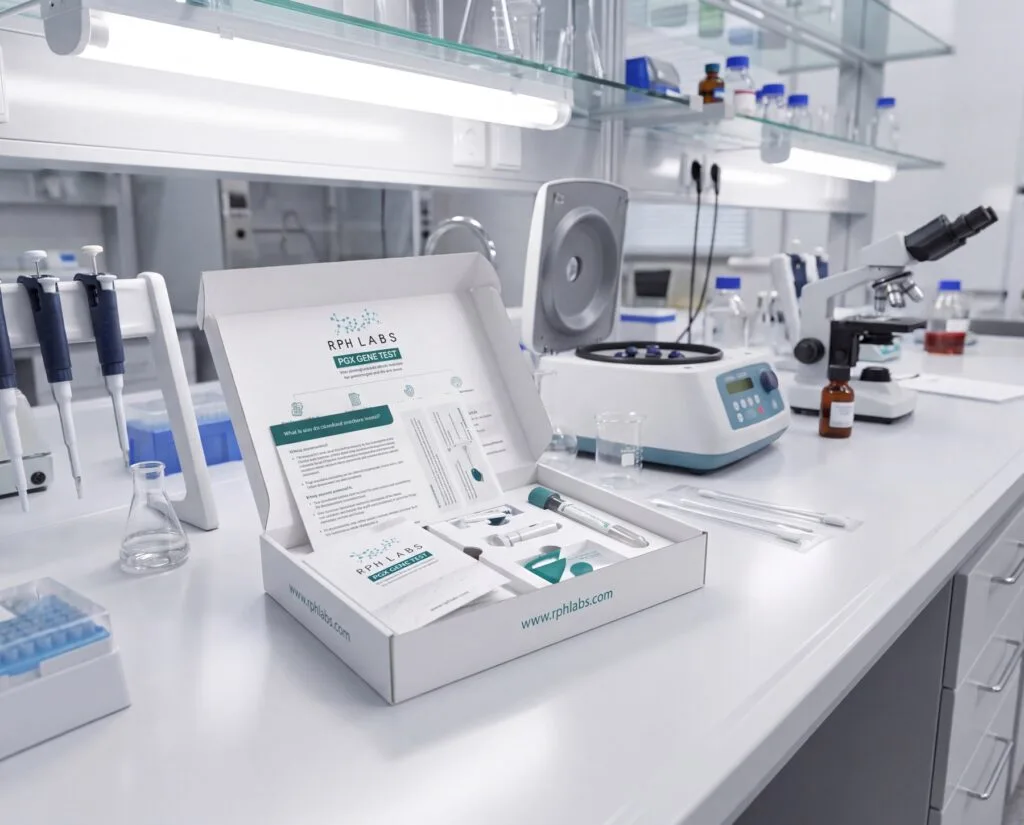
Texas Medicaid
RPh Labs is enrolled with Texas Medicaid, administered through the Texas Medicaid & Healthcare Partnership (TMHP). Medicaid orders need a prescriber’s order and documentation of medical necessity, and some require prior authorization. Choose Medicaid as the billing method on the billing paperwork and include the member ID from the Medicaid card.
If you have Medicaid in another state, contact us before you order and we will tell you honestly whether we can bill your plan.
HSA and FSA receipts
If you pay for the test yourself with a health savings account (HSA) or flexible spending account (FSA), you do not need any of the insurance paperwork. The test is HSA and FSA eligible, and an itemized receipt with the documentation your plan administrator asks for is issued with your order.
Keep the receipt with your tax records. Some administrators also ask for a letter of medical necessity; your prescriber can provide one if needed.
Online or PDF?
Every one of our lab forms is available both ways. The online versions check required fields as you go, so nothing is missed, and a completed copy is generated for the laboratory automatically. The PDFs are there for anyone who prefers to print, sign by hand, or send a form from a clinic.
If you start a form online and need to stop, you can come back to it; if you print a PDF, use blue or black ink, write clearly in capitals, and sign and date every signature line. A scan or clear photo of a completed paper form is fine to send by email if you cannot post it.
Clinics that already use their own electronic ordering system can keep doing so and send us the completed requisition; the information we need is the same either way, and our team will confirm receipt.
Whichever you choose, the information is handled under HIPAA and used only to process your test and any claim. Read our privacy policy for details.
How we protect the information on your forms
The forms you send us contain health information, so they are handled under HIPAA from the moment they arrive. Online submissions travel over an encrypted connection, paper forms are stored securely, and access is limited to the staff who process your test and claim.
We use the information only to run the test you ordered, bill your plan if you asked us to, and deliver your results. We never sell it, and your genetic results are shared only with the people you authorize.
What happens after you submit
- We check the paperwork as soon as it arrives, and contact you or your provider if anything is missing.
- We verify coverage for insurance orders, and tell you if prior authorization is needed before the sample is collected.
- The laboratory processes the sample once it arrives; results are ready 7 to 10 business days later.
- A pharmacist reviews the report before it is released to your account or your provider.
- Your plan processes the claim and sends you an explanation of benefits showing what it paid and anything you owe.
Signing for a child or another adult
A parent or legal guardian signs for a child. For an adult who cannot sign for themselves, a legally authorized representative, such as someone holding healthcare power of attorney, can sign on their behalf. Write the representative’s name clearly and keep a copy of the authority with your records.
Each kit and each set of paperwork belongs to one person. If you are ordering for several family members, complete a separate set for each of them.
Reading your explanation of benefits
After the claim is processed, your plan sends an explanation of benefits (EOB). It is not a bill. It shows what was charged, what the plan allowed and paid, and what, if anything, you may owe after your deductible, copay or coinsurance.
If a claim is denied, the EOB lists a reason code. The most common reasons are missing prior authorization, diagnosis codes that do not match the plan’s policy, or a plan that excludes the test. Call us and we will go through it with you; your prescriber can usually request a review or file an appeal with a letter explaining why the result will change your treatment.
What to keep for your records
- A copy of every signed form, including the ABN if you signed one.
- Your order confirmation and kit activation details.
- Any prior authorization reference number from your plan.
- Your explanation of benefits and any letters from your plan.
- Your final report, which stays in your online account for life.
For clinics, pharmacies and care teams
Practices ordering for patients can use the online provider requisition for every order and track samples and results in the provider portal. As the ordering provider, give the patient an ABN when Medicare coverage is uncertain and keep the signed copy on file.
Our team can check a patient’s benefits before you order, help with prior authorization paperwork, and talk a result through with you once it is released. See the provider page for the full ordering process.
How to avoid delays with lab forms
- Use the latest version from this page; out-of-date lab forms are the most common cause of a delay.
- Complete every required field, including date of birth, and make sure names match the insurance card exactly.
- For insurance, include the ICD-10 codes and the medications that prompted the test.
- For Medicare, sign the ABN before the sample is collected, not afterwards.
- Keep a copy of every form you send.
Questions about a form? Call (888) 383-2181 or contact us and we will walk you through it.
Glossary of terms on our forms
- ABN: Advance Beneficiary Notice of Noncoverage, the Medicare notice given before a service Medicare may not pay for.
- NPI: National Provider Identifier, the 10-digit number that identifies a prescriber on a claim.
- ICD-10 code: the standard code for the diagnosis or condition being treated; plans use it to judge medical necessity.
- Medical necessity: a plan’s written criteria for when a test is appropriate for a patient.
- Prior authorization: approval some plans require before a test is performed.
- Specimen: the sample sent to the laboratory; for this test, a cheek (buccal) swab.
- Requisition: the order that tells the laboratory which test to run, for whom and who ordered it.
- Deductible, copay and coinsurance: the parts of a covered cost you pay yourself under your plan.
- EOB: explanation of benefits, the statement your plan sends after processing a claim.
Lab forms FAQ
Which lab forms do I need to order a PGx test?
If you are paying for the at-home kit yourself, none: your details are collected at checkout. If the test is billed to insurance, you need the insurance billing form, and Medicare patients may also need the ABN form. Clinicians ordering for a patient use the lab requisition form.
What is an ABN form?
An Advance Beneficiary Notice of Noncoverage (ABN), form CMS-R-131, tells an Original Medicare patient before a service that Medicare may not pay for it, gives an estimated cost, and asks the patient to choose whether to go ahead.
Where can I get the Medicare ABN form PDF?
Download it from the forms directory on this page, or complete the ABN form online. Sign it before your sample is collected and keep a copy.
Who fills in the insurance billing form?
The patient and the prescriber together. The prescriber supplies their NPI, the medications and the ICD-10 codes, and both sign the authorizations.
Can I submit lab forms online?
Yes. The ABN form, insurance billing form and lab requisition form can all be completed online, or downloaded as PDFs.
Do I need a form if I pay for the kit myself?
No. Self-pay, HSA and FSA orders need no paper forms. You register the kit online when it arrives.
Can someone else sign for me?
Yes. A parent or guardian signs for a child, and a legally authorized representative can sign for an adult who cannot sign for themselves.
What happens if my claim is denied?
Your explanation of benefits will list the reason. Call us and we will go through it with you; your prescriber can usually request a review or file an appeal.
How do I know I have the latest version?
The forms on this page are always the current versions. Download a fresh copy each time rather than reusing an old printout.
Get the latest forms and updates by email
We email new and revised forms as they are published, so you are never submitting an out-of-date version.
Thanks — you are on the list.