
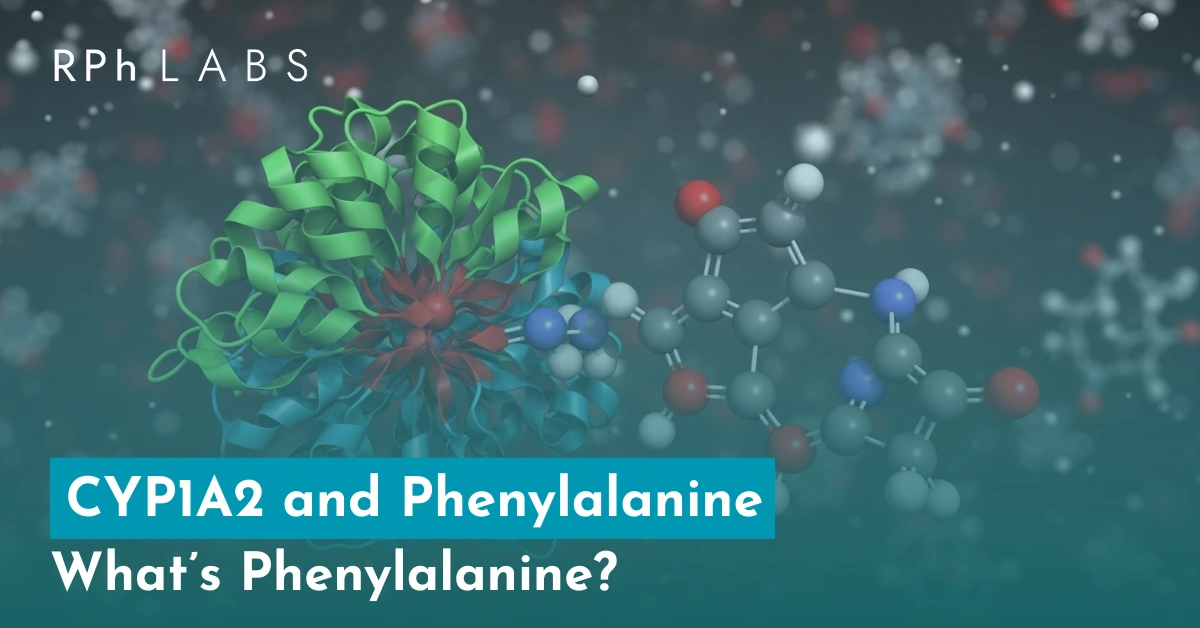
Searches for CYP1A2 and phenylalanine usually come from two separate ideas that have been blended together online. This guide keeps them apart: it explains which enzyme really breaks phenylalanine down, what the cytochrome P450 enzyme CYP1A2 actually does, and what genetic testing can and cannot tell you about either one.
On this page
Phenylalanine is an amino acid. Amino acids and proteins are known as the building blocks of life. When protein breaks down, amino acids are formed in the body.
Phenylalanine is an amino acid that must be ingested as part of our diet, since it cannot be produced in the body. This amino acid is important for acting as a precursor to neurotransmitter synthesis, including dopamine and norepinephrine, which are essential for regulating moods as well as facilitating all cognitive functions. There exist two forms: the naturally occurring is L-phenylalanine and the synthetic is D-phenylalanine, often utilized in certain supplements.
What Is CYP1A2?
Your DNA contains structural and regulatory genes. CYP1A2 is categorized as a protein-coding gene. It encodes an enzyme that belongs to the cytochrome P450 family. The enzyme is found mainly in the liver and plays a central role in clearing medicines and other compounds that come from outside the body, caffeine being the best known example. It does not metabolize amino acids. That matters for how you react to certain drugs and to caffeine, rather than to the protein in your diet.
CYP1A2 and Phenylalanine Link
The honest answer about CYP1A2 and phenylalanine is that there is no direct link. CYP1A2 is not the enzyme that metabolizes phenylalanine, and it is not a secondary route for it either, because phenylalanine is handled by a different enzyme described in the next section. CYP1A2 activity does vary between people, with genetics, smoking and some medicines all changing it, but that variation affects how you clear drugs and caffeine rather than how you clear an amino acid.
Genetic variations in the CYP1A2 gene change how quickly you clear caffeine and several medicines, and they do not raise or lower your phenylalanine level. High phenylalanine does matter in phenylketonuria (PKU), where the amino acid builds up and can cause harm if the diet is not managed, but PKU is caused by variants in the PAH gene rather than in CYP1A2. PKU is also uncommon, and newborn screening in the United States picks it up in the first days of life.
Enzyme Directly Associated with Metabolizing Phenylalanine
The enzyme directly associated with metabolizing phenylalanine is phenylalanine hydroxylase (PAH). The PAH gene encodes this enzyme, which converts phenylalanine into tyrosine. This is the primary and essential step in the metabolism of phenylalanine. Deficiencies or mutations in the PAH gene can lead to phenylketonuria (PKU), a condition where phenylalanine accumulates in the body and can cause serious health issues if not managed.
Tyrosine is an important amino acid that serves several key functions in the body:
Protein Synthesis: Tyrosine is a building block for proteins, contributing to various structural and functional roles in cells.
Precursor for Neurotransmitters: Tyrosine is a precursor (a substance by which another is formed) to several important neurotransmitters, including:
- Dopamine: Involved in mood regulation, reward, and motor control.
- Norepinephrine: Plays a role in the body’s stress response and attention.
- Epinephrine (Adrenaline): Important for the fight-or-flight response.
Thyroid Hormone Production: Tyrosine is crucial for the synthesis of thyroid hormones, which regulate metabolism, growth, and development.
Melanin Production: Tyrosine is a precursor for melanin, the pigment responsible for skin, hair, and eye color.
Antioxidant Role: Some forms of tyrosine can contribute to the body’s antioxidant defenses, helping to protect cells from oxidative stress.
Overall, tyrosine plays a vital role in multiple physiological processes, influencing mood, metabolism, and cellular functions.
Phenylalanine Food Sources
Phenylalanine is found in a variety of foods, especially food items that consist of protein in high quantities. Some common phenylalanine food sources include:
- Meat: chicken, beef, pork, and fish
- Eggs
- Milk and dairy products
- Nuts and seeds
- Legumes (beans, lentils)
- Soy food products, including tofu and tempeh
All these foods are readily available, so it’s easy to have the right amount for your body each day.
Pharmacogenomics
Pharmacogenomic testing reports how your body is likely to handle certain medicines. It does not measure phenylalanine, it does not set a diet, and the RPh Labs 20-gene panel does not include CYP1A2. The genes it does report, such as CYP2D6, CYP2C19, CYP2C9 and SLCO1B1, carry published prescribing guidance for medicines like codeine, clopidogrel, warfarin and the statins.
So a PGx result will not tell you how much phenylalanine to eat. If you have PKU, that plan comes from a metabolic clinic and a dietitian, who follow blood phenylalanine levels rather than a genetic report. Where PGx can help someone with PKU is the same place it helps anyone else, which is choosing and dosing medicines more safely with a prescriber.
Why people search for CYP1A2 and phenylalanine together
Two true facts sit behind the question. Phenylalanine is an amino acid your body turns into tyrosine, which becomes dopamine and other catecholamines. CYP1A2 is a liver enzyme that breaks down caffeine and a few medicines. Both touch brain chemistry at some distance, so the names end up in the same articles.
The science does not connect them directly. Cytochrome P450 enzymes such as CYP1A2 mostly act on drugs and other foreign compounds. Amino acid handling runs through a different set of enzymes entirely. When you see CYP1A2 and phenylalanine described as a metabolic pair, that is a simplification rather than a finding.
That distinction is worth making because it changes what you should do. If you are worried about phenylalanine, the relevant tests are metabolic and dietary. If you are curious about caffeine or a specific medicine, that is where CYP1A2 belongs.
- Phenylalanine: an essential amino acid you get from food
- Its main pathway: converted to tyrosine in the liver
- CYP1A2: a drug and caffeine metabolizing enzyme
- No established pathway makes CYP1A2 a phenylalanine enzyme
Phenylalanine hydroxylase is the enzyme that actually matters
The enzyme that converts phenylalanine into tyrosine is phenylalanine hydroxylase, usually shortened to PAH. It works in the liver and needs a helper molecule called tetrahydrobiopterin, or BH4, to function.
When phenylalanine hydroxylase works normally, dietary phenylalanine flows steadily into tyrosine and onward into proteins, neurotransmitters, thyroid hormone and pigment. When the enzyme has little or no activity, phenylalanine builds up in the blood instead, and that accumulation is what causes harm in phenylketonuria.
PKU is inherited in an autosomal recessive pattern, which means a person needs two altered copies of the PAH gene for the condition to appear. Carriers with one altered copy generally have no symptoms and no dietary restriction.
A smaller group of people have a problem making or recycling BH4 rather than a problem with the enzyme itself. That distinction changes treatment, which is one reason diagnosis belongs with a metabolic specialist and not with a consumer test.
What CYP1A2 does instead
CYP1A2 sits in the liver and clears caffeine, along with drugs such as clozapine, olanzapine, theophylline and tizanidine. It is strongly inducible, so tobacco smoke, char-grilled food and cruciferous vegetables can raise its activity while medicines like fluvoxamine and ciprofloxacin lower it.
None of those substrates are amino acids. That is the clean answer to the CYP1A2 and phenylalanine question: the enzyme handles xenobiotics, meaning compounds from outside the body, while amino acids move through dedicated metabolic pathways.
Where CYP1A2 does matter, it matters for drug levels rather than for diet. Even there, published prescribing guidance is thin, and dosing usually relies on blood levels, response and interactions. You can check which gene-drug pairs have real guidance at the CPIC guidelines library.
If your interest is caffeine rather than amino acids, our article on the CYP1A2 gene and caffeine sensitivity covers that side in more detail.
Foods high in phenylalanine, and where it hides
Phenylalanine is present in nearly every protein, so foods high in phenylalanine are simply foods high in protein. For most people that is a good thing, because the amino acid is essential and has to come from the diet.
- Meat, poultry and fish
- Eggs, milk, cheese and yogurt
- Soy foods such as tofu and tempeh
- Beans, lentils, nuts and seeds
- Wheat products, in smaller amounts
The less obvious source is aspartame, a sweetener that releases phenylalanine when it is digested. That is why diet sodas, sugar-free gum, some yogurts and a number of medicines carry the phrase “phenylketonurics: contains phenylalanine” on the label. For most people it is simply information; for someone managing PKU it is a warning that counts.
Protein supplements and sports powders deserve the same attention. If you are tracking foods high in phenylalanine for medical reasons, read powders and bars as carefully as you read meals.
How a phenylketonuria diet works
A phenylketonuria diet is built around a strict, individually calculated phenylalanine allowance. It restricts high-protein foods and replaces them with a medical formula that supplies the other amino acids, vitamins and minerals a person still needs.
The allowance is set by a metabolic dietitian using regular blood phenylalanine measurements, and it changes with age, growth, illness and pregnancy. A phenylketonuria diet is not a general low-protein diet and should never be copied from a website or from another patient’s plan.
Two drug therapies also exist for selected patients: sapropterin, a synthetic form of BH4 that can raise enzyme activity in some genotypes, and pegvaliase, an injected enzyme therapy for adults. Both are specialist prescriptions with their own monitoring requirements.
Current guidance treats PKU as a lifelong condition to manage rather than something children outgrow, and pregnancy in particular requires tight control planned in advance with a metabolic team.
Tyrosine and dopamine: what happens downstream
Once phenylalanine becomes tyrosine, the pathway branches. Tyrosine and dopamine are linked through two steps: tyrosine becomes L-DOPA, and L-DOPA becomes dopamine. From dopamine the body can make norepinephrine and then epinephrine.
Tyrosine also feeds thyroid hormone production and melanin, the pigment in skin, hair and eyes. That breadth explains why tyrosine appears in so many supplement marketing claims, and why those claims should be read carefully.
Why supplements do not simply raise dopamine
The step from tyrosine to L-DOPA is normally close to saturated, which means adding more raw material does not reliably push more dopamine out the other end in a healthy person. Studies of tyrosine supplements have mostly looked at short-term performance under stress, not at treating any condition.
If you are considering a tyrosine product, check it with your prescriber first, especially if you take thyroid medication, a MAO inhibitor or levodopa. Our article on L-tyrosine supplements covers the safety questions in more depth.
How PKU is actually diagnosed
In the United States, PKU is found through newborn screening. The heel-prick blood spot taken in the first days of life is tested for elevated phenylalanine, and screening for this condition is included in every state program.
An abnormal screen is not a diagnosis. It triggers confirmatory blood amino acid testing, assessment of BH4 status and usually PAH gene sequencing, all coordinated through a metabolic clinic. Treatment starts quickly because early dietary control is what protects brain development.
Adults who were diagnosed as infants sometimes drift away from care. Returning to a metabolic clinic is worthwhile, because monitoring, formula options and drug therapies have all changed over the last two decades.
If you are worried about carrier status for family planning reasons, a genetic counselor is the right person to ask. That conversation is about inheritance and reproductive options, not about drug metabolism.
Where pharmacogenomic testing fits, and where it does not
Pharmacogenomic testing answers one narrow question: how might your body handle specific medications. It does not diagnose disease, does not predict whether you will develop a condition, and does not measure amino acid levels.
The RPh Labs 20-gene panel does not include CYP1A2 and does not include PAH. So a PGx report cannot answer the CYP1A2 and phenylalanine question, cannot screen for PKU, and cannot tell you how much phenylalanine your diet should contain. Blood testing and a metabolic clinic do that.
What the panel does cover is the genes with published prescribing guidance, including CYP2D6, CYP2C19, CYP2C9, CYP3A5, DPYD, TPMT, NUDT15, SLCO1B1 and VKORC1, reported against more than 240 medications and reviewed by a PharmD pharmacist. Our medication list shows the drug-gene pairs, and the at-home cheek swab kit lists every gene included before you order.
That is a useful test for someone starting an antidepressant, a blood thinner or a statin. It is the wrong test for a question about amino acid metabolism, and we would rather say so than sell it as both.
Conclusion
Phenylalanine is an essential amino acid your body needs, and the connection between CYP1A2 and phenylalanine is not simply indirect, it is absent. CYP1A2 works on medicines and other foreign compounds, while phenylalanine hydroxylase is the enzyme that converts phenylalanine to tyrosine. In phenylketonuria, care means limiting phenylalanine in the diet under a clinician’s supervision and tracking blood levels. Pharmacogenomic testing is a separate tool, used for medicines rather than for tailoring a diet.
References
- [National Center for Biotechnology Information – PMC6523085](https://www.ncbi.nlm.nih.gov/pmc/articles/PMC6523085/)
- [PubChem – Phenylalanine] (https://pubchem.ncbi.nlm.nih.gov/compound/Phenylalanine)
- [Mayo Clinic – Phenylalanine]
(https://www.mayoclinic.org/healthy-lifestyle/nutrition-and-healthy-eating/expert-answers/phenylalanine/faq-20058361)
Please note that this blog is only for informational purposes. Always consult a doctor before taking any medical action.
CYP1A2 and phenylalanine FAQ
What is Phenylalanine?
Phenylalanine is an essential amino acid found in many protein rich foods, and the body uses it to make tyrosine.
Is there no connection between CYP1A2 and Phenylalanine?
There is no direct connection. CYP1A2 metabolizes medicines and other foreign compounds such as caffeine, while phenylalanine is handled by phenylalanine hydroxylase, the enzyme encoded by the PAH gene. CYP1A2 activity does vary between people, but that affects drugs and caffeine rather than amino acid levels.
How to interpret a PGx test report?
Every RPh Labs report is reviewed by a PharmD pharmacist, and a free pharmacist consultation is included, so you can have your results walked through with you before you discuss them with your prescriber.
Is there a specific age requirement for PGx testing?
There is no fixed age limit. For a child or teenager the decision is made by the parent or guardian together with the prescriber, and testing is most useful when a specific medicine covered by the panel is being considered.
Does CYP1A2 break down phenylalanine?
No. Phenylalanine is converted to tyrosine by phenylalanine hydroxylase, with tetrahydrobiopterin as a cofactor. CYP1A2 is a cytochrome P450 enzyme that clears caffeine and a small number of medicines. The two belong to different metabolic systems, so a CYP1A2 result tells you nothing about how you handle dietary phenylalanine.
Can a PGx test screen my child for PKU?
No. PKU is detected through state newborn screening, then confirmed with blood amino acid testing and specialist evaluation. Pharmacogenomic panels look at drug metabolizing genes and do not include the PAH gene. If you have any concern about a newborn screening result, contact your pediatrician or metabolic clinic directly.
Is aspartame dangerous if I do not have PKU?
For people without PKU, aspartame is treated as a normal food additive and the phenylalanine it releases is handled by ordinary metabolism. The label warning exists specifically for people managing a phenylketonuria diet, who must count every source. If you have questions about your own intake, ask your clinician or dietitian.
Should I avoid foods high in phenylalanine to boost dopamine?
No. Restricting foods high in phenylalanine without a medical reason removes protein your body needs and does nothing helpful for mood or focus. The tyrosine and dopamine pathway is regulated at steps that extra dietary substrate does not simply override, so eating more or less of it is not a reliable lever.
Does a low protein diet help mood or focus?
There is no good evidence for that, and cutting protein can cause real deficiencies. A phenylketonuria diet is a medical treatment designed and monitored by a metabolic dietitian with regular blood levels, not a general wellness strategy. Any lasting problem with mood or concentration is worth discussing with a clinician.
Which genes are on the RPh Labs panel?
Twenty genes with actionable prescribing guidance: ABCG2, APOE, BCHE, CYP2B6, CYP2C19, CYP2C9, CYP2C, CYP3A4, CYP3A5, CYP2D6, CYP4F2, DPYD, G6PD, MT-RNR1, NAT2, NUDT15, SLCO1B1, TPMT, UGT1A1 and VKORC1. CYP1A2, PAH, COMT and MTHFR are not included, and the panel does not assess disease risk.



Leave a Reply