
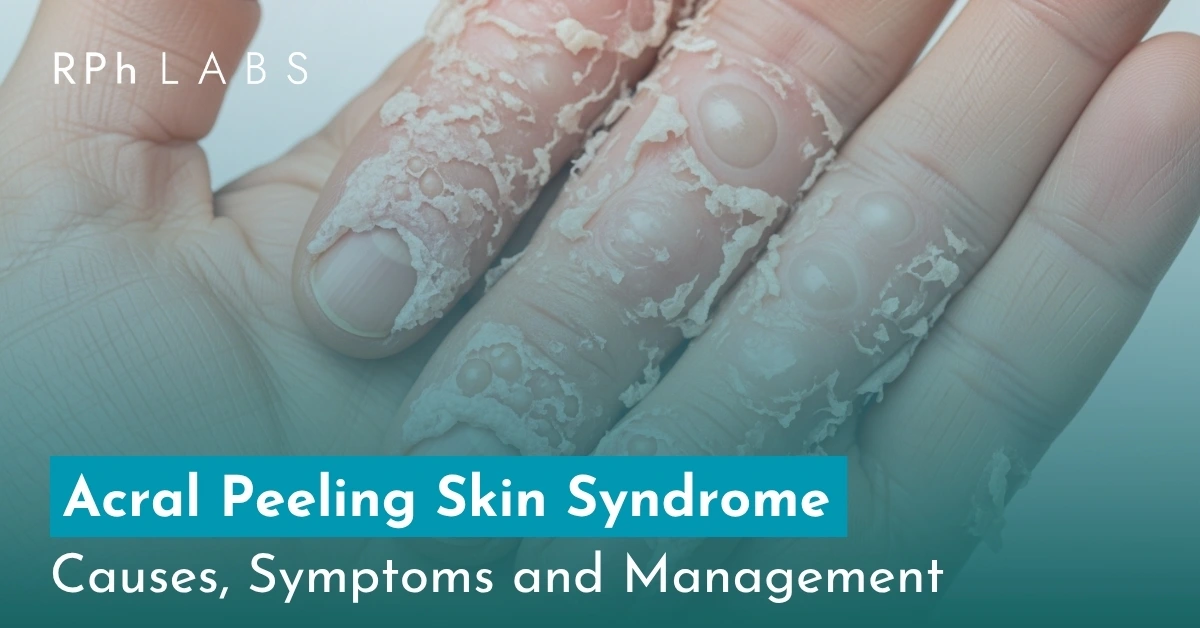
Acral peeling skin syndrome is easy to live with once you understand it and surprisingly hard to get diagnosed. This guide covers the genes involved, how the diagnosis is confirmed, the daily care that reduces flares, and the questions worth taking to a dermatology appointment.
On this page
If you’re experiencing a continuous peeling of the skin on the palms of your hands or the soles of your feet, you may be dealing with Acral Peeling Skin Syndrome (APSS). It is a rare but important skin disorder to understand. We’ll walk through everything you need: what APSS is, how to recognize it, what the latest research shows, how it’s properly diagnosed and managed, and how genetic testing may play a role.
APSS is very rare, and its true frequency is not known because mild cases are easily missed. Most reported cases are caused by changes in the TGM5 gene, with a smaller number linked to CSTA. Yes, these genes are the classic example of autosomal recessive skin peeling syndrome. In this guide, we’ll tell you everything you need to know about this rare condition and practical ways to manage it.
What Is Acral Peeling Skin Syndrome?
APSS is a genetic skin disorder in which the outermost layer of skin repeatedly peels off over the acral surfaces, for example, palms and soles. The term “acral” refers to the extremities, hands, feet, fingers, and toes. The name fits exactly where the peeling shows up. It’s sometimes called peeling skin syndrome type 2 because it corresponds to the localized acral form. It is frequently associated with the TGM5 or CSTA genes.
Common Names:
- Peeling skin syndrome type 2
- Acral peeling skin disorder
- Localized deciduous skin
- Acral PSS (APSS)
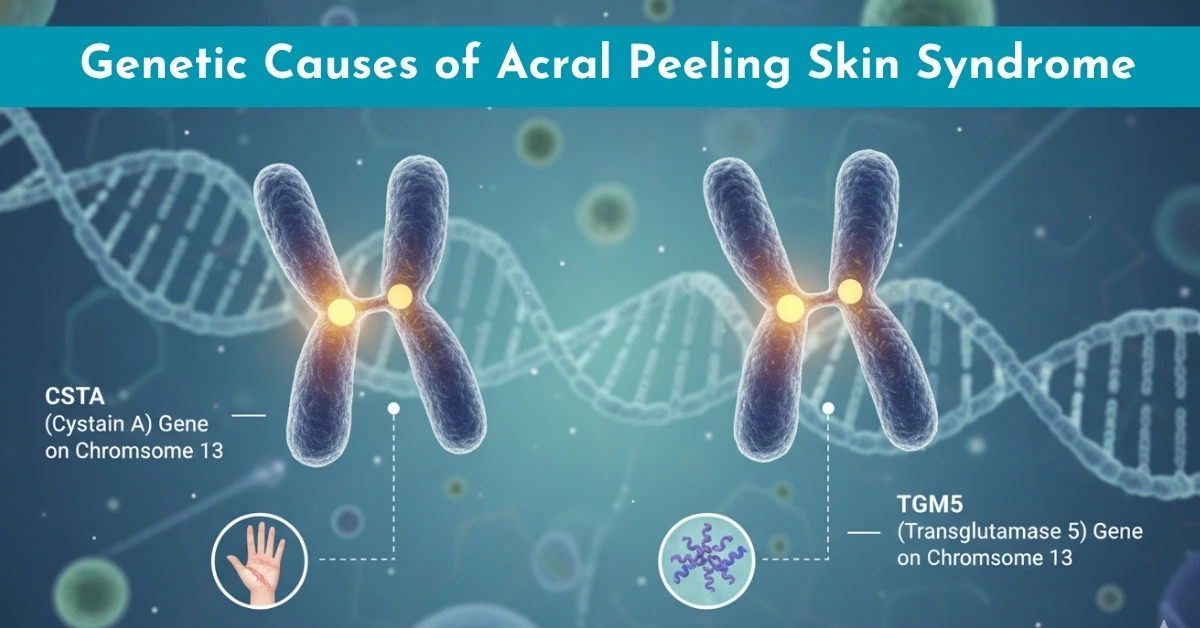
Genetic Causes of Acral Peeling Skin Syndrome
APSS is inherited in an autosomal recessive pattern; both parents must carry the gene mutation for a child to be affected. Two key genes are involved:
1. TGM5 (Transglutaminase 5) Gene on Chromosome 15
- The TGM5 gene encodes transglutaminase-5, an enzyme crucial for the formation of the cornified cell envelope, which keeps skin layers bound together, and it is present on chromosome 15.
- Mutations in the transglutaminase-5 (TGM5) gene impair the enzyme that cross-links structural proteins (like loricrin, involucrin) in the skin barrier.
- It affects skin adhesion, causing superficial peeling of palms and soles.
For example, the well-studied mutation p.Gly113Cys completely abolishes enzyme activity in vitro.
2. CSTA (Cystatin A) Gene on Chromosome 13
- The CSTA gene present on chromosome 13 produces cystatin A, a protein that prevents excessive skin protein breakdown. Cystatin A protein acts as a “skin glue”, keeping the outer layers attached firmly.
- Less common but increasingly recognized. Mutations in CSTA (cystatin A) have been found in a small number of APSS-type cases.
- This mutation impacts skin barrier function and leads to localized peeling.
These genes play vital roles in maintaining the integrity of the epidermal barrier, which protects the body from environmental factors like heat, humidity, cold weather, sun exposure and more.
Did you know?
RPh Labs is a CLIA-certified and COLA-accredited lab, and its PGx testing reports how your body may process 240+ medications. It does not give genetic insights for inherited skin conditions. TGM5 and CSTA are not on the 20-gene panel, and the panel does not test disease risk.
Symptoms and Features of Acral Peeling Skin Syndrome
The symptoms of Acral Peeling Skin Syndrome vary in severity but are typically localized to the palms and soles. Common Signs include:
- Location: Superficial skin peeling on the hands and feet, but may also affect the limbs and arms.
- Onset of disease: In most cases, usually signs appear at birth or within the first few months of life. Rarely, milder cases might go undiagnosed until late childhood or adolescence (up to 15 years old)
- Triggering Factors: Peeling is often worsened by heat, humidity, moisture (like immersion in water), Friction or pressure, Mechanical trauma, and Seasonal changes. Painless exfoliation that may increase with heat or moisture.
- Skin biopsy (if done) will show cleavage between the stratum granulosum and stratum corneum.
These signs can flare up seasonally. One practical example: A child with acral peeling skin disorder might struggle with playground activities if peeling worsens from sweat. But, it’s manageable with the right habits.
Note: For families concerned about inherited genetic conditions like Acral Peeling Skin Syndrome, understanding the role of prenatal and carrier genetic testing can be crucial. You can explore our detailed guide on Genetic Testing to learn how early screening helps identify such conditions.
Common Misdiagnoses and Why They Matter
That genetic difference changes everything, from genetic counseling to family-planning discussions. In APSS, there is no primary blistering disease. The skin peels rapidly, but typically no deeper blistering or scarring. Here are the conditions we really observed;
| Condition | Key Differences | Why It Matters |
| APSS | Painless peeling on hands/feet; onset early; triggered by moisture/heat; autosomal recessive | Rare; may go undiagnosed |
| EBS‑loc | Blistering dominant pattern; autosomal dominant; more typical blister formation | Requires different counseling |
| Tinea/manuum/feet | Often itchy, fungal causes; positive lab/mycology | Treatable with antifungals—different path |
| Keratolysis exfoliativa | Peeling, but more due to callus/sloughing; not genetic | More benign, different management |
Tip: If standard treatments for dermatitis or fungal infections fail, APSS should be considered. Genetic testing can confirm the diagnosis.
Did you know?
APSS is often misdiagnosed as the localized form of Epidermolysis Bullosa Simplex (EBS-loc). The two can look similar on the skin, so gene testing ordered by a dermatologist is usually what tells them apart.
Diagnosis of Acral Peeling Skin Syndrome
Diagnosing APSS requires careful evaluation because it shares symptoms with common skin conditions. Dermatologists may use:
- Clinical observation of hands and feet skin peeling disorder
- Family history of autosomal recessive skin peeling syndrome
- Genetic testing to identify TGM5 or CSTA mutations
RPh Labs’ PGx testing is a medication-response test. It does not test for APSS, and it cannot diagnose a skin condition or any other disease. Diagnostic TGM5 and CSTA testing is ordered by your dermatologist or a genetic counselor through a genetics laboratory.
Genetic Counseling:
Because APSS is autosomal recessive, if two parents are carriers, each child has a 25% chance of being affected. Confirming the genetic cause aids family planning.
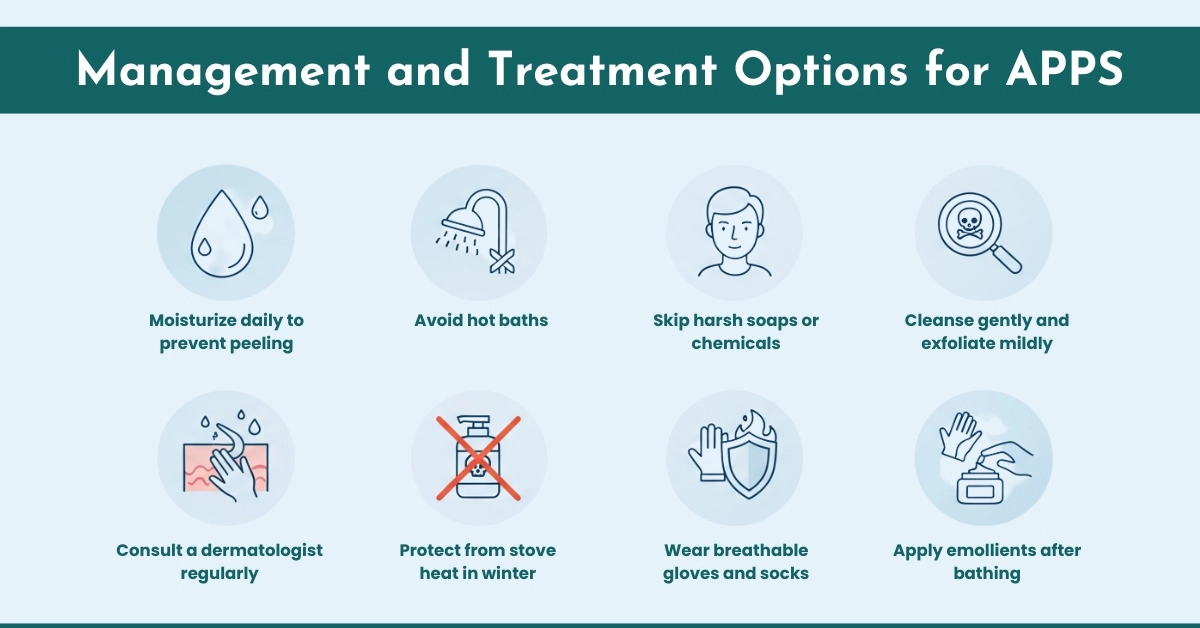
Management and Treatment Options for APPS
Currently, there is no cure for APSS, but symptoms can be managed effectively. Key strategies include:
- Daily moisturizing to keep skin hydrated
- Avoid harsh soaps and chemicals to protect the skin barrier
- Gentle washing and exfoliation to prevent excessive peeling
- Regular dermatology check-ups
- Do not sit near the stove in winter
- Wear breathable gloves, shoes, and cotton socks
- Apply emollients like petroleum jelly or ceramide-based creams right after bathing.
Research and Future Outlook
According to JIDOnline, ongoing research is exploring potential gene-targeted therapies, which could offer personalized solutions for rare genodermatoses like APSS in the near future.
The studies on Acral Peeling Skin Syndrome are still in the development stage. Research into the role of TGM5 and CSTA mutations in destabilizing the epidermal structure and the possible use of gene therapy or molecular in vivo repair in the future is underway.
New developments in the field of genomic medicine and the study of rare diseases are making clinicians better comprehend rare genodermatoses such as APSS. Genetic testing can confirm the diagnosis early, so that care and family counseling can be planned appropriately.
Acral peeling skin syndrome: 7 clear facts at a glance
If you are reading this because of skin that keeps shedding in thin sheets, these seven points cover the essentials of acral peeling skin syndrome before the detail.
- It is inherited, not caught. It is not contagious and it is not caused by poor hygiene.
- The peeling is superficial. The top layer separates, which is why it usually does not scar.
- It is normally painless, though the newly exposed skin can feel tender or sore.
- Moisture, heat, friction and swimming commonly make it worse, so flares often follow summer or sport.
- It is confined to the palms and soles in the classic form. Widespread peeling suggests a different condition.
- There is no cure, and there is also no urgency. Care is about barrier protection and trigger management.
- A dermatologist plus, where available, genetic confirmation is the route to a firm answer.
The most useful thing a diagnosis gives you is an end to the treatment carousel. Many people spend years on antifungal creams and steroid ointments for something that was never fungal or inflammatory in the first place.
If that sounds familiar, take this article’s diagnosis section to your next appointment. Naming the pattern out loud is often what moves the conversation forward.
What a TGM5 gene mutation does to the skin barrier
Skin holds itself together with structural proteins that are cross-linked into a tough envelope around each cell of the outer layer. Transglutaminase 5, the enzyme encoded by the TGM5 gene, is one of the enzymes that performs that cross-linking.
When a TGM5 gene mutation reduces or removes that enzyme activity, the links between the outermost cells and the layer beneath them are weaker than they should be. Ordinary friction and water exposure are then enough to shear the top layer away.
That is why the separation sits so high in the skin. A biopsy, if one is done, typically shows the split between the granular layer and the cornified layer above it, which is a different plane from the one seen in blistering conditions.
The other gene in the picture
A smaller number of cases involve the CSTA gene, which encodes cystatin A, a protease inhibitor that helps keep the outer layers from breaking down too readily. The end result looks similar even though the mechanism differs.
Neither gene has anything to do with how you process medicines, and neither is included on a pharmacogenomic panel. A TGM5 gene mutation is found on a diagnostic test ordered for the skin condition itself, which is a different kind of test entirely.
Daily care for peeling skin on hands and feet
There is no treatment that stops the shedding. What does change day-to-day comfort is reducing the forces that pull the weakened layer off. Think barrier protection and friction control rather than active medication.
- Apply a thick emollient, such as plain petrolatum or a ceramide-containing cream, straight after washing while the skin is still slightly damp.
- Wash with lukewarm water and a non-soap cleanser. Hot water and harsh detergents both make peeling skin on hands and feet worse.
- Pat dry instead of rubbing, and dry carefully between the toes.
- Wear cotton socks and breathable shoes, and change socks during the day if your feet sweat.
- Use gloves for dishwashing, cleaning and gardening, with a cotton liner if rubber alone makes your hands sweat.
- Trim loose flakes with clean scissors rather than peeling them off, which can tear into attached skin.
Resist aggressive exfoliation, strong keratolytic acids and callus shavers unless a clinician has specifically recommended them. With peeling skin on hands and feet the barrier is already fragile, and stripping more of it away tends to backfire.
Watch for signs that a raw area has become infected: spreading redness, warmth, swelling, increasing pain, pus or fever. That needs a clinician’s assessment rather than another layer of moisturizer.
Autosomal recessive inheritance and what it means at home
This condition follows autosomal recessive inheritance. That means a person is affected when they inherit a non-working copy of the gene from each parent, and carriers with a single non-working copy generally have no skin symptoms at all.
The practical consequences surprise people. Two unaffected parents can have an affected child. There may be no family history whatsoever. And an affected person’s own children will be carriers rather than affected, unless their partner also happens to carry a variant in the same gene.
Numbers worth having straight
- When both parents are carriers, each pregnancy carries a one in four chance of an affected child.
- Each pregnancy also carries a one in two chance of a carrier child who is unaffected.
- Siblings of an affected child are often tested or counseled, because carrier status has no outward sign.
- Autosomal recessive inheritance is not more likely in one sex than the other.
Those odds apply independently to each pregnancy. A previous affected child does not change the chance for the next one, which is the single most common misunderstanding in genetic counseling conversations.
If family planning is on your mind, ask for a referral to a genetic counselor or clinical genetics service. They can explain testing options for partners and relatives in the context of your actual confirmed result.
Getting a diagnosis: what to ask a dermatologist
Diagnosis is clinical first. A dermatologist who recognizes the pattern, the lifelong history, the acral distribution and the absence of real inflammation is usually more than halfway there. Genetic confirmation then puts a name to it.
Before that happens, most people have been treated for something else, usually tinea, contact dermatitis or simple dry skin. Ruling those out properly is part of the process rather than a waste of time.
Questions that move things along
- Has a fungal scraping or culture actually been done, and was it negative?
- Does the peeling pattern fit a blistering condition, or is the split too superficial for that?
- Would genetic testing for the known genes be available to me, and who orders it?
- Should my siblings or children be assessed?
- What can I do about flares in hot weather or after swimming?
Keep a simple photo diary on your phone, dated, including good weeks and bad ones. Skin conditions have an unhelpful habit of looking mild on the exact day of the appointment, and photographs of a flare carry real weight.
If you want a broader primer on how inherited conditions are tested for in general, our overview of genetic testing during pregnancy explains the difference between carrier screening and diagnostic testing.
Living with a genetic skin disorder day to day
The medical side of this genetic skin disorder is mild compared with most. The practical and social side is where people actually need support, and it is the part clinic letters tend to skip.
School and work
Teachers and managers often assume the peeling is contagious. A short note from a clinician stating that the condition is inherited and not infectious settles it quickly. Reasonable adjustments are usually small: gloves for certain tasks, a change of socks, a chance to apply emollient during the day.
Sport and swimming
Water and friction both provoke flares, so swimming is a common trigger. That is a reason to plan around it, not necessarily to stop. Rinsing, drying thoroughly and applying emollient afterwards, plus socks and well-fitted footwear for running sports, cover most of the problem.
The emotional side
Visible hand and foot changes affect confidence, particularly for teenagers. Being told for years that it is fungal, or that it is your own fault for not moisturizing, wears people down. A firm diagnosis of a genetic skin disorder often brings more relief than any cream does.
Patient organizations for rare skin conditions and genodermatoses can be useful here, both for practical tips and for the simple value of meeting people with the same story.
Flares, triggers and a simple seasonal plan
Most people find their condition runs in cycles rather than at a constant level. Mapping your own pattern is the closest thing to a treatment plan available, because the triggers are consistent across individuals even when severity is not.
- Heat and humidity, which is why summer is frequently the worst season.
- Prolonged water exposure, including swimming, long baths and wet work.
- Friction from new shoes, sports, tools, or heavy manual tasks.
- Sweating, whether from exercise, occlusive footwear or hot weather.
A plan that fits on one card
- In warm months, increase emollient frequency and change socks more often rather than waiting for a flare.
- Before sport or wet work, protect with gloves or well-fitted footwear and reapply emollient afterwards.
- During a flare, reduce friction, keep the area clean and covered if raw, and hold off on any exfoliation.
- After a flare, note what preceded it. Over a year that record becomes genuinely predictive.
- See your clinician if an area looks infected, or if the pattern changes and spreads beyond hands and feet.
That last point matters. Classic acral peeling skin syndrome stays on the palms and soles, so peeling that spreads to the trunk or limbs deserves a fresh assessment rather than an assumption.
Where pharmacogenomic testing fits, and where it does not
This needs saying plainly, because the internet muddles it constantly. Pharmacogenomic (PGx) testing reports how your body may process certain medicines. It does not diagnose disease, it does not predict future conditions, and it gives no insight into inherited skin conditions.
The RPh Labs panel covers 20 genes, including CYP2D6, CYP2C19, CYP2C9, SLCO1B1, TPMT and DPYD, and reports against more than 240 medications. It does not include TGM5 or CSTA. It cannot confirm, exclude or shed light on acral peeling skin syndrome, and you should be skeptical of anyone who suggests it can.
There is also no established gene-drug guidance for the treatments used here, because the mainstays are emollients and trigger avoidance rather than systemic drugs. Honest answer: pharmacogenomics has little to offer this particular condition.
When it is worth a thought anyway
It becomes relevant only if you take medicines for something else that do have published guidance, such as certain antidepressants through CYP2D6 and CYP2C19, codeine or tramadol through CYP2D6, or statins through SLCO1B1. That is a discussion with your prescriber about those medicines, not about your skin.
For the underlying evidence, clinicians use the CPIC guidelines. If it does apply to your medicine list, the RPh Labs at-home cheek swab kit is $299 self-pay and HSA or FSA eligible, with every report reviewed by a PharmD pharmacist. For your skin, the referral you want is dermatology or clinical genetics.
Conclusion:
APSS is a rare but real autosomal recessive genodermatosis causing peeling of the skin on acral surfaces (hands/feet). The most common gene involved is TGM5; less commonly CSTA. Newly reported mutations and modifiers are expanding our understanding. It is underdiagnosed and often misinterpreted as other conditions like EBS-loc or dermatitis. Recognizing the specific pattern is key. Management focuses on barrier protection, trigger avoidance and moisturization. While there’s no cure yet, but early care makes a big difference.
Disclaimer:
This blog is for educational use only and should not be used to make medical decisions. Some visuals are AI-generated for illustrative purposes only.
Frequently Asked Question
More questions about acral peeling skin syndrome
Is APSS contagious or linked to infections?
No. APSS is a genetic, non-infectious condition. You cannot ‘catch’ it from another person.
Will my condition spread beyond my hands and feet?
In classic APSS, it is limited to acral areas (palms/soles). If you see widespread peeling on the trunk/arms/legs, it may be a generalized peeling skin syndrome rather than the acral form. Discuss this with your dermatologist.
Can the peeling improve or go away entirely with age?
Some patients report milder episodes with age, but there is no guarantee of complete remission. Effective management reduces burden though.
Is Acral Peeling Skin Syndrome hereditary?
It is, yes, a matter of an autosomal recessive pattern – i.e., both parents have to be carriers of the defective gene in order to get a child to exhibit the symptoms.
When should I seek genetic testing?
If you have a pattern of acral peeling lasting years, appear early in life, no or low inflammation, and standard treatments haven’t helped, ask your dermatologist about TGM5/CSTA testing. Knowing the genetic basis helps with counseling, avoiding misdiagnosis, and planning.
Does APSS increase risk for other skin conditions or infections?
Not shown to cause serious internal disease. But because of the skin barrier impairment, care should be taken with friction, moisture, and potential secondary infection.
Is a TGM5 gene mutation the only cause?
No. A TGM5 gene mutation accounts for most reported cases, and a smaller number involve the CSTA gene. Some people with a convincing clinical picture have no identified variant, because gene discovery in rare skin conditions is still ongoing. A negative genetic result does not automatically overturn a dermatologist’s clinical diagnosis.
Can moisturizers stop the peeling completely?
Not completely. Emollients reduce dryness, friction and discomfort, and they often make flares shorter and less obvious, but they do not repair the underlying protein cross-linking. Think of them as the daily maintenance that keeps peeling skin on hands and feet manageable rather than as a treatment aimed at the cause.
Do both parents have to be carriers?
Yes, under autosomal recessive inheritance both parents carry one non-working copy, usually without any symptoms themselves. That is why there is often no family history. A genetic counselor can explain the one in four recurrence risk per pregnancy and discuss testing for partners and other relatives.
Could this be a fungal infection instead?
It is worth ruling out properly, because tinea of the hands or feet is far more common. Fungal infection is usually itchy, often asymmetric, and confirmed by a scraping or culture. Lifelong, painless, symmetrical peeling that returns whatever antifungal is used points away from infection and toward a genetic skin disorder.
Does the condition get worse with age?
It varies between individuals and there is no reliable rule. Some people report milder episodes as adults, while others stay much the same. Because severity fluctuates with heat, moisture and friction, changes over time often reflect lifestyle and climate as much as anything biological. Discuss any clear change with your dermatologist.
Can RPh Labs test for the genes involved?
No. RPh Labs performs pharmacogenomic testing, which reports how you may process certain medicines and does not include TGM5 or CSTA. Diagnostic genetic testing for the skin condition is ordered through a dermatologist or clinical genetics service. The two tests answer completely different questions.


Leave a Reply