
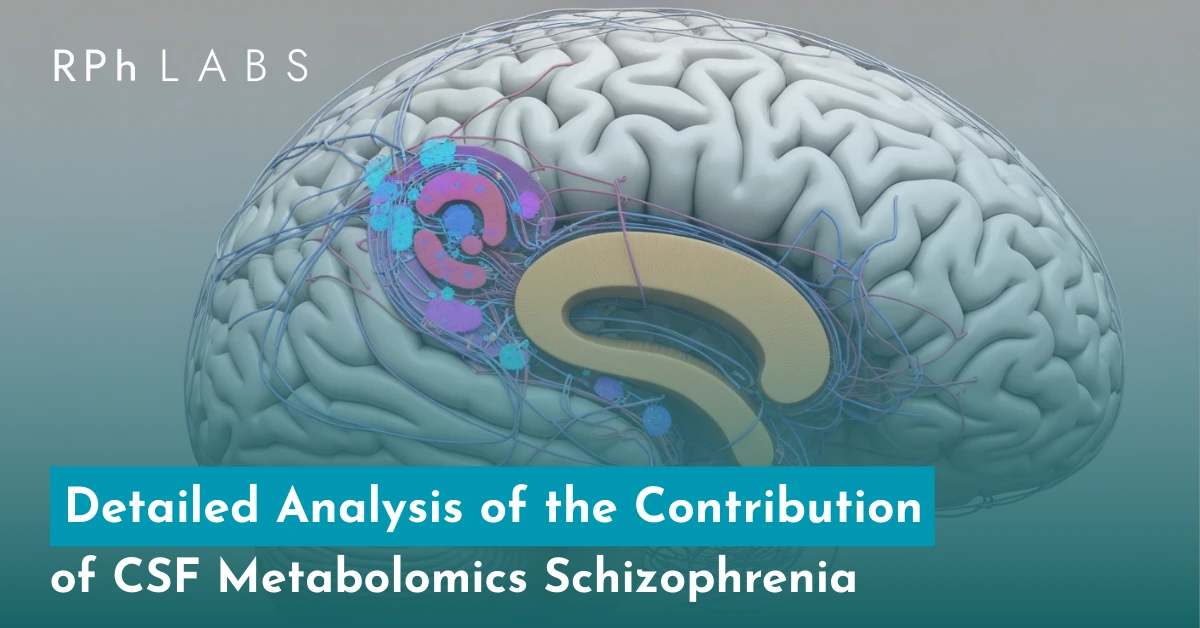
Research into csf metabolomics schizophrenia asks whether the chemistry of the fluid around the brain can reveal what is happening in the illness. It is a serious field with real findings and real limits. This guide explains both, and separates the research from what a clinic can offer today.
On this page
Schizophrenia is an ill-defined, complex psychiatric disorder that runs in about 1% of the world’s population. It manifests in delusions, hallucinations, disturbances in cognitive functions, and emotional blunting, which makes it quite difficult to diagnose and treat. In all honesty, though the causes of schizophrenia are yet unknown, research into neurobiology, genetics, and biochemistry only supports the depth of their understanding of the disorder.
One promising area is cerebrospinal fluid metabolomics, which involves an advanced method through which it analyzes the metabolite profile around the brain and the spinal cord of cerebrospinal fluid. Here, we will review the expanding interest in CSF metabolomics schizophrenia spectrum in its potential to identify clinically relevant biomarkers and to shed light on disease mechanisms guiding new therapeutic strategies.
What is CSF Metabolomics?
The comprehensive study of those small molecules produced during metabolism within biological systems is metabolomics. The end products of gene expression and cellular activity represent the metabolites, giving an impression of the metabolic state of a person. Metabolomics of CSF directs attention to the metabolites within the cerebrospinal fluid bathing the brain and spinal cord.
CSF is particularly helpful for research because it reflects the biochemical environment of the CNS, thereby explaining the nature of brain metabolism, neurotransmitters’ function, and neuroinflammation. One can obtain CSF by performing a lumbar puncture or spinal tap through which one can study metabolites that are more directly related to both brain activity and pathology.
CSF samples contain a wide range of metabolites that can be identified and quantified using mass spectrometry (MS) or nuclear magnetic resonance (NMR) spectroscopy. Metabolites identified include amino acids, lipids, organic acids, and neurotransmitters, all of which are very relevant for indicating critical aspects of brain health and disease processes.
Role of CSF Metabolomics Schizophrenia
The deranged neurobiological pathways have been associated with schizophrenia, and it has been known to be related to the disturbed neurotransmitter systems, including dopamine, glutamate, serotonin, and cellular energy metabolism. It is one of the scientific tools that can discover such pathways. This would, in turn, cast light on possible biomarkers for diagnosis, prognosis, and therapeutic targets.
Neurotransmitter Dysfunction
Characterizing schizophrenia is dysfunction in neurotransmitter systems, particularly the dopamine, glutamate, and GABA (gamma-aminobutyric acid) ones. Such neurotransmitters have previously known key roles in mood, cognition, and sensory processing. A level of signaling change has been related to the pathophysiology of schizophrenia.
Dopamine:
Dopamine dysregulation has been considered central to the positive symptoms of schizophrenia, primarily hallucinations and delusions. CSF metabolomics studies suggested the potential link in dopamine system pathology through the imbalance of dopaminergic metabolites, such as homovanillic acid (HVA).
Glutamate:
Glutamate is considered to be the most crucial excitatory neurotransmitter in the CNS, and its receptors, particularly the NMDA receptors, are implicated as being central in synaptic plasticity and cognition. Reduced NMDA receptor activity has been considered to be one of the central etiopathogeneses for the observed cognitive deficits that are associated with schizophrenia. Metabolomics studies also suggested changes in glutamate and other closely related metabolites, like glutamine, in the CSF of patients with schizophrenia.
GABA
GABA is the most potent inhibitory neurotransmitter and synchronizes with excitatory neurotransmitters to maintain a balance. The cognitive and sensory processing deficits seen so vividly in schizophrenia have been the dysregulation of the GABA system. Metabolomic profiling of CSF may identify changes in GABA levels or its metabolic byproducts.
Energy Metabolism and Mitochondrial Dysfunction
A hypothesis is emerging suggesting that schizophrenia may be associated with disorders in the energy metabolism of the brain, primarily because of mitochondrial dysfunction. Mitochondria are generally known as the powerhouses of cells, as they provide the energy source necessary for cell functioning in the form of ATP. Mitochondrial dysfunction reduces the productivity of ATP and floods neural Tissue with disrupted energy in the form of damaging oxidative stress.
Metabolomics of CSF detected disturbances in the metabolism of compounds associated with mitochondrial functioning, which include aberrantly altered levels of lactate, pyruvate, and acetylcarnitine that could be caused by alterations in cellular energy metabolism. Other abnormalities of concentration of other metabolites, such as creatine and phosphocreatine, that are involved in the ATP buffering system, were detected in the CSF of schizophrenia patients, and these could propose impairments of energy homeostasis.
Inflammation and Immune System Activation
Neuroinflammation is increasingly being raised in the pathophysiology of schizophrenia. Immunity response and inflammation metabolites could be traced by CSF metabolomics. The concept is exemplified by a tryptophan metabolite kynurenine produced through the pathway of tryptophan degradation. There has been established an increase in the concentration of schizophrenia, indicating that this is an immune system’s altered response.
The kynurenine pathway has neurotoxic metabolites, thereby affecting the brain’s function. Levels of pro-inflammatory cytokines are increased in the CSF of schizophrenic patients, and changes in the metabolites related to oxidative stress and inflammation are researched intensively for potential use as biomarkers for the disease.
Oxidative Stress and Antioxidant Defenses
Schizophrenia is characterized by increased oxidative stress, a condition of imbalance that results from the overproduction of free radicals and a failure to neutralize them. Oxidative stress might affect the cell lines in the brain because it causes neuronal death, blunting neurotransmitter systems. The oxidative stress markers are MDA and 8-OHdG, with the body’s antioxidant defenses, including glutathione, which can be determined using metabolomics from CSF.
Biomarkers for Diagnosis and Prognosis
The most exciting application of CSF metabolomics in schizophrenia research is to uncover potential biomarkers for diagnosis and prognosis. Perhaps the identified biomarkers using metabolomics might be useful to make distinctions between schizophrenia and other psychiatric diseases, prediction regarding the onset time of the disease, or follow-up monitoring for the progression of symptoms. Examples include, for instance, a metabolite signature in CSF that may predict schizophrenia before it appears clinically to enable early intervention and improve its prognosis.
Another example is that the profiles of metabolites could predict which patients would probably respond to a given treatment and hence guide the therapy through a personalized approach.
Challenges and Future Directions
Although it shows much promise, there are some significant challenges to be overcome in the future with CSF metabolomics:
- Standardization: Among the biggest challenges posed is the lack of standardized procedures in the collection, processing, and analysis of samples. Metabolite profiles can be produced based on any number of factors, like diet, medication, handling biological samples, etc.
- Heterogeneity of Schizophrenia: Schizophrenia is a heterogeneous disorder, implying that different subtypes of the disease may have different underlying metabolic signatures. That renders it more difficult to identify universal biomarkers.
- Ethical and Practical Problems: To obtain CSF, the patient must undergo an invasive procedure, which might limit this data in large-scale clinical studies. The ethical issue of obtaining samples of CSF from vulnerable populations, such as those suffering from severe mental illness, also persists.
Despite these challenges, the future is bright for CSF metabolomics in schizophrenia research. With the availability of modern technology, advancement in data analysis, and finally, an enhanced understanding of the disorder, metabolomics could take a crucial role in improving diagnosis, treatment, and outcomes among schizophrenia patients.
How PGx Testing Benefits Schizophrenia Treatment
- Selection of drug-continuation: Many variations in CYP450 and other enzymes contribute to the metabolism of drugs, their effects, or side effects. Pharmacogenomic testing informs dosing for drugs with published guidance, such as aripiprazole and risperidone through CYP2D6. It does not choose between drugs such as risperidone and clozapine, which is a clinical decision, and clozapine is handled mainly by CYP1A2 rather than CYP2D6.
- Context for side effects: CYP2D6 metabolizer status changes exposure to several antipsychotics, which is relevant to tolerability. DRD2 is a research gene rather than a prescribing test, it is not on the RPh Labs panel, and no genotype predicts weight gain or movement disorders.
- Tailor-made Doses: Pharmacogenetic testing characterizes a slow or fast drug metabolizer, allowing doctors to administer the doses in time to avoid toxicity or ensure efficiency.
- Tolerability and adherence: Fewer avoidable side effects can help people stay on treatment, although adherence depends on many factors that no test measures.
Where csf metabolomics schizophrenia sits in the research picture
Metabolomics measures the small molecules left behind by metabolism. Cerebrospinal fluid is attractive for this because it bathes the brain and spinal cord, so its chemistry is closer to the central nervous system than a blood sample is.
That closeness comes at a cost. Collecting cerebrospinal fluid requires a lumbar puncture, which is invasive, uncomfortable and not something you repeat casually. As a result, csf metabolomics schizophrenia studies tend to be small, and small studies produce findings that do not always replicate.
- Sample handling matters enormously. Time to freezing, storage temperature and processing all change metabolite profiles.
- Medication is a confounder in almost every study, because most participants are already taking antipsychotics.
- Diet, smoking, time of day, fasting state and body weight all shift metabolites.
- Schizophrenia is heterogeneous, so a single chemical signature may not exist.
- Analysis methods differ between laboratories, which makes pooling results difficult.
None of that makes the work pointless. It means the honest description is mechanistic research rather than diagnostics, and any article promising a spinal fluid test for schizophrenia has skipped several steps.
The glutamate hypothesis and what metabolomics adds
The dopamine hypothesis came first, largely because every effective antipsychotic blocks dopamine D2 receptors to some degree, and drugs that increase dopamine can produce psychotic symptoms.
The glutamate hypothesis arrived from a different direction. Drugs that block NMDA receptors, such as ketamine and phencyclidine, reproduce not only positive symptoms but also the negative and cognitive features that dopamine drugs do not explain well.
Metabolomics is well suited to testing the glutamate hypothesis because glutamate, glutamine and related compounds are measurable metabolites. Studies have reported differences in glutamate and glutamine in cerebrospinal fluid and in brain imaging measures, with results that vary by illness stage and by medication status.
Why neither hypothesis has replaced the other
Dopamine explains why antipsychotics work on hallucinations and delusions. The glutamate hypothesis explains features they treat poorly. Most researchers now describe an interacting system rather than a single broken chemical, which is also why a single metabolite is unlikely to become a diagnostic test.
The kynurenine pathway and immune activation
Tryptophan has two fates. A small share becomes serotonin, and most of it travels down the kynurenine pathway, which produces several neuroactive molecules.
Two of those matter here. Kynurenic acid blocks NMDA receptors and some nicotinic receptors, and quinolinic acid does the opposite at NMDA receptors while also being neurotoxic at high levels. The balance between them shifts when the immune system is activated.
That is why the kynurenine pathway keeps appearing in csf metabolomics schizophrenia work. Several studies report raised kynurenic acid in cerebrospinal fluid in schizophrenia, which fits neatly with the glutamate hypothesis, because raised kynurenic acid would reduce NMDA receptor signaling.
- Findings are not universal. Some cohorts show the difference and others do not.
- Inflammation from unrelated causes also moves the kynurenine pathway, which weakens its specificity.
- Smoking, common in this population, independently affects these metabolites.
- Trials of anti-inflammatory add-on treatments have produced mixed results so far.
It remains one of the more promising mechanistic threads, and it is still a research thread rather than a test you can order.
Biomarkers for schizophrenia: the honest status
There are no validated biomarkers for schizophrenia in clinical use. Diagnosis is clinical, made by a psychiatrist from history, observed symptoms, duration and the exclusion of other causes.
That is worth stating plainly because families often ask for a scan or a blood test to settle the question. Imaging and laboratory tests are used to rule other things out, such as thyroid disease, infections, substance effects or a structural lesion, not to rule schizophrenia in.
For a biomarker to become clinical it has to clear a high bar: reproducible across populations, robust to medication and lifestyle confounders, better than existing clinical assessment, and practical enough to run routinely. Candidate biomarkers for schizophrenia from metabolomics have not cleared it.
Where progress is more likely first
Prediction of treatment response, rather than diagnosis, is the more realistic near-term target. So is monitoring: therapeutic drug monitoring for clozapine already exists and is genuinely useful, which shows what a practical laboratory measure looks like in this field.
Antipsychotic metabolism: the genetics that genuinely apply
This is the part with real clinical guidance today, and it is worth being precise about, because the earlier version of this article was not.
- Aripiprazole is a CYP2D6 substrate, and dose adjustment guidance exists for poor metabolizers.
- Risperidone is also largely CYP2D6 dependent, and metabolizer status changes exposure.
- Haloperidol and some other older agents involve CYP2D6 as well.
- Clozapine and olanzapine are handled mainly by CYP1A2 and glucuronidation, not CYP2D6. CYP1A2 is not on the RPh Labs 20-gene panel.
- Quetiapine is largely a CYP3A4 substrate, where interacting drugs matter more than genotype.
Two non-genetic factors change antipsychotic metabolism more than most people expect. Tobacco smoke induces CYP1A2, so people who smoke often need different clozapine or olanzapine levels, and stopping smoking abruptly can raise levels sharply. Interacting medicines can also convert a normal metabolizer into a functional poor one.
A note on DRD2. It is a receptor gene studied in relation to response and side effects, and it is not an established prescribing test. It is not on our panel, and no one should be told a DRD2 result predicts their antipsychotic side effects.
Where genotype does apply, it informs dose and choice alongside everything else. The CPIC guidelines publish the recommendations, our medication list by gene shows the pairings, and the at-home testing kit covers CYP2D6 among its 20 genes.
What actually helps someone living with schizophrenia now
Research matters, but it should not crowd out the things with established benefit today.
- Antipsychotic medication remains the core treatment, chosen and adjusted with a psychiatrist, with side effects monitored rather than tolerated silently.
- Clozapine is the treatment with the best evidence for treatment-resistant illness, and it requires regular blood count monitoring because of the risk of severe neutropenia.
- Coordinated specialty care in early psychosis, combining medication, therapy, family support, and education or employment support, improves outcomes.
- Cognitive behavioral therapy for psychosis and family interventions reduce relapse.
- Physical health screening matters, because cardiovascular risk and metabolic side effects drive much of the excess mortality in this group.
- Smoking cessation support is important both for health and because smoking changes drug levels.
The NIMH page on schizophrenia is a reliable starting point for families. In the United States, call or text the 988 Suicide and Crisis Lifeline in a mental health crisis, or 911 if someone is in immediate danger.
How to read new research claims in this field
Studies in this area get reported enthusiastically, so a few questions help you judge a headline.
- How many participants, and was there a control group matched for age, sex and smoking?
- Were participants medicated? If so, could the finding be a drug effect rather than an illness effect?
- Has the result been replicated in an independent cohort?
- Is the claim about mechanism or about a test? Those are very different stages.
- Who funded it, and does a company sell a product based on the finding?
Applied to csf metabolomics schizophrenia, those questions usually return the same answer: interesting, early, not yet clinical. That is a normal place for research to be, and it is more useful than a premature promise.
If you or a family member is being treated now, the useful conversations are about medication choice, side effects, monitoring and support. Ask whether antipsychotic metabolism issues such as smoking status, interacting drugs or CYP2D6 status could be contributing to an unusual response.
Conclusion
CSF Metabolomics Changes Our Perception of Schizophrenia CSF offers an extremely high-resolution biochemical profile of the environment of the brain. The study of the metabolites present in CSF has revealed insights into neurotransmitter dysregulation, energy metabolism, neuroinflammation, and oxidative stress mechanisms, all relevant to schizophrenia pathophysiology. Given the fast-moving nature of research in this area, CSF metabolomics may prove of enormous potential for early diagnosis, individually tailored therapy, and deeper clarification of molecular underpinnings of schizophrenia.
There is a lot of scope yet to be realized regarding this approach to reshaping schizophrenia research and clinical practice.
Csf metabolomics schizophrenia FAQ
Can a spinal fluid test diagnose schizophrenia?
No. There are no validated biomarkers for schizophrenia in clinical use. Diagnosis is clinical, and laboratory tests and imaging are used to exclude other causes. Csf metabolomics schizophrenia work is mechanistic research, not a diagnostic service.
What is the kynurenine pathway’s role?
Most tryptophan travels down the kynurenine pathway, producing kynurenic acid, which blocks NMDA receptors, and quinolinic acid, which is neurotoxic at high levels. Several studies report raised kynurenic acid in schizophrenia, which fits the glutamate hypothesis but is not specific.
What is the glutamate hypothesis in simple terms?
That reduced NMDA receptor signaling contributes to schizophrenia. It came from the observation that NMDA blockers such as ketamine reproduce negative and cognitive symptoms that dopamine-based explanations handle poorly. It complements rather than replaces the dopamine hypothesis.
Does genetics guide antipsychotic metabolism?
For some drugs. Aripiprazole and risperidone are CYP2D6 substrates with published dosing guidance. Clozapine and olanzapine run mainly through CYP1A2, which is not on the RPh Labs panel, and smoking status affects those levels more than genotype does.
Is DRD2 testing useful for choosing an antipsychotic?
No. DRD2 is studied in research on response and side effects, but it is not an established prescribing test and is not on our panel. Nobody should be told a DRD2 result predicts their antipsychotic side effects.
Why do these studies keep disagreeing?
Small samples, medication effects, smoking, diet and differing laboratory methods all shift metabolite profiles, and schizophrenia itself is heterogeneous. Replication in independent cohorts is the test that matters, and most candidate findings have not passed it yet.



Leave a Reply