
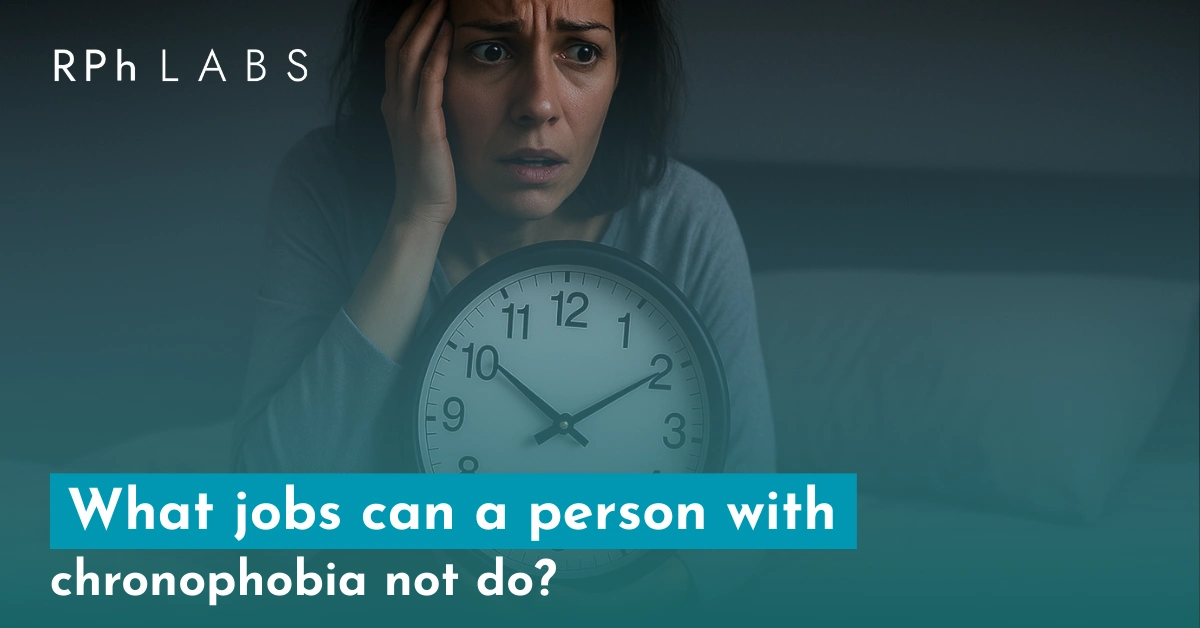
Chronophobia describes a distressing fear of time passing, and most articles about it jump straight to a list of jobs you supposedly cannot do. That framing is wrong, and this guide corrects it: what the condition is, what treatment achieves, and how work is adjusted rather than abandoned.
On this page
Chronophobia is the irrational fear of time or the passing of time, and it can profoundly affect a person’s day-to-day life, including their career. Time-based anxiety can manifest as a fear of deadlines, constant awareness of how little time is left, and overwhelming distress about the inevitable passing of time. This condition can make specific jobs incredibly stressful and, in some cases, unmanageable.
For a person with chronophobia, the nature of work and how it is associated with time should be considered when making career choices. In this blog, we will discuss in detail What jobs can a person with chronophobia not do. The types of jobs that would make a person with chronophobia want to avoid and approaches to career choices to limit the impact of this anxiety.
What is Chronophobia?
It’s more of an intense and irrational fear; it causes high anxiety levels that may even include some physical symptomatology. Individuals having chronophobia also feel that too much time is passing them by. They might go to some obsessive thinking concerning time, plus they might find themselves not being able to control their feelings. Because they understand they could not be in a position to stop or speed time.
This fear can be highly disruptive in high-pressure environments where deadlines are tight, work is continuous, and the clock seems to be ticking constantly. It may manifest in panic attacks, a sense of dread, or an overwhelming need to flee from situations that remind them of the inevitable forward march of time.
Roles that are hardest while chronophobia is untreated
No job is closed to you by a diagnosis. The roles below are the ones people with chronophobia most often find difficult while symptoms are untreated, which is a reason to seek treatment and adjustments rather than to rule a career out:
Project Management
Project management roles often involve juggling multiple tasks with strict deadlines, making them a poor fit for people with chronophobia. Project managers ensure projects are completed on time, coordinate with teams, and track progress. The constant emphasis on time management, meeting deadlines, and delivering results within specific timeframes can worsen feelings of anxiety. For chronophobia, the continuous ticking of the clock can be overwhelming, especially in projects with frequent changes or delays.
Air Traffic Control
Air traffic controllers are responsible for managing safe and efficient aircraft movement. This job is very time-sensitive, requiring the responsibility to maintain safe distances between planes, manage delays, and communicate constantly with pilots. The risks are very high, and the pressure to make decisions within moments can trigger intense anxiety for someone with chronophobia. The high levels of stress and the need to think on one’s feet in a time-sensitive environment would be unbearable for someone with this condition.
Emergency Services (Police, Firefighters, Paramedics)
Working in emergency services involves responding to urgent situations where every second counts. Dealing with life-or-death situations will affect the most pressure; decisions must be made in haste, making things quite overwhelming. It might make a person severely drained by the clock ticking when suffering from this condition. And this situation might be pretty challenging in making them work under such pressures. Panic attacks and other anxiety symptoms might get triggered due to stress experienced when responding within a tight time frame.
Sales with Tight Quotas
Sales jobs often come with severe quotas and expectations, frequently tied to the time of year or hourly targets. If you’re required to meet daily, weekly, or monthly sales goals, the constant pressure of time passing might worsen anxiety. Sales positions involving constant cold calling, many meetings with clients, or numerous leads in the pipeline make the passing of time a continuous theme and possibly one that may scare off or make chronophobia feel guilty about being in such a situation.
Teaching and Education (In Some Circumstances)
Teaching can be a very fulfilling career in itself, but at times, it’s associated with much time-related anxiety. Planning lessons and grading assignments can be overwhelming for someone with this condition. A teacher is tied to the school bell, fixed class periods, and grading and administrative work deadlines. This constant “tick-tock” can intensify anxiety and lead to stress. Though some individuals with it thrive in slower-paced settings, traditional teaching might not be the right fit.
Corporate Jobs with Structured Hours and Deadlines
Most corporate jobs, especially finance, consulting, and marketing, have meetings, deadlines, and performance reviews. The corporate environment is highly time-bound: efficiency, productivity, achievement of KPIs (Key Performance Indicators), and optimization are key terms here. This “doing more in less time” will surely prove a considerable stress factor for someone with chronophobia, especially if one cannot cope with the rapid slippage of time.
Event Planning
Even the most minute details of events must be planned within narrowly defined time frames. It may be coordinating a wedding, a corporate function, or even a simple conference; time indeed plays a crucial role here. Planning and managing any event usually involves keeping scores of moving parts in focus so that everything falls right at the right moment, along with strict schedules. Managing last-minute changes, unexpected delays, or a timeline to be followed to the minute is a burden that can overwhelm someone suffering from chronophobia.
Journalism or Mass Media
The most hectic pressures on journalists, reporters, and media personalities working against deadlines are due to article writing, production, and real-time coverage. These conditions leave a person who has chronophobia feeling constantly “rushed” or “out of time.” The anxiety builds, for instance, because news breaks stories and real-time broadcasting. And any work requiring speed in media outlets raises the anxiety that can result from the concept of passing the time.
Surgeons or Other Medical Professions in High-Stress Environments
While time pressures may be less prevalent in certain medical professions, surgeons and doctors who work in such stressful settings as trauma units or emergency rooms are always under life-or-death conditions that require a timely response. Pressure to make decisions on time, urgency of medical intervention, and keeping the pace of surgery all lead to anxiety related to time. In such situations, chronophobia can be too overwhelming and hard to control.
Jobs That Could be Better Suited for Someone with Chronophobia
While there are jobs that may induce anxiety in people with chronophobia, there are also some jobs that may be more suited. These jobs are typically less stressful and time-bound, providing sufficient space for individualistic pacing. Here are a few examples:
- Freelance or Telecommuting: Many freelance jobs, such as writing, graphic design, or consultancy, offer flexible schedules and independent time management.
- Creative Professions: Artists, photographers, and writers can work independently without strict deadlines, which allows them to have a more relaxed relationship with time.
- Academia and Research: Although academia has deadlines, a research role or position in a university is less concerned with time constraints and more liberal.
- Therapist or Counselor: A therapy career often presents a less hectic lifestyle of one-to-one consultations where time becomes less stressful than other professions.
- Environmental Jobs: Park rangers, wildlife biologists, or environmental educators often work outdoors where the causes of time-related stress are relatively low.
Management of Chronophobia in the Workplace
Work is a difficult situation for people with chronophobia. However, there is the possibility of managing it with the right skills:
- Mindfulness and Relaxation Techniques: It involves meditation, yoga, and deep breathing exercises as techniques to help control one’s anxiety due to stress resulting from time constraints.
- Time Management Tools: Using planners, calendars, and task management apps can help individuals feel more in control of their time and reduce the stress of last-minute deadlines.
- Open Communication with Employers: It can be crucial to discuss your challenges with time management and explore flexible work options. Some workplaces may offer accommodations to reduce the impact of chronophobia.
- Counseling Therapy: Through Cognitive Behavioral Therapy (CBT) or other similar therapies, therapy can assist in addressing root causes and in coping with chronophobia in the management of anxiety.
Where testing fits if medication is considered
Testing through PGx may come in particularly handy for anyone who has chronophobia by allowing personalized and effective treatment. Since chronophobia often involves the presence of intense anxiety, time can worsen it. PGx testing helps determine the right medication for a person, be it SSRIs, benzodiazepines, or beta-blockers tailored to that person’s genetic profile.
So the risk of having adverse drug reactions is also reduced. The process involved in finding the proper remedy is no longer trial and error. Furthermore, for patients with comorbidities such as depression or generalized anxiety, PGx testing ofNo test guarantees that a medicine will control chronophobia, and medication is not the first-line treatment for a specific phobia in any case. But also, that the underlying mood disorders are addressed, leading to better overall mental health and reduction of anxiety.
What chronophobia is, and what it is not
Chronophobia is a descriptive term rather than a separate diagnosis in the current diagnostic manual. The distress it names is real, and clinicians usually classify it under specific phobia, or sometimes under generalized anxiety, panic disorder or health anxiety, depending on the pattern.
For a specific phobia to be diagnosed, clinicians look for a set of features together: marked fear out of proportion to actual danger, an almost immediate anxiety response when the trigger appears, active avoidance or intense endurance of it, a duration of at least six months, and real interference with daily life.
The fear of time passing shows up in several forms. Some people describe dread about aging and mortality. Some describe panic when watching a clock or a deadline approach. Others describe a constant background sense that time is being wasted, which can look more like rumination than phobia.
Why the distinction matters
It matters because the treatments differ. A focused phobia responds very well to exposure therapy. Rumination about mortality may respond better to cognitive therapy or acceptance-based work. Getting the formulation right with a clinician is more useful than settling on a label from the internet.
The fear of time passing in everyday life
The experience usually has three layers, and naming them separately makes the problem more tractable.
- Body: racing heart, tight chest, shallow breathing, sweating, nausea, sometimes a full panic attack.
- Thought: catastrophic predictions about running out of time, irreversible loss, or being permanently behind.
- Behavior: avoiding clocks and calendars, or the opposite, checking them constantly; procrastinating; over-scheduling; reassurance seeking.
The behaviors are the part that keeps the fear alive. Avoidance removes short-term discomfort and teaches the brain that the trigger was genuinely dangerous, so the fear grows. Checking does the same thing in a different costume.
There is one specific pattern worth flagging. A fear of time passing that centers on death and dying, or that comes with persistent low mood, sleep change and loss of interest, needs a proper mental health assessment rather than self-management.

Specific phobia treatment that actually works
This is the most useful section in the article, because specific phobia is among the most treatable conditions in mental health.
- Assessment, to define the trigger precisely and to check for panic disorder, depression, trauma or substance use alongside it.
- Psychoeducation, so that the anxiety response makes sense as a false alarm rather than as evidence of danger.
- A graded plan built with the therapist, moving from mildly uncomfortable to genuinely difficult.
- Repeated practice between sessions, which is where most of the change happens.
- Relapse planning, because occasional spikes are normal and do not undo progress.
Specific phobia treatment usually takes a modest number of sessions rather than years, and for some phobias a single long session produces lasting change. Cognitive work on catastrophic predictions is often added, and acceptance-based approaches help when the trigger cannot be avoided, which is exactly the case with time.
Medication has a smaller role here than people expect. SSRIs are used mainly when another condition such as panic disorder or depression is present. Benzodiazepines are generally avoided around exposure work, because they can blunt the learning that makes the therapy effective. Any medication decision belongs to a prescriber who knows your history.
How exposure therapy handles a fear you cannot avoid
Time cannot be avoided, which sounds like a problem for exposure therapy until you look at what is actually being avoided. It is usually the sensations and the thoughts, not the clock itself.
- Interoceptive exposure deliberately brings on the physical sensations, such as a raised heart rate, so they stop signaling danger.
- Imaginal exposure works with the feared scenario in detail, written or spoken, repeated until it loses charge.
- Situational exposure reintroduces the avoided triggers: timers, countdowns, deadlines, birthdays, visible clocks.
- Response prevention removes the safety behaviors, including constant checking, reassurance seeking and over-planning.
The mechanism is inhibitory learning rather than simple habituation. You are not waiting for anxiety to disappear; you are collecting evidence that the feared outcome does not happen and that you can cope with the discomfort when it does rise.
Done properly, exposure therapy is structured and collaborative. You are never surprised, and you set the pace with the therapist. If a clinician proposes something that feels like being thrown in at the deep end, ask for the graded version.
Time anxiety at work: adjust the job, do not abandon it
Now the part this article previously got wrong. There is no list of jobs a person with chronophobia cannot do. A phobia is a treatable condition, not a permanent disqualification, and framing careers as closed doors discourages people from getting help.
What is true is that some environments make time anxiety at work harder while symptoms are untreated: rolling deadlines, shift work with unpredictable hours, visible countdown timers, and roles where a delay has serious consequences. That is a reason to plan and to treat, not to rule out a career.
- Break large deliverables into defined units with their own checkpoints, so the deadline stops being a single cliff.
- Batch clock-checking into scheduled moments instead of continuous monitoring.
- Ask for written deadlines and priorities so ambiguity does not fill with worry.
- Negotiate predictable scheduling where the role allows it.
- Use a start ritual to defeat procrastination, since avoidance of starting is a common driver of time anxiety at work.
- Protect sleep and limit caffeine, both of which change how strongly anxiety registers.
In the United States, adjustments like these can be requested as reasonable accommodations when a condition substantially limits a major life activity. You do not have to disclose everything to everyone, and asking for a process change is often simpler than people fear. For specific rights, speak to a professional rather than relying on an article.
Building a plan for the next three months
Concrete beats comprehensive. A short plan that gets used outperforms a perfect one that does not.
- Book an assessment with a clinician who treats anxiety disorders, and describe the pattern rather than the label.
- Track triggers for two weeks: what happened, what you felt, what you did afterward.
- Pick the smallest avoided situation and plan a graded return to it with your therapist.
- Remove one safety behavior at a time rather than all at once.
- Tell one person at home and, if appropriate, one at work, so support exists before a difficult week.
- Review progress monthly against function, such as tasks started on time, not against how anxious you felt.
- Book a review date now, so progress is measured rather than guessed at.
If anxiety is severe, if panic attacks are frequent, or if thoughts of death become thoughts of self-harm, get help promptly. In the United States, call or text the 988 Suicide and Crisis Lifeline, or call 911 in an emergency. The NIMH overview of anxiety disorders is a solid neutral reference.
Does genetic testing have anything to offer here?
Directly, no. No genetic test diagnoses chronophobia or any other phobia, predicts who will develop one, or identifies which therapy will suit you. Diagnosis is clinical and treatment choice is clinical.
Pharmacogenomic testing answers a narrower question about medicines. If a prescriber is considering an SSRI for a co-occurring anxiety or depressive disorder, CYP2C19 and CYP2D6 metabolizer status affects how much drug your body is exposed to at a standard dose.
That matters most for people who have reacted badly to ordinary doses before, or who have tried several medicines without effect. It is context for a prescribing decision, never a replacement for one, and it says nothing about exposure therapy, which is the treatment with the strongest evidence for a fear of time passing.
If your prescriber wants that information, the RPh Labs panel covers 20 genes reported against more than 240 medications from an at-home cheek swab, with every report reviewed by a PharmD pharmacist. See the testing kit page, the medication list by gene, or genetic testing for mental health for what it does not cover.
Conclusion
Chronophobia can severely impair an individual’s ability to function in specific high-pressure careers where time is constantly emphasized. For people with this condition, one way to reduce stress and anxiety is by selecting jobs that have less time sensitivity. And allow them more control over their schedule. Understanding the limits of one’s own and looking for jobs that will enable a healthier relationship with time.
Rather than falling into environments that exacerbate the fear of time passing. By carefully considering career options and adopting strategies to cope with time-related stress. People living with chronophobia can build fulfilling and manageable professional lives.
Reference
Chronophobia FAQ
What is Chronophobia, and how does it affect the ability to work?
Chronophobia is an intense fear or anxiety about the passing of time. It can make people panic over deadlines, schedules, and time-related pressures. People with chronophobia struggle in high-pressure jobs that require strict timelines or constant awareness of time. People with chronophobia fear slipping away of time, making them anxious, panic attacks, and difficulty focusing, which makes specific jobs difficult to manage or impossible.
What kind of jobs should a chronophobia person avoid?
Individuals with chronophobia would desire to avoid jobs with tight deadlines, constant time pressure, or high stakes involved with decision-making. Some jobs include project management, air traffic control, emergency services such as police, fire, and EMT services, sales jobs that include quotas, journalism, event planning, and work environments within large corporations where one has to keep track of time under pressure, a condition that exacerbates chronophobia.
Is a chronophobia able to be a creative worker?
Yes, creative fields are more suitable for the person with chronophobia as they offer more flexibility in time management. Writing, art, photography, or design careers often allow for self-paced work, fewer deadlines, and the freedom to structure time according to personal preferences. However, it depends on the specific demands of the job and the individual’s ability to manage time-related stress.
Are there any jobs that could help someone with chronophobia?
Individuals with chronophobia might also flourish in jobs with a low-pressure, slower-paced working environment. Examples of work that are more research-intensive, academic in nature, or environmental in scope include being a park ranger or wildlife biologist, which provides less stress about set schedules and requires more self-directed work. Another excellent option would be remote or freelance work with flexible schedules, where an individual’s time could be governed rather than externally controlled.
Can therapy or medications help someone with chronophobia manage time-related job stress?
Yes, therapy, especially Cognitive Behavioral Therapy or CBT, and medications can help an individual with chronophobia better cope with anxiety. Therapy can teach coping strategies that reduce time-related stress. Medications such as anti-anxiety drugs or antidepressants can help regulate symptoms of anxiety. With proper support, people with chronophobia may be able to work in time-sensitive jobs, but choosing a job that fits their ability to manage stress is essential for long-term well-being.
Is chronophobia an official diagnosis?
It is a descriptive term rather than a separate diagnosis. Clinicians usually classify the distress under specific phobia, or under generalized anxiety, panic disorder or health anxiety depending on the pattern. The label matters less than the formulation your clinician makes.
Are there jobs someone with chronophobia cannot do?
No. A phobia is a treatable condition, not a permanent disqualification. Some environments are harder while symptoms are untreated, which is a reason to seek treatment and request adjustments rather than to rule out a career.
What does specific phobia treatment involve?
Assessment, education about the anxiety response, a graded exposure plan built with a therapist, practice between sessions, and relapse planning. It usually takes a modest number of sessions, and specific phobia is among the most treatable conditions in mental health.
How can exposure therapy work for a fear of time passing?
By targeting what is actually avoided: the physical sensations, the feared scenarios and the safety behaviors. Interoceptive, imaginal and situational exposure are combined, and checking or over-planning is reduced so the fear stops being reinforced.
What helps with time anxiety at work right now?
Break deliverables into checkpoints, batch clock-checking into set moments, ask for written deadlines, negotiate predictable scheduling where possible, and protect sleep. These can also be requested as workplace adjustments.
Can a genetic test help with a phobia?
Not for diagnosis or therapy choice. Pharmacogenomic results describe how you process certain medicines, which can be useful context if a prescriber is considering an SSRI for a co-occurring anxiety or depressive disorder.



Leave a Reply