
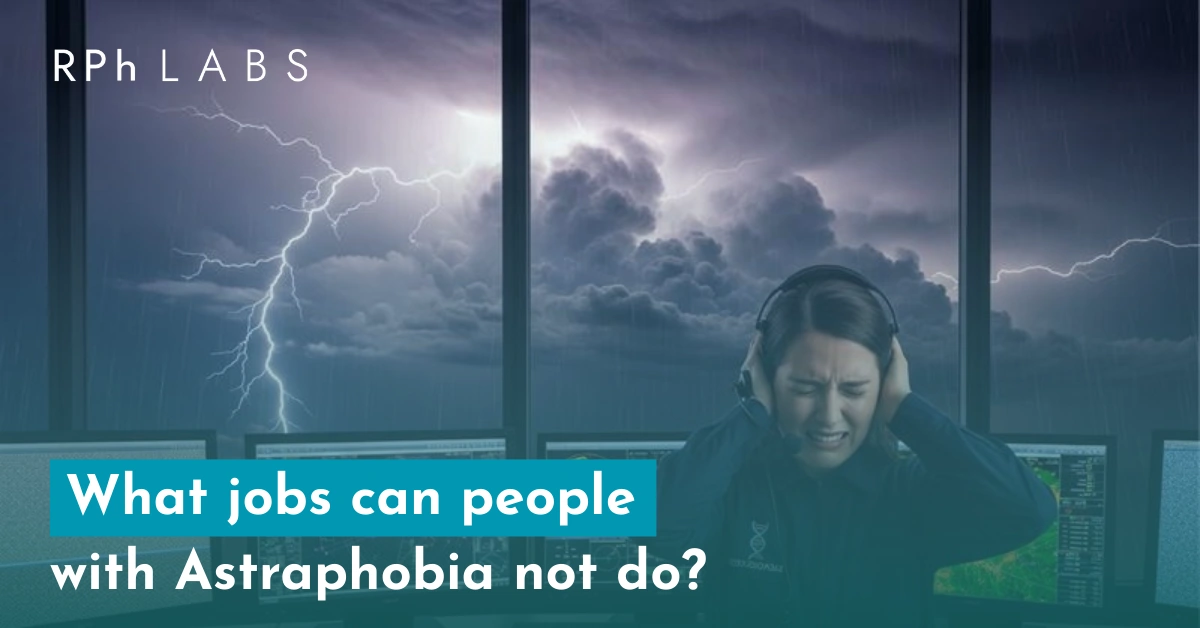
Astraphobia is a marked fear of thunderstorms, and it is far more common than most people admit. This guide replaces the usual list of jobs you supposedly cannot do with something more useful: what the fear is, how it is treated, and how to make work manageable while you treat it.
On this page
Astraphobia is the fear of thunderstorms and can influence an individual’s daily life and choice of career. It’s a phobia, often with severe anxiety, panic attacks, or avoidance behaviors. Some jobs become difficult to handle or even impossible with Astraphobia. People with Astraphobia need to carefully consider how their condition might impact the work environment, routines, and responsibilities. In this article, we’ll explore what jobs can people with Astraphobia not do, the types of jobs that may be unsuitable for individuals, and suggest alternatives that cater to their needs.
What is Astraphobia?
Astraphobia is an intense and irrational fear of thunderstorms, including fear of lightning and thunder. This phobia can affect people of all ages and may cause significant anxiety, panic attacks, or avoidance behaviors during storms. Individuals who have Astraphobia typically have symptoms such as sweating, trembling, rapid heartbeats, or even nausea when they expect or experience thunder and lightning. This condition is mostly caused by a traumatic incident or heightened sensitivity to loud sounds and unpredictable happenings. Therapy, relaxation techniques, and sometimes medications can manage the fear, improving life.
Roles that are hardest while astraphobia is untreated
A treatable condition is not a permanent disqualification. The roles below are the ones people with astraphobia most often find difficult while symptoms are untreated:
Jobs That Involve Long Exposures to the Weather
Jobs that require people to expose themselves to the weather, especially thunderstorms, are not suitable for individuals who have Astraphobia. Outdoor jobs are generally unpredictable, which makes most people with Astraphobia not feel secure and at ease.
Examples of High-Risk Outdoor Jobs
- Construction Workers: Construction sites are exposed to the elements, and workers often need help to avoid thunderstorms, making this career a poor fit.
- Farmers: Farming requires long hours in open fields; a thunderstorm can arise without warning.
- Park Rangers: Park rangers are responsible for maintaining natural environments, which may be remote and vulnerable to sudden weather changes.
Emergency Response Roles
Emergency responders are often exposed to unpredictable situations, such as stormy weather conditions, to assist others. The tension of these situations may trigger the fears of individuals with Astraphobia.
Some Unsuitable Roles
- Firefighters: Many times, they need to work outdoors in thunderstorm conditions.
- Paramedics: EMS usually work in uncertain climatic conditions.
- Search and Rescue Teams: These jobs require greater flexibility and endurance in dealing with climatic changes, a major obstacle for an astraphobic.
Pilots and Air Travel Careers
Airline pilots, flight attendants, and air traffic controllers are frequently exposed to thunderstorms while weather monitoring. For an astraphobic, this can be overwhelming.
Jobs to Avoid
- Commercial Pilots: Flying planes through stormy weather is a regular part of the job.Although Astraphobia will restrict some job options, numerous fulfilling jobs are less likely to trigger this fear:
- Remote Work Options: Jobs in IT, writing, graphic design, or virtual assistance can be done indoors, away from the stressors of the weather.
- Office-Based Careers: Administration, finance, or marketing jobs usually happen indoors.
- Healthcare (Non-Emergency): Dentists or lab assistants present a stable environment and minimize exposure to weather conditions
- Artistic Fields: Art, music, and crafts can be practiced safely indoors
- Education: Teaching, private tutoring, or researching within academia usually occurs in indoors, controlled environments
symptoms of Astraphobia
Symptoms of Astraphobia range from mild anxiety through physical and emotional reactions occurring during the presence of a thunderstorm or in the expectation of such a condition. These symptoms usually cause the mind and body to alter daily activities.
Physical Symptoms
- Racing Heart: Feeling of a racing heart or palpitations when hearing the sound of thunder or witnessing lightning.
- Shortness of Breath: Problem in breathing or hyperventilation.
- Sweating: Excessive sweating, especially on the palms or forehead.
- Trembling: Shaking hands or legs during storms.
- Nausea: Upset stomach, dizziness, or feeling faint.
- Chest Tightness: A feeling of discomfort or pressure in the chest.
- Freezing or Fleeing: Feeling paralyzed or an overwhelming urge to escape.
Emotional and Psychological Symptoms
- Intense Anxiety or Panic Attacks: Overwhelming fear that may lead to crying or screaming.
- Anticipatory Anxiety: Worry or dread when a thunderstorm is forecasted.
- Hypervigilance: Being overly alert to weather changes and constantly checking forecasts.
- Irrational Thinking: Expecting a thunderstorm to bring damage or threat, even in a secure place.
Behavioral Symptoms
- Avoidance: Avoiding venturing out or traveling during a storm’s forecast.
- Seeking Shelter Excessively: Overreacting by hiding in basements, closets, or under furniture.
- Clinging: Constantly seeking comfort from loved ones, pets, or even objects like blankets during a storm.
These symptoms can be very stressful and may continue for years if not treated appropriately with therapy or relaxation techniques. You should seek professional help when it interferes with your life.
Who gets Astraphobia?
Astraphobia can affect any individual at any age and background. Certain groups may be more prone to developing the phobia due to various psychological, environmental, or genetic reasons. Here’s a rundown of who might be more disposed to developing this phobia:
Children
- Normal in Early Development: Many children develop a temporary fear of thunderstorms as part of normal childhood anxieties. For some, this fear can persist and evolve into Astraphobia.
- Lack of Understanding: Young children may not understand that storms are usually harmless, which amplifies their fear.
Adults
- Traumatic Experiences: Adults who have experienced the worst of the weather conditions, such as hurricanes or lightning strikes, may develop Astraphobia due to post-traumatic stress.
- Prevailing Anxiety Disorders: Those diagnosed with generalized anxiety or panic disorders are more vulnerable to developing specific phobias like Astraphobia.
Those with Specific Personality Characteristics
- Sensitive Types: People who are naturally more sensitive to loud noises or sudden stimulation may be more likely to develop a hatred of thunderstorms.
- Neurotic Types: Those with a greater tendency to worry or fear may be at a higher risk.
People with Past Traumas
- Survivors of Natural Calamities: Exposure to destructive weather conditions may leave individuals with a permanent fear of storms.
- Eyewitnesses to Storm Damage: Viewing destroyed trees or houses caused by thunderstorms can also cause individuals to develop phobias.
Family Factors
- Parental Fear: Children with parents or caregivers who strongly fear storms will learn this fear by watching.
- Inherited Anxiety: A tendency to anxiety can predispose some people to develop Astraphobia.
Treatment of Astraphobia
Treatment for Astraphobia aims at reducing fear and anxiety related to thunderstorms, building better coping mechanisms, and enhancing the quality of life. There are several ways an individual can approach it; this depends on the degree of symptoms:
Cognitive Behavioral Therapy (CBT)
CBT is one of the most effective treatments for phobias. It helps individuals identify and challenge irrational thoughts about thunderstorms, replacing them with more realistic perspectives.
Techniques:
- Exposure therapy (gradual desensitization to storm sounds or images in a controlled setting).
- Cognitive restructuring (changing negative thought patterns about storms).
Exposure Therapy
Exposure therapy is a variant of CBT that involves gradual and controlled exposure to the fear trigger (thunderstorms) to reduce sensitivity over time.
Examples:
- Starting with images or videos of thunderstorms.
- Gradually advancing to simulated sounds of thunder.
Finally, exposure to real-life storms in a safe environment.
Medication
For serious conditions, medication will be prescribed to treat severe anxiety or panic attacks.
Common Types:
- Anti-anxiety Drugs: Benzodiazepines for short-term usage.
- Antidepressants: SSRIs or Selective Serotonin Reuptake Inhibitors for long-term treatment of anxiety.
- Beta-Blockers: To limit the physical manifestations such as palpitations caused by a storm.
Relaxation Methods
For immediate anxiety triggered by a thunderstorm
Examples:
- Deep Breathing: Gradual inhalation and exhaling to relax the nervous system.
- Progressive Muscle Relaxation: Tensing and relaxing different muscle groups to reduce stress.
- Mindfulness and Meditation: Staying present and focusing on non-threatening elements.
Lifestyle Changes
Routine Adjustments:
- Limiting weather forecast checks to reduce anticipatory anxiety.
- Creating a “safe space” at home with comforting items like blankets, soothing music, or dim lighting.
- Regular Exercise: Helps reduce overall anxiety and stress levels.
Healthy Sleep Habits: Ensures a stable mood and better resilience during stressful times.
Support Groups and Therapy
Relating experiences with others who have such fears can offer emotional support and coping mechanisms.
Options:
- Local therapy groups
- Online forums or communities for phobia management
Complementary Therapies
- Art or Music Therapy: Facilitates the expression and processing of fears creatively.
- Hypnotherapy: Helps access sub-conscious fears and reframes the mind’s response to thunderstorms.
- Acupuncture or Yoga: Aids in overall stress reduction and anxiety.
Educating and Reassuring Yourself
- Understanding Storms: Learning the science behind thunderstorms can help demystify and reduce irrational fears.
- Emergency Preparedness: Having a plan (like knowing where to take Shelter) can create a sense of control and reduce anxiety.
Seeking Professional Help
If Astraphobia significantly disrupts daily life, consulting a mental health professional is very important. A psychologist or psychiatrist can recommend a tailored treatment plan that might include a combination of the methods above.
With the right efforts and strategies, most people can be relieved of or considerably minimize their fear of thunderstorms and hence lead their lives comfortably and confidently.
Where testing fits if medication is considered
Pharmacogenomic testing of No test establishes which medication is best for anxiety. Graded exposure therapy is the treatment with the strongest evidence for a specific phobia, and medication is considered only where another disorder is present. PGx tests the genetic makeup of a person and shows how one’s body metabolizes drugs and how it reacts with certain medications, including those used to treat anti-anxiety conditions such as SSRIs, benzodiazepines, and beta-blockers.
Thus, making medicine prescriptions is not a game but a fact, therefore bringing downside effects and increasing the treatment’s efficacy. In the case of those with Astraphobia, PGx testing guarantees them the best possible treatment to help them live comfortably without their symptoms.
Astraphobia: what it is and how it is classified
Astraphobia sits under specific phobia, natural environment type, in clinical classification. It is one of the more common phobias in that group, alongside heights and water, and it frequently begins in childhood.
Clinicians look for a cluster rather than for fear alone: fear out of proportion to actual danger, an almost immediate anxiety response to thunder, lightning or the forecast of a storm, avoidance or intense distress, a pattern lasting at least six months, and meaningful interference with daily life.
A reasonable respect for lightning is not a phobia. Lightning genuinely is dangerous, and moving indoors during a storm is sensible behavior. The fear of thunderstorms becomes a clinical problem when the anticipation dominates, when forecasts govern your plans, or when you cannot function during a storm that poses no real threat to you.
Anticipation is usually the worst part
Many people with astraphobia describe checking radar apps for days, sleeping badly before forecast storms and feeling relief the moment one actually arrives. That pattern is a clue to what maintains it: the checking and the avoidance, rather than the weather.
Storm anxiety, panic attack symptoms and the difference
Storm anxiety exists on a scale, from mild unease to a full panic attack, and it is worth being able to tell them apart.
- Anxiety builds and ebbs with the situation: tension, worry, watchfulness, trouble concentrating.
- Panic attack symptoms peak within minutes and include pounding heart, chest tightness, breathlessness, trembling, sweating, nausea, dizziness, tingling, chills or flushes, and a strong sense of unreality or of losing control.
- A panic attack is intensely unpleasant and not dangerous in itself, which is genuinely useful to know during one.
- Fear of the attack can become a second problem, leading to avoidance of situations where one might occur.
Two caveats matter. Chest pain and breathlessness should be assessed medically the first time rather than assumed to be anxiety, particularly with cardiac risk factors. And panic attacks that occur unexpectedly, outside storms, suggest panic disorder rather than a specific phobia, which changes the treatment plan.
Sleep is the quiet casualty of storm anxiety. Night storms disturb sleep, poor sleep raises next-day anxiety, and the cycle tightens. Addressing sleep directly is part of treatment, not an optional extra.
Treating the fear of thunderstorms
Specific phobias respond well to treatment, and the approach is well established.
- Assessment, to confirm the pattern and to check for panic disorder, generalized anxiety, trauma or depression alongside it.
- Education about the physiology, so the surge of adrenaline reads as a false alarm rather than as evidence of danger.
- Graded exposure, typically starting with recordings of thunder at low volume, then videos, then real storms observed from safety.
- Interoceptive exposure, deliberately producing sensations such as a racing heart so they stop signaling catastrophe.
- Dropping safety behaviors: constant radar checking, hiding in a windowless room, needing someone else present.
- A practice plan for storm season, so the gains are consolidated rather than tested once a year.
Cognitive work sits alongside it, replacing catastrophic predictions with calibrated ones. The goal is not to decide that lightning is harmless. It is to hold an accurate picture: indoors and away from windows, plumbing and corded electronics, your actual risk is very low.
Medication has a limited role for specific phobia. It is used mainly when another disorder is present, and benzodiazepines are generally avoided around exposure work because they can blunt the learning. That decision belongs to a prescriber who knows your history.
Practical storm safety, which also reduces anxiety
Accurate information calms better than reassurance does, and a plan converts helplessness into action.
- When thunder roars, go indoors. If you can hear thunder, you are close enough to be struck.
- Stay inside for about half an hour after the last thunder before returning outdoors.
- Indoors, avoid plumbing, corded electronics and windows during the storm itself.
- A hard-topped vehicle is a reasonable shelter. An open shelter, a tree or a picnic pavilion is not.
- Charge devices, keep a flashlight accessible and know where your safe room is before the season starts.
There is a line between a plan and a compulsion. Checking the forecast once a day is planning. Checking radar every ten minutes is a safety behavior that keeps the fear of thunderstorms alive, and reducing it is part of treatment rather than a risk.
Work: reasonable accommodations at work, not closed doors
The earlier version of this article listed jobs that people with astraphobia supposedly cannot do. That framing is wrong. A treatable condition is not a permanent disqualification, and telling people their career is closed discourages them from seeking the treatment that would open it.
What is fair to say is that untreated storm anxiety makes some environments harder: outdoor work in exposed conditions, roles with unpredictable callouts, and jobs where storms directly affect safety decisions. Those are reasons to treat and to plan.
- Advance notice when severe weather is forecast, so a shift can be reorganized rather than abandoned.
- Flexibility to work indoors or remotely during a storm where the role allows it.
- Time for therapy appointments during a course of treatment.
- A defined break space for a few minutes if a panic attack occurs.
- A phased return to outdoor duties as exposure work progresses.
In the United States, reasonable accommodations at work can be requested when a condition substantially limits a major life activity. You can describe the functional limit and the adjustment you need without disclosing your full history, and a short clinician letter usually helps. Treat reasonable accommodations at work as a bridge that shrinks as treatment progresses.
Helping a child who is frightened of storms
Fear of storms is very common in children, and adult responses shape whether it fades or hardens.
- Acknowledge the fear without agreeing that the storm will hurt them indoors.
- Explain thunder and lightning simply, including the counting trick for distance, which turns mystery into information.
- Build a storm plan together, with a chosen room, a torch and an activity, so there is something to do.
- Avoid sudden forced exposure, and avoid the opposite error of building a fortress of avoidance.
- Praise coping rather than the absence of fear.
- Seek help if the fear disrupts school, sleep or family life, since childhood phobias respond well to treatment.
Watch your own reactions too. Children with a visibly storm-anxious parent often learn the same response, and treating the adult sometimes resolves the child’s fear as well.
Does genetics have anything to say?
Not for diagnosis. No genetic test identifies astraphobia, predicts who will develop a phobia, or selects a therapy. Anxiety runs in families, which is a family-history observation rather than a test.
Pharmacogenomic testing answers a narrower question about medicines. If a prescriber is considering an antidepressant for a co-occurring anxiety or depressive disorder, CYP2C19 and CYP2D6 metabolizer status affects exposure at a standard dose, which can explain earlier side effects.
The RPh Labs panel covers 20 genes reported against more than 240 medications, using an at-home cheek swab with every report reviewed by a PharmD pharmacist. See the testing kit page and the medication list by gene for the scope, and genetic testing for mental health for what it cannot do.
The treatment with the strongest evidence for the fear of thunderstorms is still graded exposure with a therapist who treats anxiety disorders. The NIMH overview of anxiety disorders is a reliable place to start, and in a crisis in the United States you can call or text the 988 Suicide and Crisis Lifeline.
Conclusion
Astraphobia, or the intense fear of thunderstorms, can significantly influence personal and professional life. Understanding the symptoms, causes, and treatment options is crucial for those affected by this phobia. There are certain jobs, particularly those that require frequent exposure to weather, which are not suitable for people with Astraphobia. Still, there are numerous alternative careers and strategies to help them thrive.
Astraphobia is something that can be treated with therapy, relaxation techniques, medication, and even newer, more innovative solutions such as pharmacogenomic testing. Hence, if appropriately supported and intervened, the individuals who have Astraphobia will again gain control over their lives, rebuild a meaningful future for themselves, and grow according to their needs and strengths.
References
Astraphobia FAQ
What is Astraphobia, and how is it different from the general fear of thunderstorms?
Astraphobia refers to a severe, unreasonable fear of thunderstorms. It includes fear of the sound of thunder and flashes of lightning. Astraphobia goes beyond general dislike or uneasiness with thunderstorms. It provokes anxiety, panic attacks, and avoidance behaviors that are severe enough to interfere with daily life.
Are there careers that are suitable for individuals with Astraphobia?
Many careers are suitable, including remote jobs, office-based roles, healthcare positions (non-emergency), and creative fields. These roles allow individuals to work in controlled environments with minimal exposure to weather.
How can an individual with Astraphobia manage to handle a thunderstorm?
One would find coping mechanisms in having an indoor safe room, putting on noise-canceling headphones, doing deep breathing exercises, calming activities, and telling themselves that it’s a safe environment.
Can Astraphobia develop at any age?
Yes, Astraphobia can occur at any time. Though it is an ordinary fear in children, it can persist into adult life or even start later in life due to traumatic experiences or other already existing anxiety disorders.
Which are the best treatments for Astraphobia?
Effective treatments for Astraphobia include cognitive behavioral therapy, exposure therapy, relaxation techniques, and sometimes medications like SSRIs or beta-blockers. In extreme cases, pharmacogenomic testing will assist in choosing the appropriate medication for each patient.
Is astraphobia a recognized condition?
It falls under specific phobia, natural environment type. Clinicians look for fear out of proportion to danger, an immediate anxiety response, avoidance or intense distress, a duration of at least six months and real interference with daily life.
How is the fear of thunderstorms treated?
Graded exposure, usually starting with thunder recordings at low volume, then video, then real storms observed from safety. Cognitive work on catastrophic predictions and dropping safety behaviors such as constant radar checking are part of it.
What are panic attack symptoms during a storm?
A peak within minutes of pounding heart, chest tightness, breathlessness, trembling, sweating, nausea, dizziness, tingling and a sense of unreality. Get chest pain and breathlessness checked medically the first time rather than assuming anxiety.
Does checking the radar help storm anxiety?
Checking once a day is planning. Checking every ten minutes is a safety behavior that maintains the fear by providing short-term relief. Reducing it is a normal part of treatment and is safer than it feels.
What reasonable accommodations at work can I ask for?
Advance notice of forecast severe weather, indoor or remote work during storms where possible, time for therapy appointments, a break space, and a phased return to outdoor duties as exposure work progresses.
Are some jobs impossible with astraphobia?
No. Untreated storm anxiety makes exposed outdoor roles harder, which is a reason to seek treatment and adjustments rather than to rule out a career. Specific phobias are among the most treatable anxiety conditions.



Leave a Reply