
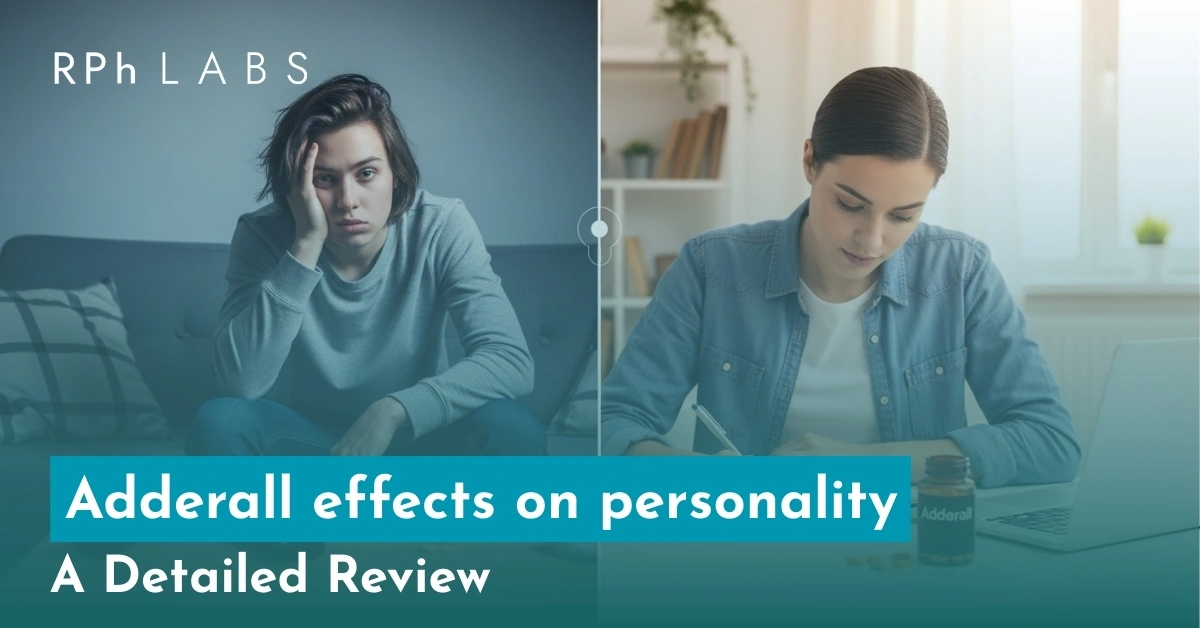
People search for adderall effects on personality for two very different reasons: either they feel like a better version of themselves, or someone close to them says they have changed. Both are worth taking seriously, and both usually point to something a prescriber can adjust.
On this page
Adderall is a prescription medication commonly used to treat attention deficit hyperactivity disorder (ADHD) and Narcolepsy. It contains a mixture of amphetamine salts that work by increasing the levels of dopamine and norepinephrine in the brain. These chemicals are associated with attention, motivation, and the regulation of mood. While Adderall is prescribed for authentic medical reasons, its impact on personality both in individuals with ADHD and those without can be quite thoughtful and complicated.
Here, we explore how Adderall effects on personality, short-term and long-term impacts, as well as the dangers of misuse.
How Adderall Works: A Quick Primer
Adderall is a central nervous system stimulant. Its main function is to enhance concentration, decrease impulsivity, and control hyperactivity in ADHD patients. Adderall enhances neurotransmission in the brain, especially in areas that deal with attention and executive functions, which helps people focus better and process information better.
Adderall mainly increases dopamine and norepinephrine activity in the brain, which is thought to improve attention and impulse control in people with ADHD. It has little direct effect on serotonin. However, beyond the therapeutic effects, Adderall can also change mood, behaviour, and personality traits as a whole.
Immediate Personality Changes due to Adderall
Increased Focus and Motivation
Improved Productivity: The most common experience that people have who use Adderall is a tremendous increase in focus and productivity. People with ADHD who take Adderall often report feeling “in the zone,” able to concentrate for extended periods on tasks they would otherwise find difficult to focus on. Enhanced Motivation: People, especially on Adderall, can become much more motivated to do even more routine things.
People experience an increase in a greater sense of “goal-orientated” and “more productive”. Personality changes: A person is highly focused and organized and perhaps appears diligent. In positive ways, this works better for some people since one could be seen as becoming quite active in everyday life.
Mood Elevation and Feeling of Euphoria
Improved Mood: With ADHD, Adderall can also control mood swings and stabilize because focus is restored and feelings of frustration or restlessness are decreased.
Euphoria: In addition, especially with higher doses, or even misused, Adderall can provide euphoria (a feeling of extreme happiness or confidence) due to dopamine levels increase, which increases the level of pleasure as well as rewards in a human being’s brain.
Effect on Personality: Transient elevations in mood can make individuals feel more confident, friendly, and energetic. However, this euphoric state can also lead to overconfidence or even recklessness.
Increased Sociability
Some users of Adderall report that they become more talkative, energetic, and socially active. This may be due to the increased dopamine and norepinephrine activity in the brain, which can make social interactions more interesting and enjoyable.
Effect on Personality: For others, Adderall will give them a more extroverted and outgoing version of themselves. As a result, people will assert themselves more in social circumstances, acting with more vigour and energy than they would if they were in their natural state.
Composure and Self-Control
The most prominent is the effect of having “regulated impulsivity” about ADHD; such patients usually experience reduced agitation and restlessness in reaction to taking Adderall because this medication regulates hyperactivity. This could also imply the individual is in control and well-behaved and might have more composed personalities or more in-control personalities who can manage their selves.
Long-term Impacts of Adderall on Personality
As much as the short-term effects of Adderall on personality, there are still possible long-term impacts due to constant intake or high usage.
Addiction and Personality Shift
Tolerance: With time, the brain develops a tolerance to Adderall, and the person will need more of it to achieve the same effect. This can change the personality because they might rely more on the drug to be motivated or focused. Addiction: Adderall is a stimulant and, like other stimulants, has a high potential for abuse.
When used recreationally or to get ahead cognitively, abusers of Adderall can develop addictive habits. Impact on Personality: Prolonged usage or abuse of Adderall causes irritability, anxiety, and mood swings after the drug has worn off. They may become more introverted, less emotionally stable, or more compulsive.
Emotional Flatness or “Burnout”
Once the brain’s dopamine gets imbalanced with long use of stimulants, some individuals will experience emotional numbing or “burnout.” This leads to either a lack of motivation or a disconnection from regular activities.
Effect on Personality: This could make a person appear disinterested, apathetic, or emotionally detached. People who were once energetic and enthusiastic may appear to have lost their previous zeal for life.
Anxiety and Paranoia (Fear) Increase
Stimulants like Adderall sometimes increase anxiety, which makes the person restless, worried, and more fearful or panicky. Chronic use may cause paranoia or a distorted view of reality in some users.
Effect on Personality: This may result in changes in personality, including becoming more introverted, withdrawing from social life, and being suspicious. The individual may also become more moody, irritable, and defensive.
Aggression and Impulsivity
Adderall, when used in high doses or for an extended period, can lead to increased irritability or aggression. People might feel overstimulated or “on edge,” resulting in a shorter temper and more impulsive decisions.
Impact on Personality: Chronic users might become more aggressive or confrontational, and react negatively in stressful situations.
Adderall and Personality in Non-ADHD Individuals
When used by non-ADHD individuals, Adderall has a variety of psychotropic effects, most of which are associated with stimulants.
Overconfidence and Narcissism
An individual without ADHD who abuses Adderall may end up feeling extremely confident with themselves and invincible, causing them to overestimate their abilities or take risky measures.
Effect on Personality: Some users may exhibit traits of narcissism, such as inflated self-importance, a sense of entitlement, or a disregard for others’ needs or opinions.
Obsessiveness
This is a situation where some may develop obsessive behaviour when using Adderall, especially for cognitive enhancement purposes. The increasing attention of the individual and the reduction of fatigue can provoke people to become obsessed with more productivity at work or about certain tasks.
This may result in an overly perfectionistic personality or a rigid approach toward outcomes at the cost of personal well-being or social relationships.
Reduced Empathy
Adderall may reduce emotional sensitivity or empathy in some individuals. Since the drug enhances cognitive processes and reduces impulsivity, it may make people more focused on logic and task completion, sometimes at the expense of emotional understanding.
Impact on Personality: Individuals may come across as more heartless, logical or emotionless, and their personalities may suffer due to loss of empathy for others.
How PGx Testing Determines Genetic Response to Adderall
Pharmacogenetic (PGx) testing from RPh Labs reports how your body is likely to process certain medicines. It does not diagnose ADHD, and it does not predict your personality or how well Adderall will work for you. Amphetamine is partly broken down by CYP2D6, but there is no published gene-drug guideline for dosing it, so genotype is background science here rather than a dosing tool.
That is different from the drugs where the evidence is settled. For atomoxetine, a non-stimulant used in ADHD, CYP2D6 results do come with published prescribing guidance, and the same is true for many antidepressants through CYP2D6 and CYP2C19. Those are results a prescriber can act on. No genotype result is a reason to raise or lower a stimulant dose on your own.
So a PGx report is one input among many in ADHD treatment, not a shortcut past careful follow up. Your prescriber still judges your response, side effects, sleep, appetite, blood pressure and everything else you take.
Adderall effects on personality: 6 honest facts
These six points are the parts worth knowing before you read anything else about adderall effects on personality.
- Treated ADHD symptoms can look like a personality change from the outside. Being able to finish things is not a new personality.
- Genuine changes in mood and temperament are usually a signal about dose, timing, sleep or another condition, not a permanent shift.
- Most of what people describe is time-limited. It tracks the medicine through the day and eases when the dose is reviewed.
- Emotional flatness, irritability and tearfulness at wear-off are common, reportable and often fixable.
- Sleep loss and caffeine amplify everything on this list, and both get missed in the conversation.
- Nothing here should be managed by adjusting your own dose. The fix is a conversation, not an experiment.
It is also worth correcting a common claim made in writing about adderall effects on personality: amphetamine mainly increases dopamine and norepinephrine signaling. It is not primarily a serotonin drug, which matters because serotonin is where much of the popular writing about mood and personality comes from.
Medicated you is still you: what treatment usually changes
When stimulant treatment works, the adderall effects on personality that people report cluster around executive function rather than character. People notice they can start tasks, hold attention, wait their turn and let a small annoyance go.
That can look dramatic to other people. Someone who spent years being called scattered or unreliable may suddenly be described as focused and calm, and the contrast gets labeled a personality change when it is really the removal of an obstacle.
The flip side is worth naming. Some people feel quieter, and if you had built an identity around being the spontaneous, high-energy one, a steadier version of yourself can feel like a loss even when life is running better. That deserves an honest conversation rather than being dismissed.
- Less interrupting, less blurting, fewer impulsive purchases and decisions
- Better follow-through, which changes how reliable you seem to others
- Lower frustration and fewer emotional spikes during the day
- For some people, less humor or spark, which is one of the adderall personality changes most often raised at a review
Keep a short log in the first month: sleep, appetite, mood at three points in the day, and one line on how work went. Vague impressions are hard to act on. Patterns are easy.

Adderall personality changes that signal something needs adjusting
Some experiences are not part of good treatment, and adderall and emotional blunting is one of them. The adderall personality changes below are worth reporting rather than tolerating, because most respond to a change in dose, formulation or timing.
- Feeling robotic, joyless or detached while the medicine is active
- Irritability, a short temper or snapping at people you normally would not
- Rigid over-focus on unimportant tasks, sometimes called being locked on
- Increased suspicion, unusual thoughts, or feeling on edge for no clear reason
- Tearfulness or a mood crash at a predictable time each afternoon
- Feeling that you cannot function at all without it on days you have not taken it
A dose that is too high often looks like tension, adderall and emotional blunting, and a sharp crash. A dose that is too low often looks like unchanged symptoms plus jitteriness. They feel similar from inside, which is why the report to the prescriber should describe timing and behavior rather than a conclusion.
Adderall personality changes that arrive suddenly in someone previously stable deserve prompt attention, particularly if they include unusual beliefs, seeing or hearing things, or a dramatic rise in energy with no need for sleep. Those go to the prescriber the same week, not at the next routine review.
Adderall and emotional blunting: what to watch for
Adderall and emotional blunting come up often enough that it deserves its own section. People describe feeling neutral: not sad, not happy, watching their own life from a small distance.
Adderall and emotional blunting is not the same as depression, although the two overlap and can look identical from the outside. Blunting from a stimulant usually follows the dose, so it lifts in the evening. Depression persists through the evening and the weekend, and brings low mood, lost interest, sleep and appetite changes and hopelessness with it.
- Note whether the flatness follows the medicine through the day or stays regardless.
- Note whether it started with a dose increase or a change of brand or formulation.
- Note whether other people have mentioned it, since blunting is often clearer to them than to you.
- Note what else changed at the same time: sleep, alcohol, cannabis, another new medicine.
Adderall and emotional blunting is a reasonable reason to review the plan. Options a prescriber may consider include a lower dose, a different release profile, a different stimulant, or a non-stimulant. None of that is a decision to make alone, and stopping abruptly to test the theory usually just adds a bad week of rebound to the picture.
If the flatness comes with hopelessness or thoughts of suicide or self-harm, get help now. In the US, call or text the 988 Suicide and Crisis Lifeline, and call 911 if someone is in immediate danger.
Adderall and anxiety: when the stimulant is the problem
Adderall and anxiety have a complicated relationship. Treating ADHD can reduce the anxiety that came from constant deadline failure, and the same medicine can also generate anxiety directly.
The physical version of adderall and anxiety is easy to recognize once you know it: a fast heart rate, tight chest, restlessness and a racing mind. It commonly appears an hour or two after a dose, and it is worse with caffeine, poor sleep and an empty stomach.
- Audit caffeine first, including energy drinks and pre-workout supplements. This is the single most common fixable cause.
- Protect sleep. Late doses shorten sleep, and short sleep raises anxiety the next day, which then gets blamed on the medicine.
- Watch alcohol, which helps for an hour and worsens anxiety the following day.
- Mention any panic attacks, since adderall and anxiety together change the treatment plan rather than just the dose.
Adderall and anxiety can also mean the anxiety came first and was never treated. Around half of the plan in that situation is not about the stimulant at all, and the NIMH overview of ADHD is a useful read on how often other conditions travel alongside it.
Emergency signs are separate from anxiety and need urgent care: chest pain, fainting, severe shortness of breath, weakness on one side, seizures, or a very high temperature with sweating and agitation. Call 911. For a suspected overdose, call 911, and in the US Poison Control is available at 1-800-222-1222.
The daily rebound and adderall withdrawal symptoms
Two different things get mixed together here. The daily rebound is what happens as the dose leaves your system. Adderall withdrawal symptoms are what happens after stopping regular use.
The rebound is not the same as adderall withdrawal symptoms. It is a predictable dip in the late afternoon or evening: tiredness, low mood, irritability, hunger and a return of symptoms, sometimes more strongly than before the dose. It is one of the most common reasons people describe a personality that changes by the clock.
Adderall withdrawal symptoms after stopping regular use are related but longer: fatigue, heavy sleep, increased appetite, low mood and poor concentration for days to a couple of weeks. Amphetamines do not require a medically supervised taper the way alcohol or benzodiazepines do, but that does not mean stopping suddenly feels fine.
- Plan any pause or stop with your prescriber, especially before exams, a new job or a long trip.
- Expect the first week off to be a poor time to judge whether the medicine was helping.
- Tell your prescriber if adderall withdrawal symptoms include persistent low mood, since that needs assessment rather than waiting.
- Needing more over time for the same effect, or taking it in ways it was not prescribed, is worth raising honestly. Stimulant use disorder is treatable and it is a medical conversation, not a moral one.
Keep the medicine stored securely and do not share it. It is a controlled substance, and someone else’s reaction to it is not predictable from yours.
What other people notice, and how to ask them
You are a poor judge of your own adderall personality changes, particularly while medicated. The people around you are usually better informed and rarely asked well.
Asking whether you seem different invites a polite answer. Asking specific questions gets useful information.
- Am I easier or harder to talk to in the afternoon than I was six months ago?
- Do I laugh less than I used to?
- Am I snappier at a particular time of day, and does it look like adderall withdrawal symptoms in the evening?
- Do I seem to disappear into tasks and not hear you?
- Have you noticed anything about my sleep or eating that I have not mentioned?
Bring those answers to the appointment with your log. A prescriber can do far more with a partner’s observation that irritability starts at four in the afternoon than with a general worry about adderall effects on personality. It points straight at timing and coverage.
Where genetics fits, and where it does not
Pharmacogenomic testing is marketed heavily around ADHD, so here is the honest version. There is no gene-based dosing guideline for amphetamine. CYP2D6 plays a partial role in its metabolism, but no report can tell a prescriber what dose of Adderall to use, and none predicts adderall effects on personality.
A panel also does not diagnose ADHD, does not predict behavior, temperament or adderall personality changes, and does not test for disease risk. That is worth stating plainly because plenty of writing on this topic implies otherwise. You can check which drug-gene pairs actually carry recommendations in the CPIC guidelines.
Where it does apply in ADHD care is the medicines around the stimulant. Atomoxetine has established CYP2D6 guidance, and many antidepressants used alongside ADHD treatment depend on CYP2D6 and CYP2C19, which matters if adderall and anxiety are being treated at the same time. Methylphenidate is handled by an enzyme called CES1, which is not on the RPh Labs 20-gene panel.
If your prescriber wants that information, the RPh Labs at-home cheek swab kit reports 20 genes against more than 240 medications, and every report is reviewed by a PharmD pharmacist. There is more detail on genetic testing for ADHD and on how the process works.
How to bring this up with your prescriber
Appointments are short, and adderall effects on personality is an easy topic to soften into nothing. Arrive with specifics and a direct request.
- Describe the timing: what you feel, at what hour, in relation to the dose.
- Bring your log and anything a partner, parent or colleague has observed.
- List sleep hours, caffeine, alcohol, cannabis and any new medicine or supplement.
- Say what you want: a dose review, a different release profile, a non-stimulant discussion, or an assessment for anxiety or depression.
- Ask what would count as an emergency between appointments and who to call.
- Book the follow-up before you leave, since the change needs a review date to be judged fairly.
Say the uncomfortable part out loud if it applies. Prescribers are not surprised by adderall effects on personality, by blunting, or by someone saying the medicine has started to feel necessary rather than helpful. What they cannot act on is the version that never gets mentioned.
Conclusion
Adderall can be highly influential on the personality of an individual both short-term benefits and long-term aftereffects. Though it gets persons with ADHD focused, motivated, and emotionally balanced, there can be undesirable after-effects of dependency, emotional flattening, or increased anxiety especially if taken for more extended periods or misused. People without ADHD might experience feelings of overconfidence, a productive obsession, or lowered empathy.
So, here also caution plays a key role. Pharmacogenetic testing does not fine-tune a stimulant dose, because no guideline ties a gene result to an amphetamine dose. It can still be useful for other medicines a person takes, including atomoxetine and many antidepressants, where published guidance does exist. Your prescriber reads it alongside your history and your response to treatment.
Adderall effects on personality are complex and highly individual, so steady medical oversight matters more than any single test. If you notice mood changes, irritability or emotional flatness, tell your prescriber rather than adjusting the medicine yourself.
References
Adderall effects on personality FAQ
How does Adderall affect personality?
Adderall can make people appear more organized, confident, and energetic by increasing focus, motivation, and sociability. However, it can also lead to mood swings, anxiety, and irritability with long-term use.
What are the short-term effects of Adderall on behaviour?
In the short term, Adderall can increase productivity, raise mood, and improve social interactions. It can also give a feeling of euphoria or overconfidence in some people.
Does Adderall lead to addiction or dependency?
Yes, long-term or misuse of Adderall can lead to tolerance, dependency, and even addiction. Individuals may become dependent on the drug to stay focused or motivated, which can cause emotional instability and withdrawal symptoms.
What happens to non-ADHD individuals who take Adderall?
In normal individuals, overconfidence, obsessive behaviour, and loss of empathy often characterize Adderall use. A few may become “possessed” by specific tasks, whereas others may feel their self-esteem or sense of invincibility has reached an all-time high.
What is PGx testing, and how does this relate to Adderall?
Pharmacogenetic (PGx) testing reports how your body is likely to process certain medicines. There is no gene-drug guideline for dosing Adderall, so a PGx report cannot set a stimulant dose. It is more useful for drugs that do have published guidance, such as atomoxetine and many antidepressants, and your prescriber reads it with your history.
Are adderall personality changes permanent?
Usually not. Most adderall personality changes people describe follow the medicine through the day and ease when the dose, timing or formulation is reviewed. Changes that persist off the medicine, or that involve unusual beliefs or a dramatic drop in mood, need proper assessment rather than being assumed to be permanent.
Why do I feel flat instead of happier?
Adderall and emotional blunting is a recognized complaint, and it often follows a dose that is higher than you need. Note whether the flatness lifts in the evening, since that pattern points to the medicine, while flatness that stays through weekends points more toward depression that needs its own treatment.
How long do adderall withdrawal symptoms last after stopping?
Commonly a few days to a couple of weeks, with fatigue, heavy sleep, increased appetite, low mood and poor concentration. It is not the medically dangerous withdrawal seen with alcohol or benzodiazepines, but it is unpleasant enough that any planned stop should be timed with your prescriber rather than done abruptly.
Can it make anxiety worse?
Yes, it can go either way. Adderall and anxiety often improve together when untreated ADHD was driving the stress, but stimulants can also cause a fast heart rate, restlessness and a racing mind. Caffeine and short sleep amplify both, so audit those before concluding the medicine is at fault.
Does it change your personality if you do not have ADHD?
Taking a stimulant that is not prescribed for you is unsafe and illegal, and effects are less predictable, including raised heart rate and blood pressure, poor sleep and anxiety. If you suspect you have ADHD, ask for an assessment rather than testing someone else’s prescription.
Can a genetic test explain how I react?
Only partly, and not for the stimulant itself. There is no gene-based dosing guideline for amphetamine, so no panel sets a dose or predicts temperament. Results are more useful for atomoxetine and for antidepressants, where CYP2D6 and CYP2C19 guidance exists, and they never replace your prescriber’s judgment.



Leave a Reply