
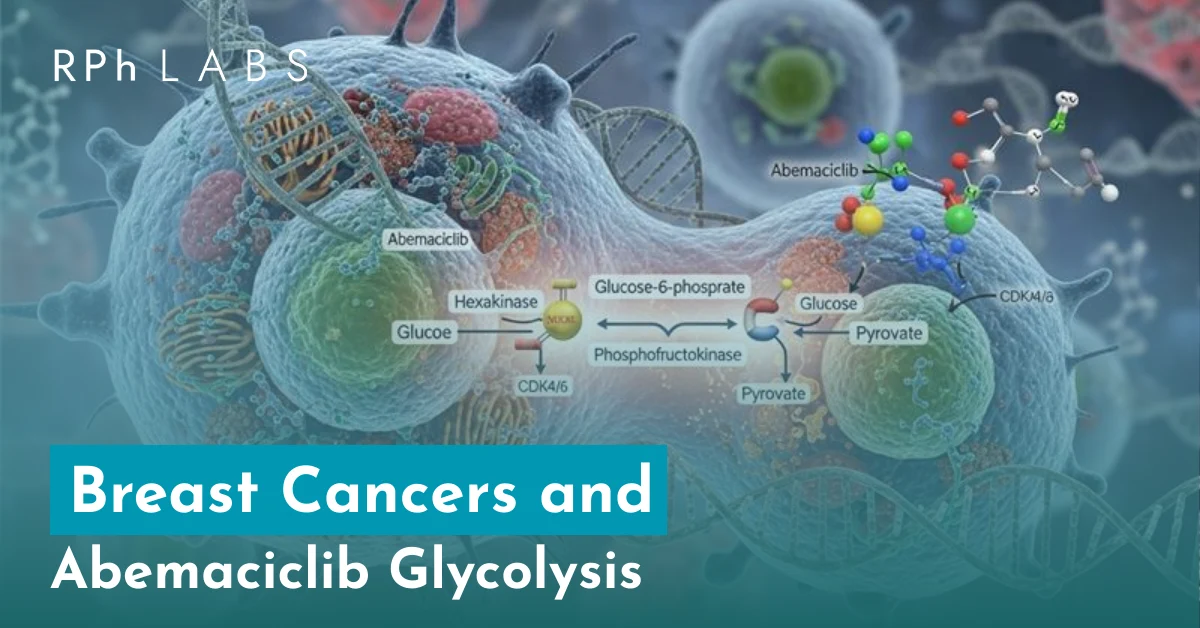
Abemaciclib glycolysis is a phrase that appears online far more often than it appears in medical practice. It points at a genuine research question about how a cdk4/6 inhibitor changes cancer cell metabolism, and this guide separates that science from anything a patient would act on.
On this page
Abemaciclib is an active pharmaceutical ingredient classified as a cyclin-dependent kinase (CDK) 4 and 6 inhibitor. It is primarily used in the treatment of hormone receptor (HR)-positive, HER2-negative advanced or metastatic breast cancer. By inhibiting CDK4/6, abemaciclib disrupts the cell cycle, leading to reduced cancer cell spread.
What is a Hormone receptor (HR)-positive? This means that the cancer cells have receptors for specific hormones, usually estrogen and/or progesterone. These hormones can stimulate the growth of the cancer cells.
What is HER2 negative? Cancer cells that are may grow more slowly and are less likely to recur (come back) or spread to other parts of the body than cancer cells that have a large amount of HER2 on their surface. On the other hand, in normal cells, HER2 helps control cell growth.
What is Metastatic breast cancer? Occurs when breast cancer cells spread from the breast to other parts of the body. This is known as stage IV breast cancer as well.
What are Hormone receptors? They are like special locks on cells. They only open when the right key (the hormone) comes along. When a hormone fits into its receptor, it triggers a chain of events inside the cell, leading to changes such as growth, development, and metabolism.
Understanding Breast Cancer
Breast cancer originates in the cells of the breast, often presenting as a lump or mass. Early symptoms may include:
- A lump in the breast or underarm (axilla)
- Swelling or thickening of part of the breast
- Irritation or dimpling of breast skin
- Redness or flaky skin in the nipple area
- Flattened or inward-turning nipple
- Pain in the nipple area
- Nipple discharge other than breast milk
- Changed breast colour. White people may notice breast skin turning pink or red, while in black and brown people, it may look darker than normal skin tone or turn purple/red.
- Any change in the size or shape of the breast
- Pain in any area of the breast
Breast cancer can develop at any age, but is most commonly diagnosed in women over 50. Regular screenings and awareness of early signs are crucial for early detection and treatment.
Abemaciclib Glycolysis
While “abemaciclib glycolysis” isn’t a standard term, it may be used to describe how Abemaciclib might indirectly affect the process of glycolysis (the metabolic pathway that converts glucose into pyruvate) in cancer cells.
Abemaciclib specifically inhibits CDK4 and CDK6, enzymes that play a critical role in cell cycle progression. By blocking these kinases, abemaciclib induces cell cycle arrest at the G1 phase, thereby inhibiting cancer cell growth. This mechanism is particularly effective in HR-positive, HER2-negative breast cancers, which often rely on CDK4/6 pathways for proliferation.
Administration and Dosage
Abemaciclib is administered orally in tablet form. The typical starting dose for adults is 150 mg, taken twice daily, in combination with endocrine therapy. Dosage adjustments may be necessary based on individual tolerability, side effects, and specific patient factors such as age, liver function, and concurrent medications. It is not commonly prescribed for pediatric patients, and its safety and efficacy in this population have not been established.
Did you know?
Although rare, men can also develop breast cancer as the breast tissues exist in the chest as well, which typically remain underdeveloped.
Precautions and Considerations
Before initiating abemaciclib therapy, consider the following precautions:
- Hepatic Impairment: Dose adjustments are recommended for patients with liver impairment.
- Neutropenia: Monitor blood cell counts regularly, as abemaciclib can cause neutropenia.
- Diarrhoea: This is a common side effect; patients should maintain hydration and may require antidiarrheal treatment.
- Drug Interactions: Abemaciclib is metabolised by the liver enzyme CYP3A4; concomitant use of strong CYP3A4 inhibitors or inducers can affect its efficacy and safety.
Advanced or Metastatic HR-Positive, HER2-Negative Breast Cancer
Advanced breast cancer refers to cancer that has spread beyond the breast to nearby tissues (locally advanced) or other parts of the body (metastatic). HR-positive, HER2-negative breast cancers are characterised by the presence of hormone receptors and the absence of excess HER2 protein, influencing treatment strategies.
Use in Early-Stage Breast Cancer
According to the FDA, “abemaciclib has been approved in combination with an aromatase inhibitor as initial endocrine-based therapy for postmenopausal women with hormone receptor (HR)-positive, human epidermal growth factor receptor 2 (HER2)-negative advanced or metastatic breast cancer.”
Pharmacogenomics and Individual Response
The metabolism of abemaciclib involves the liver enzyme CYP3A4. Genetic variations in this enzyme can influence drug levels and patient response. Pharmacogenomic testing provides insights into your genetic makeup, potentially guiding dosage adjustments to enhance effectiveness and minimise adverse effects. The FDA acknowledges that genetic factors can affect drug metabolism and response, underscoring the importance of personalised medicine in cancer treatment.
Abemaciclib glycolysis is a research idea, not a clinical term
Say this plainly at the start. Abemaciclib glycolysis is not a standard medical term, not a test, and not a treatment decision. No oncologist measures a patient’s glycolysis to choose or dose this drug.
What the phrase gestures at is real. Blocking cell cycle progression changes what a cell does with fuel, and laboratory research has examined how a cdk4/6 inhibitor alters glucose handling, mitochondrial activity and biosynthesis in cancer cells.
That work sits at the preclinical stage, in cell lines and animal models. It informs ideas about why resistance develops and which combinations might be worth testing. It does not translate into anything you or your oncologist would do differently this week.
Why the distinction matters for patients
Cancer metabolism is a magnet for supplement marketing and for diets sold as starving tumors. Understanding that abemaciclib glycolysis belongs to the laboratory, not the clinic, is the best protection against that. Treatment decisions come from clinical trials, not from mechanism diagrams.
What a cdk4/6 inhibitor actually does
Cyclin-dependent kinases 4 and 6 act as a gate on cell division. When they are active, they release the brake held by the retinoblastoma protein and the cell moves from the G1 phase into DNA replication.
A cdk4/6 inhibitor holds that gate shut, so the cell arrests in G1. In hormone receptor-positive breast cancer this pathway is frequently overactive, which is why blocking it works alongside endocrine therapy rather than instead of it.
- Abemaciclib, palbociclib and ribociclib are the three approved agents in this class.
- They are given with endocrine therapy, such as an aromatase inhibitor or fulvestrant, in advanced disease.
- Abemaciclib also has a role in high-risk early breast cancer alongside endocrine therapy.
- They differ in side effect profile and monitoring requirements, which affects which one suits a given person.
- Abemaciclib inhibits CDK4 more strongly than CDK6, which is thought to underlie some of its distinct effects.
Arrested cells are not dead cells. Some enter a senescent-like state, and how long that lasts, and what the cell does metabolically while it waits, is precisely where the research interest in cancer cell metabolism sits.
The warburg effect and cancer cell metabolism
The warburg effect is the observation, nearly a century old, that many cancer cells take up large amounts of glucose and convert it to lactate even when oxygen is plentiful. Normal cells usually reserve that route for low-oxygen conditions.
It looks wasteful in energy terms and probably is not. Rapidly dividing cells need carbon skeletons for nucleotides, amino acids and lipids, and routing glucose through glycolysis supplies those building blocks quickly.
This is not a curiosity with no application. PET imaging with a labeled glucose analog exists because of it, and that scan is a routine part of cancer care.
- Cancer cell metabolism is heterogeneous. Tumors also use fatty acids, glutamine and oxidative phosphorylation, and the mix shifts with treatment.
- The warburg effect does not mean sugar feeds cancer in the way diet marketing claims. Every cell uses glucose, and blood glucose is tightly regulated regardless of diet.
- Metabolic adaptation is one route to drug resistance, which is why it is studied alongside targeted therapies.
- No approved treatment for breast cancer works by directly targeting glycolysis.
That last point is worth repeating to anyone offered a metabolic therapy outside a clinical trial. Interesting biology and proven treatment are different categories.
Hr positive her2 negative breast cancer, in plain terms
This is the setting where these drugs are used, so it is worth getting the labels straight.
- Hormone receptor positive means the cancer cells carry estrogen or progesterone receptors, so hormones can drive their growth. That makes endocrine therapy effective.
- HER2 negative means the cells do not overexpress the HER2 protein, so HER2-targeted drugs are not used.
- Together, hr positive her2 negative breast cancer is the most common subtype, and it generally responds well to endocrine treatment.
- Advanced or metastatic means the cancer has spread beyond the breast and nearby nodes. Treatment then aims to control disease and maintain quality of life over time.
- Early breast cancer at high risk of recurrence is a different setting, where treatment aims to reduce the chance of the cancer returning.
Receptor status is determined by testing the tumor tissue, not by a cheek swab or a blood test. It can also be retested if the disease progresses, because it occasionally changes.
Men can develop breast cancer too, and it is usually hormone receptor positive. Treatment follows similar principles, with fewer trials specific to male patients, so decisions are made by the treating oncology team.
What matters in practice while taking this class of drug
This is the section that affects daily life, and none of it is about glycolysis.
- Diarrhea is the most characteristic side effect of abemaciclib. Teams usually provide a plan in advance, including when to start an antidiarrheal and when to call.
- Low neutrophil counts require regular blood monitoring, and fever during treatment needs urgent assessment rather than a wait-and-see approach.
- Blood clots are a recognized risk with this class. New leg swelling, chest pain or breathlessness needs urgent care.
- Liver enzymes are monitored, particularly early in treatment.
- Interstitial lung disease is uncommon but serious. A new persistent cough or worsening breathlessness should be reported promptly.
- Fatigue, nausea and appetite change are common and manageable with support.
Interactions matter because abemaciclib is metabolized mainly by CYP3A4. Strong inhibitors and inducers, including some antifungals, antibiotics, antiseizure medicines and St John’s wort, can change drug levels substantially. Grapefruit is usually avoided for the same reason.
Tell your oncology team about every medicine and supplement you take, including anything bought over the counter. Never stop, pause or adjust a cancer treatment on your own, and call the team rather than waiting for the next appointment when something new appears.
Questions worth asking your oncology team
Appointments move quickly, and a short written list keeps the important things from being crowded out by the logistics of scheduling.
- What is the goal of this treatment for me: reducing the chance of recurrence, or controlling advanced disease?
- How will we know whether it is working, and when is the first assessment?
- Which side effects should make me call the team the same day, and which can wait for the next appointment?
- What is my plan for diarrhea, and what should I keep at home before it starts?
- Which of my other medicines and supplements interact with this one?
- Are there clinical trials I should know about, here or at another center?
Bring a written list of everything you take, including over-the-counter products, herbal remedies and vitamins. Interactions through CYP3A4 are the most common avoidable problem with this class of drug, and they are easy to miss when medicines come from several prescribers.
Ask about supportive care too. Fatigue, nausea, appetite change and the emotional load of treatment all have services attached to them, and those referrals are frequently underused simply because nobody asks.
Where genetics genuinely guides cancer treatment
Two different kinds of genetics get confused in cancer care, and both are real.
Tumor genomics looks at the cancer itself: receptor status, HER2, and mutations such as PIK3CA or ESR1 that can open up specific treatments. Inherited testing looks at you, including BRCA1 and BRCA2, which affects treatment options and family screening. Both are arranged through oncology or genetics services.
Pharmacogenomics is the third category and answers a narrower question: how your body processes medicines. In oncology the established examples are DPYD before fluorouracil or capecitabine, UGT1A1 with irinotecan, and TPMT or NUDT15 with thiopurines.
For a cdk4/6 inhibitor specifically, there is no validated pharmacogenomic test guiding dose or choice. CYP3A4 activity is not reliably predicted from genotype, which is why interacting drugs matter more than a gene panel here.
Where a panel does help someone in cancer treatment is the rest of the medicine list: antidepressants, anticoagulants, pain medicines and antiemetics such as ondansetron. The RPh Labs panel covers 20 genes reported against more than 240 medications, and the medication list by gene shows the pairings. See the testing kit page for the process, and the FDA table of pharmacogenomic biomarkers in drug labeling for what appears on a label.
How to read metabolism claims about cancer
Metabolism is the area where hope and marketing meet most often, so a short filter is useful.
- Is this a cell study, an animal study or a trial in people? Most metabolic claims stop at the first two.
- Does the claim propose replacing treatment? That is the clearest warning sign.
- Is a product being sold alongside the explanation?
- Has a randomized trial reported an outcome that matters, such as recurrence, progression or survival?
- What does your oncology team say when you bring it to them? Bring it rather than hiding it, because supplements can interact with treatment.
Applied to abemaciclib glycolysis, that filter gives a clear answer: it is a legitimate research thread about cancer cell metabolism, with no bearing today on how anyone is treated. The things that do change outcomes are taking treatment as prescribed, attending monitoring, reporting side effects early, and asking your team about clinical trials.
Conclusion
Abemaciclib represents a significant advancement in the treatment of HR-positive, HER2-negative breast cancer, offering hope to patients with advanced or metastatic disease. Understanding its mechanism, appropriate usage, and the role of genetic factors can optimise treatment outcomes and improve patient quality of life.
References:
Abemaciclib glycolysis FAQ
Is abemaciclib glycolysis something my oncologist measures?
No. It is not a clinical term, a test or a dosing factor. It refers to preclinical research on how blocking the cell cycle changes glucose handling in cancer cells, which does not currently affect treatment decisions.
What does a cdk4/6 inhibitor do?
It blocks cyclin-dependent kinases 4 and 6, which normally release the brake on cell division, so cells arrest before DNA replication. In hormone receptor-positive breast cancer these drugs are given alongside endocrine therapy.
Does the warburg effect mean sugar feeds cancer?
No. It describes cancer cells taking up glucose and producing lactate even with oxygen present, largely to supply building blocks for growth. Every cell uses glucose, blood glucose is tightly regulated, and no approved breast cancer treatment targets glycolysis directly.
What is hr positive her2 negative breast cancer?
Cancer whose cells carry estrogen or progesterone receptors but do not overexpress HER2. It is the most common subtype and usually responds to endocrine therapy. Receptor status comes from testing tumor tissue, not from a cheek swab.
Which side effects need urgent attention?
Fever during treatment, new leg swelling, chest pain or breathlessness, and a new persistent cough. Diarrhea is the most characteristic side effect and teams usually give a plan in advance for managing it.
Does a genetic test guide this medication?
Not for the drug itself. There is no validated pharmacogenomic test for CDK4/6 inhibitors, and CYP3A4 activity is not reliably predicted from genotype. Established oncology examples are DPYD, UGT1A1 and TPMT or NUDT15 with other drugs.



Leave a Reply