
What is Gilbert’s Syndrome?
It is an inherited condition that changes affects of how the liver handles bilirubin. Bilirubin is an enzyme that breaks down old red blood cells (heme) in your body. Key Points Include:- A change in the UGT1A1 gene lowers the activity of an enzyme that is present in the liver called UDP-glucuronosyltransferase.
- This leads to a slight increase in bilirubin levels in the blood, known as unconjugated hyperbilirubinemia.
- Most people have very few symptoms that are mostly neglected, just like sometimes mild jaundice, occasional fatigue, or minor digestive discomfort.
The Genetics Behind Gilbert’s Syndrome
The key to understanding Gilbert’s syndrome lies in the UGT1A1 gene:- This condition affects the enzyme responsible for helping the liver process and eliminate bilirubin from the body.
- A simple variations present in this gene reduce enzyme activity up to 30 to 50% and also causes bilirubin to build up slightly.
- The condition is inherited in an autosomal recessive pattern, meaning you need the gene change from both parents to have the syndrome.
Understanding Bilirubin’s Protective Role
Once considered just a waste product of heme breakdown, bilirubin is now recognised as a potent antioxidant with cytoprotective properties.- Reduces oxidative stress by normalising the harmful free radicals.
- Protects blood vessels from injury.
- Supports your cellular defence systems through interactions with glutathione.
- Anti-inflammatory effects that lower chronic immune activation in your body.
Gilbert Syndrome Benefits Backed by Science
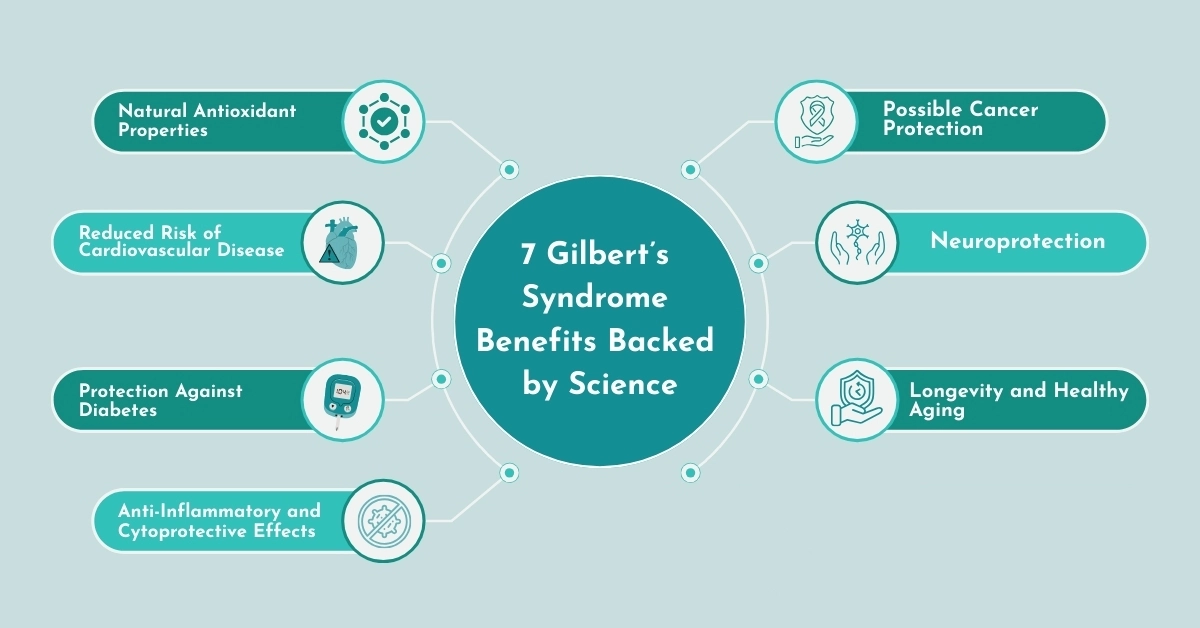
1. Natural Antioxidant Properties
The UGT1A1 mutation that defines Gilbert’s syndrome leads to bilirubin accumulation, but this isn’t bad news.- Increases bilirubin levels, which provides powerful antioxidant protection.
- Reduces the lipid peroxidation that is linked to ageing and cancer risk.
- Protects the tissues from oxidative injury.
2. Reduced Risk of Cardiovascular Disease
- People who have Gilbert’s syndrome show a lower cardiovascular disease risk.
- Due to reduced plaque formation, the patients have less chances of atherosclerosis risk
- Antioxidant has a unique property that protects the heart and the blood vessels
3. Protection Against Diabetes and Metabolic Disorders
- A person with Gilbert’s syndrome has less risk of metabolic syndrome.
- Lower rates of type 2 diabetes because it is due to insulin sensitivity.
- Improves healthier cholesterol levels.
4. Anti-Inflammatory and Cytoprotective Effects
- Bilirubin has a unique property because it has anti-inflammatory properties that are used for reducing cytokine activity in the body.
- Provides cytoprotective effects at the cellular level.
- Anti-inflammatory and cytoprotective must support cellular health and also lower the autoimmune-related damage in the patient body.
5. Possible Cancer Protection
- Studies of PMC 2020 suggest a reduced risk of colon, lung, and breast cancer in people with Gilbert’s syndrome.
- This is linked to bilirubin’s antioxidant and anti-inflammatory mechanisms.
6. Neuroprotection
- Elevated bilirubin may support neuroprotection, lowering risk of Alzheimer’s disease and Parkinson’s disease.
- Mechanisms include oxidative stress reduction and improved neuronal health.
7. Longevity and Healthy Aging
- By lowering the risks of cardiovascular disease, diabetes, and chronic inflammation, Gilbert’s syndrome may promote longer life expectancy.
- Research indicates that people with UGT1A1 gene variations often experience healthier aging with fewer metabolic issues.
Lifestyle Recommendations for Gilbert’s Syndrome Patients
| Lifestyle Factor | Recommendation | Reason/Benefit |
| Diet & Hydration | Balanced meals, avoid extreme fasting, stay hydrated | Supports bilirubin clearance & liver stability |
| Stress Management | Relaxation, adequate sleep | Prevents jaundice flare-ups |
| Alcohol & Drugs | Avoid excessive alcohol, hepatotoxic drugs | Reduces liver strain |
| Exercise | Moderate physical activity | Improves circulation & metabolic health |
| Medical Checkups | Routine liver function monitoring | Confirms benign course, excludes other diseases |
Related Conditions & Differential Diagnosis
It’s important to distinguish Gilbert’s syndrome from other disorders:- Gilbert’s Syndrome vs. Crigler-Najjar Syndrome: Crigler-Najjar is severe, with dangerously high bilirubin.
- Gilbert’s Syndrome vs. Hemochromatosis: Hemochromatosis involves iron overload, unlike bilirubin elevation.
- Hemolysis: Also causes high unconjugated bilirubin, but with anaemia and red cell destruction.
- Liver disease differential diagnosis: Unlike cirrhosis or hepatitis, Gilbert’s syndrome does not cause permanent liver injury.
Future Research on Gilbert’s Syndrome Benefits
Emerging studies suggest new applications for the heme oxygenase pathway and bilirubin biology:- Exploring genetic therapies that mimic Gilbert’s state.
- Using bilirubin as a biomarker for cardiovascular risk reduction.
- Investigating cancer-preventive mechanisms.
- Gilbert’s syndrome might be reclassified not as a disorder, but as a genetic adaptation that benefits human health.
Foods and Lifestyle Considerations
While Gilbert’s Syndrome has potential health benefits, certain dietary triggers can worsen symptoms.| Avoid / Limit | Better Choices |
| High-fat, processed foods | Lean proteins, whole grains |
| Alcohol | Herbal teas, hydration |
| Prolonged fasting | Balanced small meals |
| Excessive sugar | Fruits, vegetables rich in antioxidants |
Personalized Insights with PGx Testing from RPh Labs
Gain knowledge of your genetic makeup with the pharmacogenomic test (PGx test) offered by RPh LABS. In case of a diagnosis of Gilbert’s syndrome, PGx tests add an extra level of safety with the identification of the ways genetic variation, for instance, mutation of the UGT1A1 gene, affects drug metabolism. This aspect comes prominently into play with pharmaceutical agents like irinotecan, atazanavir, or certain analgesics, where incorrect dosing can cause serious side effects. By adopting PGx results as part of treatment plans, clinical professionals can tailor drug choices, minimise the chances of drug-related adverse events, and improve clinical efficacy. Obtain the comfort of at-home PGx test kits offered by RPh Labs and enjoy the satisfaction of knowing your genetic data aids safer and more efficient healthcare decisions. Warning: There are possibilities of grave side effects for those with Gilbert’s syndrome due to impaired bilirubin metabolism from these drugs. PGx testing identifies these risks before treatment.Do you know? PGx (pharmacogenomic) tests have the ability to reveal how your genes affect your body’s reaction to specific medications. Enter your drug name to see if it’s included in the actionable PGx list.
Conclusion
On initial observation, Gilbert’s syndrome appears as a benign liver disease due to a mutation of the UGT1A1 gene. Yet studies prove it’s much more. The genetic defect of this disease leads to mildly elevated bilirubin, which itself has natural antioxidant properties. This translates into multiple advantages for Gilbert’s syndrome, including reduced cardiovascular disease, diabetic prevention, reduced inflammation, and potential longevity advantage. Instead of being an issue, Gilbert’s syndrome provides an interesting example of how an extra copy of a gene might protect rather than harm.Frequently Asked Questions
What foods should people with Gilbert’s syndrome avoid?
People with Gilbert’s syndrome should avoid highly processed foods, excess alcohol, and crash diets. Eating balanced meals with fruits, vegetables, lean protein, and hydration helps maintain stable bilirubin levels.
What percentage of people have Gilbert’s syndrome?
Around 3% to 10% of the world’s population has Gilbert’s syndrome. It is more common in men than women, often diagnosed in adolescence or early adulthood.
What supplements are good for Gilbert’s syndrome?
Supplements like vitamin D, folate, and B-complex may help support liver health. However, it’s best to consult a doctor before starting any supplement with Gilbert’s syndrome.
Can I fast with Gilbert’s syndrome?
Fasting can raise bilirubin levels in people with Gilbert’s syndrome. Short fasts may be tolerated, but long or frequent fasting is not recommended without medical advice.
Is Gilbert’s syndrome inherited?
Yes, Gilbert’s syndrome is inherited. It happens due to changes in the UGT1A1 gene. A person must inherit the altered gene from both parents to develop this condition.
Does Gilbert’s syndrome protect against heart disease?
Research suggests that bilirubin in Gilbert’s syndrome acts like an antioxidant. This protective effect may reduce the risk of heart disease, making cardiovascular problems less common in these patients.
Can Gilbert’s syndrome increase life expectancy?
Studies indicate people with Gilbert’s syndrome may live longer. Elevated bilirubin protects against oxidative stress and chronic diseases like diabetes and atherosclerosis, possibly contributing to increased life expectancy.
Can PGx testing help people with Gilbert’s syndrome?
Yes, pharmacogenomic testing helps identify how the UGT1A1 gene affects drug metabolism, ensuring safer and more effective medication choices.

Leave a Reply